
Celebrating the Legacy of Dr. Syama Prasad Mukherjee: A Visionary Leader in Indian History

A Remarkable Figure in Indian Politics
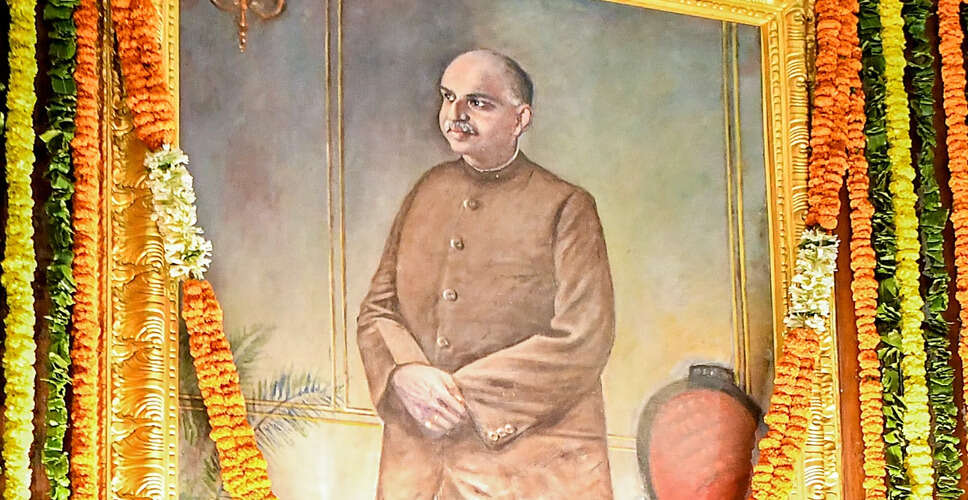
Dr. Syama Prasad Mukherjee, the founder of the Bharatiya Jana Sangh, is celebrated as a prominent nationalist and an esteemed educator in Indian history. Today, July 6, marks a significant date as it commemorates the birth of this illustrious personality in Kolkata in 1901. On this special occasion of his birth anniversary, let us explore a historical and inspiring narrative from his life that forever altered India's geography and integrity.
The Story of Saving 'Half Punjab and Half Bengal'
Dr. Mukherjee is primarily remembered for his relentless struggle for the complete integration of Kashmir into India. However, few are aware that his remarkable foresight and unwavering determination played a crucial role in ensuring that West Bengal and Punjab remained part of India. This tale unfolds during the tumultuous period of 1946-47, when the future of India was being shaped.
Jinnah's Ambitions for Bengal
In 1947, when Lord Mountbatten presented the partition plan, Muslim League leader Muhammad Ali Jinnah demanded the inclusion of all of Bengal and Punjab into Pakistan. At that time, the Chief Minister of Bengal, H. S. Suhrawardy, along with other leaders, proposed an 'Independent and United Bengal' that would not belong to either India or Pakistan. Dr. Mukherjee quickly recognized this diplomatic maneuver, understanding that if Bengal separated from India, the existence of millions of Hindus and minorities there would be jeopardized, ultimately leading to its annexation by Pakistan.
A Nationwide Movement Against Partition
In response to this plan, Dr. Mukherjee initiated a nationwide movement. He argued that if the country was to be divided on religious lines, then the predominantly Hindu areas of Bengal, such as Kolkata and regions adjacent to Assam, should remain within India. His political pressure on the Congress leadership and the British government was so immense that Mountbatten ultimately had to accept a formula for the partition of Bengal and Punjab, ensuring that West Bengal and Eastern Punjab became integral parts of India.
A Historic Statement
Following this pivotal event, Dr. Mukherjee famously remarked to Jinnah, 'You divided India on the basis of religion, but I have divided your Pakistan.'
From Young Vice-Chancellor to Cabinet Minister
Dr. Mukherjee was a man of many talents, not just a politician but also an exceptional academic. At the young age of 33, he became the youngest Vice-Chancellor of Calcutta University, a remarkable achievement in itself. After India's independence, he was appointed as the Minister of Industry and Supply in Jawaharlal Nehru's first cabinet, where he played a pivotal role in formulating India's first industrial policy in 1948.
Resignation Over Ideological Differences
Despite being a minister in Nehru's government, Dr. Mukherjee did not hesitate to resign when it came to the dignity of the nation and the rights of its citizens. In 1950, as atrocities against Hindus in Pakistan escalated, the Nehru-Liaquat Pact was established. Dr. Mukherjee opposed this agreement vehemently, believing it would fail to protect minorities in Pakistan. Staying true to his principles, he resigned from the cabinet on April 6, 1950, and later founded the Bharatiya Jana Sangh in October 1951, which has now evolved into the world's largest political party, the Bharatiya Janata Party (BJP).
Conclusion: A Champion of United India
As the nation celebrates Dr. Syama Prasad Mukherjee's 125th birth anniversary on July 6, his life serves as a reminder that nothing is more important than the nation's interest. His commitment to the slogan 'There cannot be two flags, two leaders, and two laws in one country' and his sacrifices for Kashmir exemplify the strongest narrative of unity and integrity in the country.
Note
(This article is entirely based on historical facts and is copyright-free, intended for creative and educational purposes.)