
Celebrating Tamil Nadu Day: A Historical Overview
Every year on July 18, Tamil Nadu Day is celebrated to honor the state's rich history and cultural heritage. This day marks the official renaming of Madras to Tamil Nadu in 1967. The article delves into the state's formation, historical significance, linguistic diversity, and the current political landscape dominated by Dravidian parties. With a population of over 77 million, Tamil Nadu showcases a blend of various religions and a vibrant cultural scene. Discover the fascinating journey of Tamil Nadu from its ancient roots to its modern-day identity.
| Mar 27, 2026, 11:43 IST
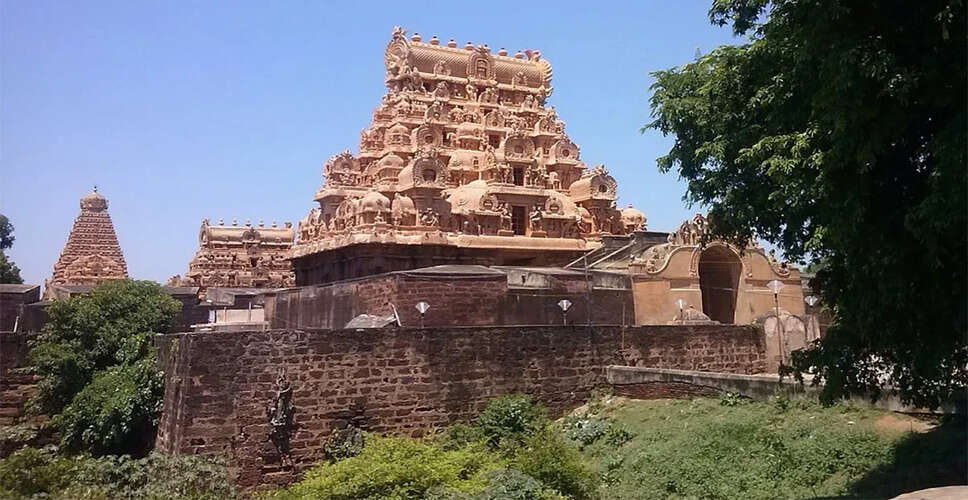
Introduction to Tamil Nadu Day
Tamil Nadu Day is celebrated annually on July 18. This date commemorates the proposal made by C.N. Annadurai in 1967 to rename the Madras state to Tamil Nadu. Although the state was officially formed on November 1, 1956, this day was initially observed as its foundation day. On July 18, 1967, the Tamil Nadu Assembly officially passed the proposal to change the state's name from 'Madras' to 'Tamil Nadu.'
Foundation Day
The formation of Madras state occurred on November 1, 1956, under the State Reorganization Act, based on linguistic lines. However, in 2021, the Tamil Nadu government decided to celebrate Tamil Nadu Day on July 18 instead of November 1, marking the day the state received its current name.
Historical Significance
Tamil Nadu boasts a rich history that spans thousands of years, primarily shaped by the rule of the Chera, Chola, and Pandya dynasties. The state has been a center of Dravidian culture, flourishing in architecture during the Pallava period. The Sangam literature and ancient temples stand as testaments to its glorious past, making it a significant linguistic and cultural state in modern India.
Language and Religion
The Tamil culture represents the heritage of the Tamil people, expressed through literature, music, theater, painting, sculpture, media, comedy, traditions, customs, science, technology, religion, cuisine, and philosophy.
A diverse range of religions coexist in Tamil Nadu, including Hinduism, Islam, Christianity, and Jainism. According to the 2011 Indian Census, 87.58% of the population identifies as Hindu, 6.12% as Christian, 5.86% as Muslim, and 0.12% as Jain.
Political Landscape
Currently, Dravidian parties dominate Tamil Nadu's political scene. The major political parties include the DMK (Dravida Munnetra Kazhagam) and AIADMK (All India Anna Dravida Munnetra Kazhagam). The Indian National Congress and the Bharatiya Janata Party also play significant roles, alongside various smaller parties.
Parliamentary and Assembly Seats
Tamil Nadu has a total of 39 Lok Sabha seats and 243 Assembly seats. Assembly elections are held every five years. The primary political parties, DMK and AIADMK, often contest elections in alliances.
Political Journey
In the 1960s, the Congress Party, led by K. Kamaraj, held significant influence in Tamil Nadu. However, in 1967, the DMK, under C.N. Annadurai, defeated Congress through the anti-Hindi movement, establishing the first non-Congress government in the state. In 1972, M.G. Ramachandran separated from the DMK to form the AIADMK, ruling from 1977 to 1987.
Since then, power has alternated between the DMK and AIADMK. Currently, M.K. Stalin serves as the Chief Minister of Tamil Nadu, having led the DMK to a significant victory in 2021.
Lok Sabha Seats: 39
Assembly Seats: 243
Current Chief Minister: M.K. Stalin
Estimated Population: 77,609,000
Estimated Male Population: 36,137,975
Estimated Female Population: 36,009,055
Literacy Rate: Approximately 80.09%