
Celebrating Savarkar Jayanti: A Look at the Life and Legacy of Veer Savarkar
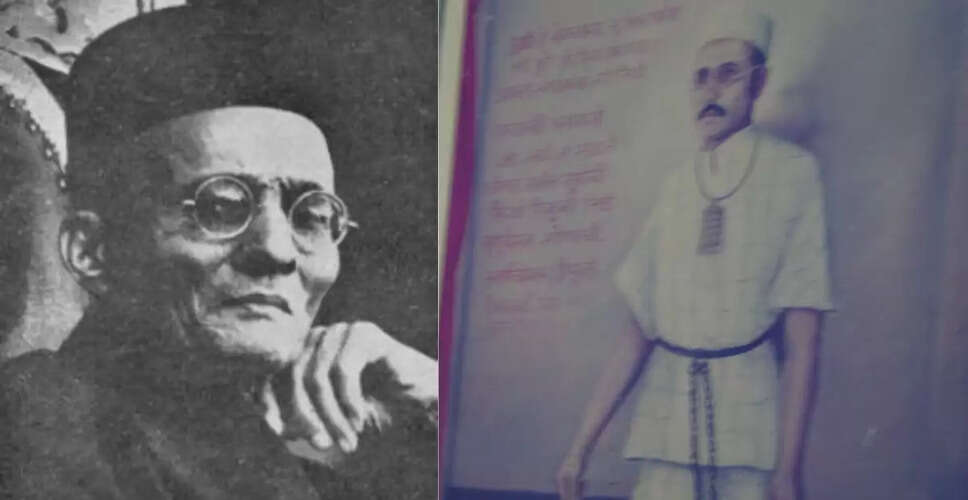
The Importance of Savarkar Jayanti
Savarkar Jayanti is commemorated annually on May 28, honoring the birth of Vinayak Damodar Savarkar, widely recognized as Veer Savarkar. He was a passionate revolutionary, a social reformer, and a prolific writer whose political ideologies continue to spark discussions in contemporary India. His contributions to the freedom struggle are significant, yet his views on Hindutva remain contentious and provoke diverse opinions.
This day serves as a reminder of Savarkar's birth in 1883 and his pivotal role in India's independence movement, as well as the hardships he endured while imprisoned by British authorities. Celebrations take place across India, particularly in Maharashtra, featuring speeches, discussions, and tributes that reflect on his life and philosophies. Many political figures, especially those aligned with nationalist ideologies, pay homage to his enduring influence.
Notable Aspects of Veer Savarkar's Life
Early Life and Influences: Savarkar was born on May 28, 1883, in Maharashtra, where he was profoundly influenced by nationalist sentiments from an early age.
Founding Abhinav Bharat: In 1904, he established the Abhinav Bharat Society, a clandestine group aimed at dismantling British rule through revolutionary means.
Studies in London: While pursuing law in London, he authored 'The First War of Indian Independence,' which posited that the 1857 uprising was a unified national revolt.
Imprisonment in Cellular Jail: In 1911, Savarkar received a sentence of two life terms (50 years) and was confined in the notorious Cellular Jail in the Andaman Islands, where he faced severe hardships.
Advocate of Hindutva: In 1923, he published 'Hindutva: Who is a Hindu?', which laid the groundwork for Hindu nationalism.
Post-Imprisonment Contributions: After his release, Savarkar focused on social reforms, advocating against caste discrimination and untouchability.
Controversy Surrounding Gandhi's Assassination: He was implicated in the assassination of Mahatma Gandhi but was acquitted due to insufficient evidence, although his connection to Nathuram Godse has marred his reputation.
Enduring Legacy: Savarkar passed away on February 26, 1966, but his legacy continues through institutions like the Savarkar Smarak in Mumbai.
Inspiring Quotes by Veer Savarkar
“One who gains strength by overcoming obstacles possesses the only strength which can overcome adversity.”
“Calamities are the stepping stones for a great nation.”
“A man who is not ready to risk his identity for his country is not worthy of being called a patriot.”
“Hindutva is not a word but a history. Not only the religious or spiritual history of our people as at times it is mistaken to be…but a history in full.”
“The sword of revolution is sharpened on the whetting stone of ideas.”
“It is only when men begin to worship that they begin to grow.”
“A patriot puts his country first, above all personal feelings or attachments.”
“Religion and politics are inseparable in Indian life. They spring from the same soul.”
“Toleration of injustice is cowardice, not non-violence.”
“The only way to escape history is to make history.”