
Celebrating Cultural Diversity: Mising Language Raas Leela Performance in Assam

A Unique Cultural Celebration in Assam
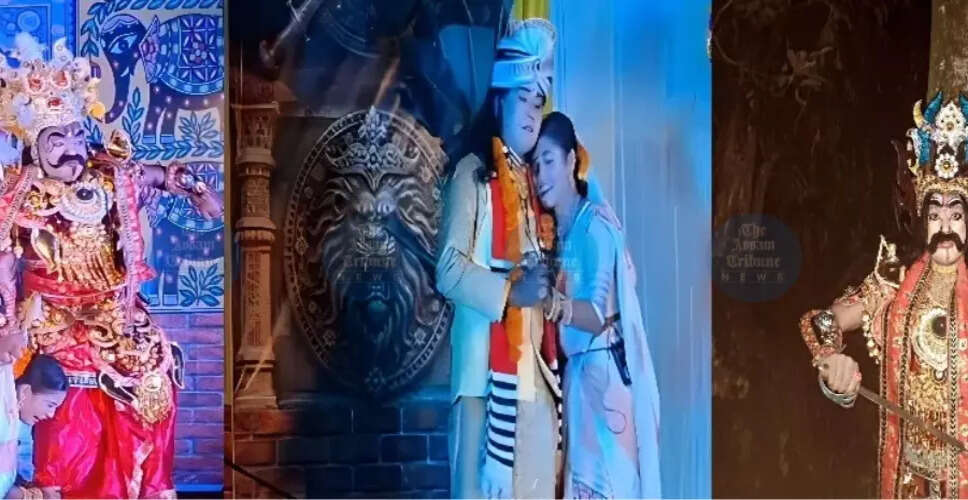
The programme presented the life and divine activities of Lord Krishna entirely in the Mising language (AT Image)
North Lakhimpur, Nov 28: In a remarkable showcase of Assam's rich cultural tapestry, a Raas Leela performance conducted in the Mising language has garnered significant acclaim in the riverine regions of Lakhimpur district. This event underscores the way the state's devotional practices are bridging linguistic and community divides.
The two-night event took place on November 23 and 24 at Sri Sri Changani Satra in Lagachu village, organized by the Lagachu Sanskriti Vikas Kendra troupe. The performance depicted the life and divine exploits of Lord Krishna, uniquely presented in the Mising language, offering a fresh perspective on one of Assam's beloved cultural traditions.
Amiya Pegu, who translated the entire script into Mising and directed the show, conceptualized this initiative. The production featured numerous local amateur artists, who were praised by the audience for their engaging portrayals of various characters.
Tilottoma Lagachu took on the role of Sri Krishna, while Radhika Lagachu portrayed young Krishna. Other notable performances included Bhani Doley as Radha, Monica Lagachu as young Radha, Digbijoy Lagachu as King Kansa, Manab Doley as Vasudeva, Oipuli Patir as Devaki, and Purna Lagachu and Bhaskar Lagachu as Nanda, with Pinky Lagachu in another role.
The musical elements, crafted by Bitopan Pegu, Lakhi Lagachu, and Buddhewar Lagachu, enhanced the overall experience of the performance. The event attracted a large audience of cultural enthusiasts from various parts of the state on both nights.
Jogendra Lagachu, the Satradhikar of Sri Sri Changani Satra, noted that presenting Raas in the Mising language aims to foster cultural connections among diverse communities in the riverine area. He emphasized that this initiative embodies the inclusive and harmonious ideals of neo-Vaishnavism, as promoted by the 15th-century saint and reformer Srimanta Sankardeva.
The Mising-language Raas performances extend beyond Lakhimpur, with similar shows held in various locations across the Dikrong and Lohit rivers in Majuli, including Naya Bazar, Bhakati Duwar, Jamud Chuk, and Zengraimukh.
As Raas festivities unfold throughout rural and urban Assam in November, the initiative in Bodotighat exemplifies how traditional cultural expressions can adapt through regional languages while preserving their spiritual and artistic integrity.