
Ceasefire Between US and Iran Faces Challenges Amid Escalating Tensions

Ceasefire Struggles Amid Regional Turmoil
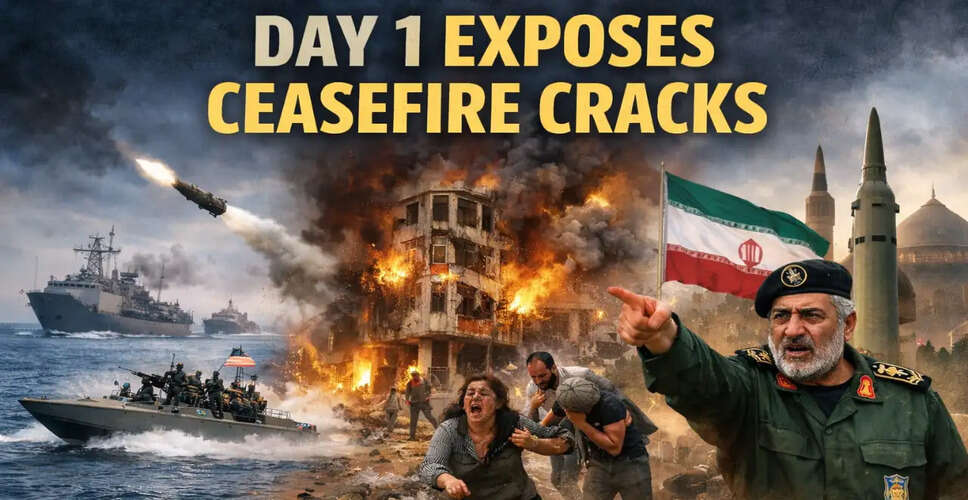
Tehran: The ceasefire agreement between the United States and Iran encountered significant hurdles on Thursday (April 9) following Israel's airstrikes on Beirut, Lebanon. The ongoing blockade of the Strait of Hormuz by Iran, a vital passage for a substantial portion of the world's oil and liquefied natural gas, further complicates the situation. Reports from Iranian semi-official news outlets indicated that forces may have laid mines in the Strait, as noted by The Associated Press. Following the ceasefire declaration, both nations proclaimed victory in the conflict. US President Donald Trump cautioned that American forces would intensify their actions against Iran if the terms of the agreement were not met. In response, Iran accused the US of failing to uphold the ceasefire by not preventing Israeli attacks on Lebanon.
Key Developments on the First Day of the US-Iran Ceasefire:
Israel's Assault on Lebanon: On Thursday, Israel executed one of its most severe attacks on Lebanon, prompting rescue teams in Beirut to search for survivors and recover bodies. Israeli officials warned of potential escalation, while Lebanese President Joseph Aoun condemned the strikes as "barbaric." Israel clarified that the ceasefire related to the Iran conflict does not extend to its operations against Hezbollah.
Hezbollah Leader's Nephew Killed: The Israeli Defense Forces (IDF) reported the death of Ali Yusuf Harshi, a close aide to Hezbollah leader Naim Qassem, during the strikes in Beirut. Harshi was a significant figure within Hezbollah's leadership, overseeing operations for the secretary-general.
Lebanon Seeks Direct Negotiations with Israel: In the aftermath of the Israeli strikes, the Lebanese government has reportedly called for direct negotiations with Israel. The attacks resulted in over 250 fatalities and more than 1,000 injuries.
Iran's Strong Condemnation: Iranian President Masoud Pezeshkian condemned Israel's military actions in Lebanon, warning that such operations could jeopardize the ceasefire. He emphasized that Iran would continue to support its Lebanese allies.
Strait of Hormuz Remains a Tense Area: Iran has not fully reopened the crucial Strait of Hormuz. Recent reports from Iranian semi-official news agencies indicated that the Revolutionary Guard may have placed sea mines in the waterway during the conflict, marking a "danger zone" for maritime traffic.
UK Denounces Iran's Tolls on Shipping: The United Kingdom has rejected Iran's tolls imposed in the Strait of Hormuz, asserting that the waterway is an international shipping route where freedom of navigation must be upheld. Foreign Secretary Yvette Cooper stated that nations cannot unilaterally impose tolls on such critical transit routes.
Uncertainty Surrounds Talks in Pakistan: Iran's Ambassador to Pakistan, Reza Amiri Moghadam, deleted a post on X, formerly Twitter, regarding an Iranian delegation's planned visit to Pakistan, despite doubts about the two-week ceasefire's viability. High-stakes in-person discussions between the US and Iran are scheduled for Friday in Pakistan, aiming to solidify the fragile ceasefire and prevent further escalation in the region.