
CBI Appeals Against Court Ruling in Delhi Liquor Policy Case
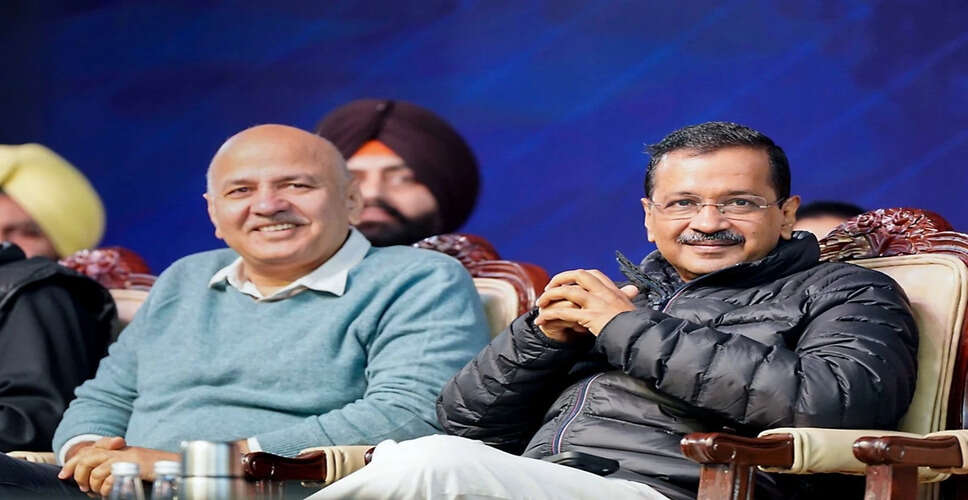
CBI Challenges Court Decision on Liquor Policy
On Monday, the Central Bureau of Investigation (CBI) filed an appeal in the Delhi High Court, contesting the special court's decision that acquitted former Chief Minister Arvind Kejriwal, former Deputy Chief Minister Manish Sisodia, and others in the liquor policy case. The CBI argued that the lower court's ruling to exonerate Kejriwal and Sisodia was erroneous.
The agency emphasized that the liquor policy scandal is among the largest corruption cases, asserting that there is clear evidence of wrongdoing. The CBI stated that the lower court issued its acquittal without proper hearings, noting that those involved in bribery continued to travel on private jets during the peak of the COVID pandemic, despite such travel being prohibited.
Furthermore, the CBI claimed that the evidence it gathered was overlooked, asserting that there is substantial proof against Kejriwal, Sisodia, and others, with witnesses supporting the CBI's case. Last week, a Delhi court remarked that the evidence collected by the CBI during the investigation failed to establish a prima facie case of policy concealment, bias, or violation of constitutional rights, leading to Sisodia's acquittal.
Special Judge Jitendra Singh was presiding over the case involving Sisodia, Kejriwal, K. Kavitha, the chairperson of Telangana Jagruti, and 20 other accused individuals. In a detailed 598-page order, the court stated that the available evidence did not indicate any prima facie case of policy concealment, unilateral action, or infringement of constitutional rights. Instead, the records suggested that the process was conducted with consultation, communication, and administrative diligence. According to the prosecution, Sisodia disregarded a report from the Ravi Dhawan committee that highlighted inconsistencies in the excise policy. The court noted that this policy was designed to address challenges from the previous excise policy, including improvements in distribution margins, reflecting efforts to mitigate monopolistic tendencies and regulatory gaps from the earlier system.