
Canadian Traveler Tests Positive for Hantavirus After Cruise Outbreak
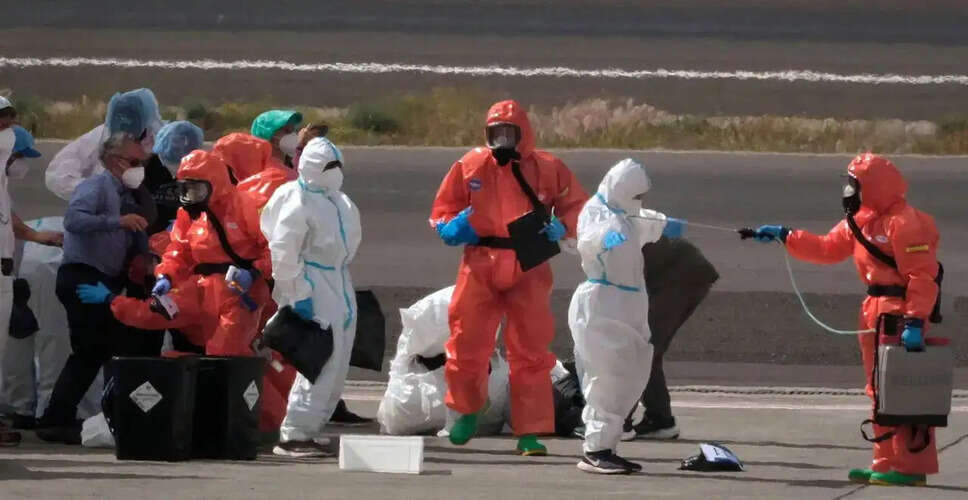

Hantavirus Case Linked to Cruise Ship Outbreak
A traveler from Canada has been diagnosed with hantavirus following their departure from a cruise ship associated with an outbreak of the Andes strain, as reported by health officials in British Columbia on Saturday. Dr. Bonnie Henry stated that the individual, who is currently in isolation in British Columbia, exhibited mild symptoms such as fever and headache two days prior to the diagnosis. The patient was admitted to a hospital in Victoria, where preliminary tests indicated a positive result on Friday. This sample will be forwarded to a microbiology lab in Winnipeg for further confirmation. Health officials confirmed that the patient remains stable and is being treated in isolation.
"This is not the outcome we had hoped for, but it is part of our preparedness plan," Dr. Henry remarked. She emphasized that hantavirus differs significantly from other respiratory viruses like COVID-19, influenza, and measles, and does not pose a pandemic threat.
This case is connected to an outbreak on the MV Hondius cruise ship, where multiple passengers have contracted the Andes strain in recent weeks. Officials reported that four passengers began isolating in the Island Health region on Sunday, including a resident from Vancouver Island in their 70s, another British Columbia resident in their 50s living abroad, and a couple from Yukon in their 70s. Dr. Henry confirmed that the individual who tested positive is part of the Yukon couple, while their partner tested negative. She assured that none of the travelers interacted with the public during their transport from Victoria International Airport after arriving in British Columbia, and healthcare workers utilized personal protective equipment during their care.
Dr. Henry also highlighted that all 11 confirmed cases worldwide have involved individuals who spent significant time on the cruise ship, with no infections reported among those not on the voyage. Since the outbreak began, three individuals have died. Hantavirus is primarily transmitted through contact with contaminated rodent droppings and is not typically spread between humans. However, the Andes strain has been linked to rare instances of human-to-human transmission. Symptoms may develop between one and eight weeks post-exposure. Officials noted that the four Canadians isolating in British Columbia had no known direct contact with ill passengers from the ship. As of May 8, Canadian authorities have identified 10 individuals across the nation who might have been exposed to the virus, including residents in Alberta, Ontario, and Quebec.