
Canada Signals Improved Ties with India Ahead of Prime Minister's Visit
Diplomatic Relations on the Mend
The Canadian government has indicated that it no longer associates India with alleged violent activities occurring within Canada, according to a senior official in Ottawa who chose to remain anonymous.
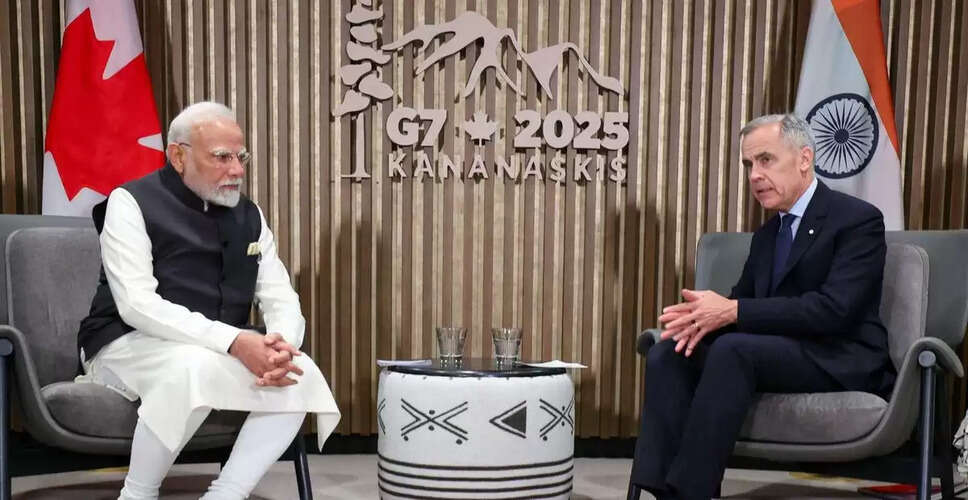
This statement was made just before Canadian Prime Minister Mark Carney's upcoming visit to India scheduled for Friday.
The unnamed official noted that there has been significant diplomatic dialogue between the two nations, including talks between national security advisers, and expressed confidence that the alleged activities have ceased.
"We wouldn't be proceeding with this trip if we believed such activities were ongoing," the official remarked.
Carney's visit is taking place during a period of warming diplomatic relations between India and Canada.
Relations had sharply declined in 2023 after former Prime Minister Justin Trudeau informed Parliament about credible allegations linking Indian government agents to the murder of Khalistani separatist Hardeep Singh Nijjar in Canada.
Nijjar was a proponent of Khalistan, a proposed independent Sikh state, and led the Khalistan Tiger Force, which is classified as a terrorist organization in India.
India has firmly denied the allegations made by Canada.
Currently, four Indian nationals are undergoing trial in Canada related to Nijjar's murder, facing charges of first-degree murder and conspiracy.
The Canadian official's remarks came shortly after Ottawa sought to keep sensitive evidence in the Nijjar case from being revealed in court, arguing it could harm international relations and national security.
The trial is not anticipated to commence until August, as stated by a spokesperson for the British Columbia Prosecution Service.
Additionally, on February 8, both countries announced an agreement on a work plan aimed at enhancing cooperation in national security and law enforcement.
Previously, Ottawa had accused India of foreign interference.
A Canadian inquiry in January 2025 alleged that India was meddling in its electoral processes by covertly funding political figures and spreading disinformation.
The Indian external affairs ministry dismissed the inquiry's findings, asserting that Canada was the one interfering in India's domestic matters.
In March 2025, the Canadian Security Intelligence Service warned that India, along with China, Russia, and Pakistan, might attempt to influence the upcoming general election scheduled for April 2025.
In July, a report from the Canadian Security Intelligence Service accused India of engaging in foreign interference and espionage activities.