
Call for Action After Tragic Death of Elephants on Railway Tracks
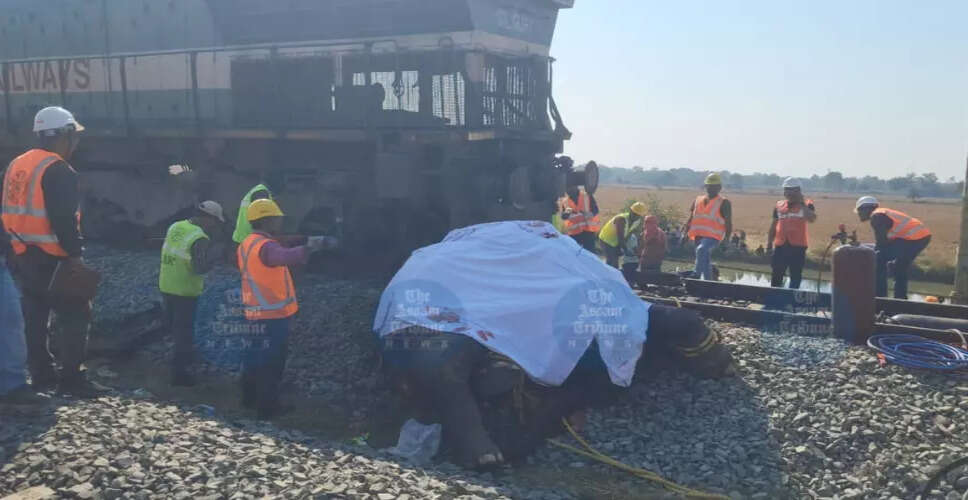
Urgent Measures Needed Following Elephant Deaths
Guwahati, Dec 22: The Kaziranga Wildlife Society (KWS), the oldest wildlife NGO in the state, has expressed deep sorrow over the unfortunate incident where eight elephants were killed by the speeding Sairand-New Delhi Rajdhani Express train near Kampur on Saturday. The organization is urging the implementation of a comprehensive protocol that clearly defines the responsibilities of various stakeholders, particularly the Railways and the Forest Department.
KWS has also demanded a judicial investigation into the incident, highlighting that the train seemingly violated a Supreme Court ruling from 2014, which set a speed limit of 30 to 40 km/h based on the sensitivity of the railway segment.
In their statement, KWS emphasized that the ongoing fatalities of elephants on train tracks reveal a lack of genuine commitment from both the Railways and the Forest Department in preventing such tragedies.
“We need a judicial inquiry to pinpoint the issues and hold the responsible parties accountable. Following that, a robust protocol must be established, detailing the responsibilities of various authorities, along with a system to address negligence or failure to act. Without this, mere discussions will not lead to solutions for these recurring incidents,” they stated.
KWS pointed out that elephant deaths on tracks have become alarmingly routine. They believe that with the right technology and vigilant monitoring of elephant movements near railway lines, it should be feasible to alert train drivers about potential elephant crossings.
“Coordination among different authorities is essential, which was evidently lacking in this case. We require both vigilant monitoring and advanced technology, such as sensors, to detect elephants near tracks. The key is to ensure that real-time information reaches the train drivers. Additionally, limiting train speeds in areas where elephants are present is crucial,” they added.
Questioning the dedication and sensitivity of the Railways and Forest Department, KWS stated that no protocol would suffice to prevent these deaths unless the authorities demonstrate genuine goodwill, commitment, and empathy towards the issue.
"All these measures will only be effective when our authorities, particularly the Railways and the Forest Department, sincerely commit to preventing avoidable elephant deaths on railway tracks,” they concluded.
By
Staff Reporter