
Calcutta High Court Report Reveals Police Inaction During Murshidabad Violence
Overview of the Murshidabad Violence Report
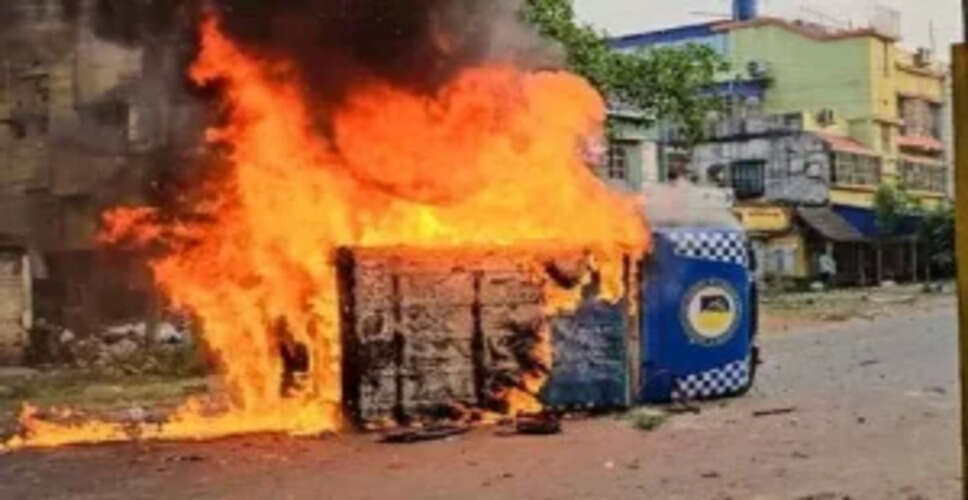
Kolkata: A committee established by the Calcutta High Court to assess and assist victims of violence linked to anti-Waqf protests in Murshidabad district has reported that local law enforcement was notably "inactive and absent" during the disturbances that occurred in Dhulian on April 11.
The report also highlighted that a local councillor played a role in instigating the violence in Dhulian town.
According to the findings submitted to the high court by the three-member committee, a garments mall in Dhulian was among the properties looted during the unrest.
The committee noted that the most significant violence took place on the afternoon of April 11, emphasizing the absence of local police during these critical moments.
The panel, which included Joginder Singh from the National Human Rights Commission, Satya Arnab Ghosal from the West Bengal Legal Services Authority, and Saugata Chakraborty from WBJS, presented their report to the high court after visiting the impacted areas and interviewing victims as instructed by the division bench overseeing the case.
On April 17, the high court mandated the formation of this committee to identify and rehabilitate individuals displaced by the violence stemming from protests against the Waqf (Amendment) Act in Murshidabad.
The division bench, consisting of Justices Soumen Sen and Raja Basu Chowdhury, acknowledged the committee's assertion that engaging qualified valuation experts is crucial to remedy the state's failure to safeguard its citizens.
The court noted that victims require tailored rehabilitation packages, and securing the expertise of valuation professionals is essential.
An earlier report from the West Bengal government to the division bench detailed extensive violence from April 8 to April 12, linked to protests over the Waqf Act.
It indicated that the situation in Suti, Dhulian, Samserganj, and Jangipur was brought under control following police and civil administration intervention.
The report outlined that protests against the Waqf (Amendment) Act, 2025 began on April 4 across all police station jurisdictions in the Jangipur police district, escalating into violence by April 8.
Tragically, two individuals, Haragobinda Das and his son Chandan Das, lost their lives to mob violence on April 12 in Jafrabad, under the jurisdiction of Samserganj police station.
In response to the escalating situation, central forces were deployed in Samserganj on April 11, with additional CAPF units sent in on April 12 following high court orders.