
Cabinet Approves Major Infrastructure Projects to Boost Rural Economy and Employee Welfare
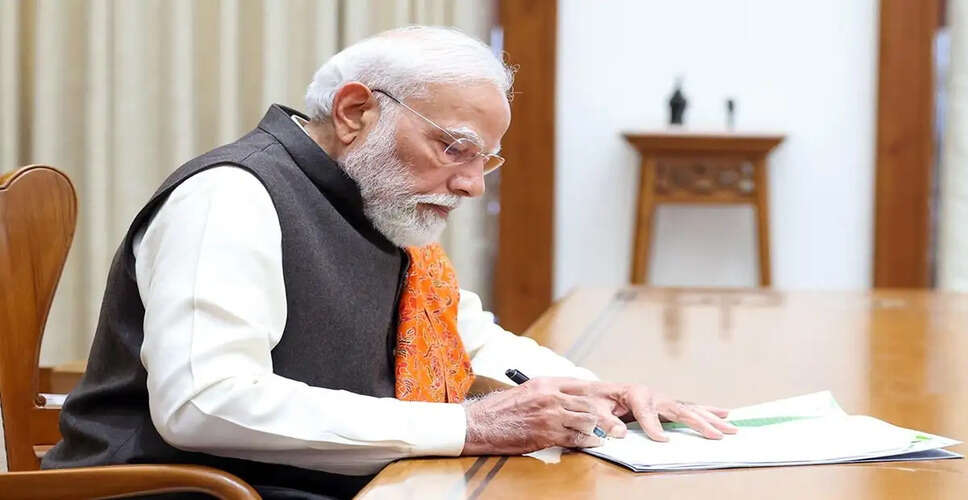

Significant Cabinet Decisions Announced
In a recent meeting, the central cabinet made several crucial decisions aimed at enhancing the nation's infrastructure, empowering the rural economy, providing relief to employees, and securing trade amidst global uncertainties, as shared by the Union Minister for Information and Broadcasting, Ashwini Vaishnaw.
Railway Projects Approved
One of the most notable decisions pertains to the railway sector. The Cabinet Committee on Economic Affairs has sanctioned two major railway projects with a combined cost of approximately ₹24,815 crores. These projects include the construction of the third and fourth railway lines from Ghaziabad to Sitapur and from Rajamahendravaram to Visakhapatnam. The total length of these projects is around 601 kilometers, with a total track length of 1,317 kilometers.
Enhancing Railway Capacity
The primary goal of these initiatives is to increase the capacity of the railway network, reduce congestion, and facilitate the movement of goods and passengers. This will enhance operational efficiency and improve service reliability, aligning with the Prime Minister's vision for a new India that supports self-reliance through regional development.
Importance of Ghaziabad to Sitapur Project
The Ghaziabad to Sitapur project is particularly significant as it forms part of a high-density network connecting Delhi to the northeastern region. Currently, the capacity utilization on this route has reached 168%, which could escalate to 207% in the future. Completion of this project will benefit several districts in Uttar Pradesh, including Ghaziabad, Moradabad, Bareilly, and Sitapur, while also improving access to industrial areas and religious sites.
Rajamahendravaram to Visakhapatnam Project
Conversely, the Rajamahendravaram to Visakhapatnam project is a vital component of the eastern coast's railway corridor. This route is linked to ports and is crucial for freight transport. Here, capacity utilization has also reached 130%. The project will involve the construction of structures such as bridges over the Godavari River, viaducts, and bypasses, enhancing operational efficiency.
Environmental Benefits and Economic Impact
Both projects are expected to expedite the transportation of goods like coal, grains, fertilizers, cement, and steel. Additionally, they will benefit the environment by reducing carbon emissions, with an estimated decrease of 180 crore kilograms, equivalent to planting millions of trees.
Increased Railway Budget and Development
The government's focus on the railway sector continues to grow, with a record budget allocation of ₹2,65,000 crores for the fiscal year 2026-27. Over 1,600 engines are being manufactured in the country, propelling India towards becoming a leading nation in freight transport.
Rural Development Initiatives
In addition, a significant decision was made regarding rural development. The third phase of the Pradhan Mantri Gram Sadak Yojana has been extended until March 2028. This initiative aims to connect rural roads to agricultural markets, schools, and hospitals, with the total expenditure increased to ₹83,977 crores. This will enhance trade, employment, and income in rural areas while improving access to education and healthcare services.
Employee Relief Measures
Furthermore, relief measures for central employees and pensioners have been announced. The government has approved a 2% increase in dearness allowance and relief, effective from January 1, 2026, benefiting approximately 5 million employees and 6.8 million pensioners. This decision will impose an annual burden of around ₹6,791 crores on the government treasury.
Establishment of Maritime Insurance Pool
Additionally, to secure maritime trade, the establishment of a maritime insurance pool has been approved, with a sovereign guarantee of ₹12,980 crores. This initiative aims to ensure insurance coverage for Indian vessels and cargo amidst global instability and geopolitical tensions, reducing reliance on foreign insurance and strengthening the nation's economic sovereignty.
Comprehensive Steps Towards Development
Overall, these cabinet decisions represent a significant stride towards expanding infrastructure, promoting rural development, enhancing social security, and achieving economic self-reliance, playing a crucial role in realizing the vision of a developed India.