
BRICS National Security Meeting in New Delhi: A Strategic Gathering

Significance of the Upcoming BRICS Meeting
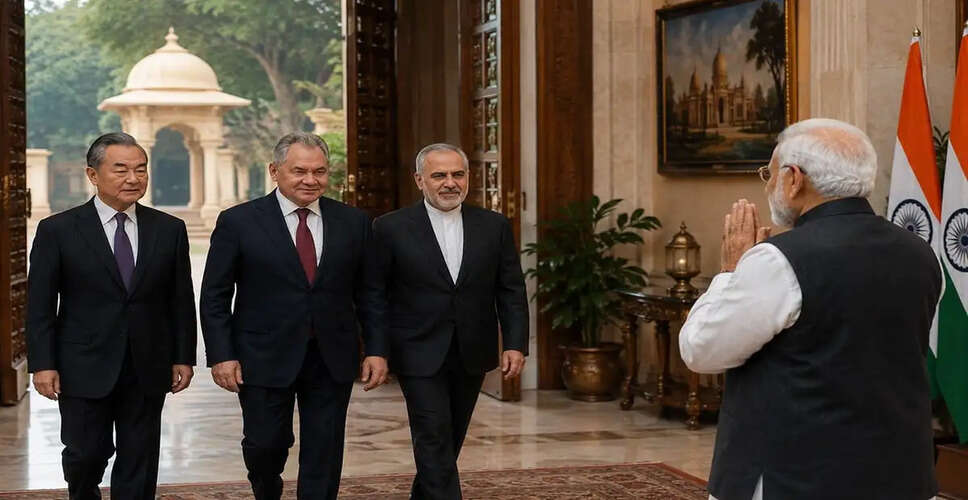
The BRICS National Security Advisors meeting, scheduled for June 22 and 23 in New Delhi, is anticipated to be one of the most significant multilateral diplomatic events of the year. Senior representatives from BRICS nations, including China's Foreign Minister Wang Yi, Russia's National Security Advisor Sergey Shoigu, and Iran's Deputy Secretary of the Supreme National Security Council Nezamipour, will participate. This meeting aims to outline the agenda for the BRICS summit in September and will focus on collective strategies regarding global security, energy cooperation, and the multipolar world order.
India's Role as BRICS Chair
India is currently holding the presidency of the BRICS group, which comprises Brazil, China, Egypt, Ethiopia, Indonesia, Iran, Russia, Saudi Arabia, South Africa, and the United Arab Emirates. The theme for India's presidency is 'Resilience, Innovation, Cooperation, and Sustainable Development,' reflecting New Delhi's ambition to position BRICS not just as an economic platform but as a collective political voice for the Global South.
Wang Yi's Visit and Its Importance
Wang Yi's visit is particularly significant as he also serves as China's special representative on the India-China border issue. He is expected to engage in bilateral talks with National Security Advisor Ajit Doval and Foreign Minister S. Jaishankar, and may even meet Prime Minister Narendra Modi. Recent years have seen a stagnation in relations due to border tensions and distrust, but there are signs of gradual improvement. India will hand over the BRICS presidency to China next year, and both nations have expressed commitment to support each other's leadership.
Geopolitical Context and Energy Cooperation
This meeting occurs at a time when rapidly changing dynamics in West Asia are influencing the global power balance. Following a potential interim peace agreement and easing of sanctions between the U.S. and Iran, Iran is attempting to re-establish itself as a key crude oil supplier to India. Iranian Petroleum Minister Mohsin Paknejad is also expected to visit India next week to participate in the BRICS energy meeting, where he may hold bilateral discussions with India's Petroleum Minister Hardeep Puri.
Iran's Energy Supply Potential
Iranian Ambassador Mohammad Fatehali has emphasized that India requires a reliable, stable, and affordable energy supply, and Iran possesses the capacity to meet these needs. Until 2019, Iran was one of India's primary oil suppliers, but U.S. sanctions forced India to halt imports. If these sanctions are lifted, India could significantly increase its purchases of Iranian oil, aiding in diversifying energy sources, reducing import costs, and maintaining strategic balance in West Asia.
Chabahar Port Project's Strategic Importance
Another crucial aspect of this development is the Chabahar port project. India has long been developing this port as a strategic gateway to Afghanistan and Central Asia, aiming to enhance regional connectivity while bypassing Pakistan. With the easing of U.S. sanctions, India intends to accelerate work on this project. If fully developed, Chabahar could strengthen the International North-South Transport Corridor and provide a new foundation for India's Central Asia policy.
Strategic Implications of the Meeting
From a strategic perspective, this entire scenario is significant on multiple levels. BRICS is evolving beyond just an economic cooperation platform; it is becoming a forum for collective security and strategic coordination for the Global South. The collaboration among countries like India, China, and Russia to address global security challenges signals the emergence of an alternative power structure parallel to the Western-dominated order.
Discussion on Security Challenges
The meeting will also address both traditional and non-traditional security challenges, including terrorism, maritime security, cyberattacks, supply chain security, energy crises, and regional conflicts. Amidst growing global instability, BRICS nations advocate for multilateralism and a balanced global governance system. China has also stated that BRICS countries are committed to world peace, shared development, and a more just global order.
Looking Ahead to the BRICS Summit
This meeting in New Delhi is crucial as it will set the direction for the upcoming BRICS summit in September. If India successfully leverages this platform, it could strengthen its position as a leader of the Global South while advancing energy and connectivity cooperation with Iran, all while maintaining balanced relations with China and Russia.