
BRICS Meeting Highlights Global Security Challenges and Cooperation
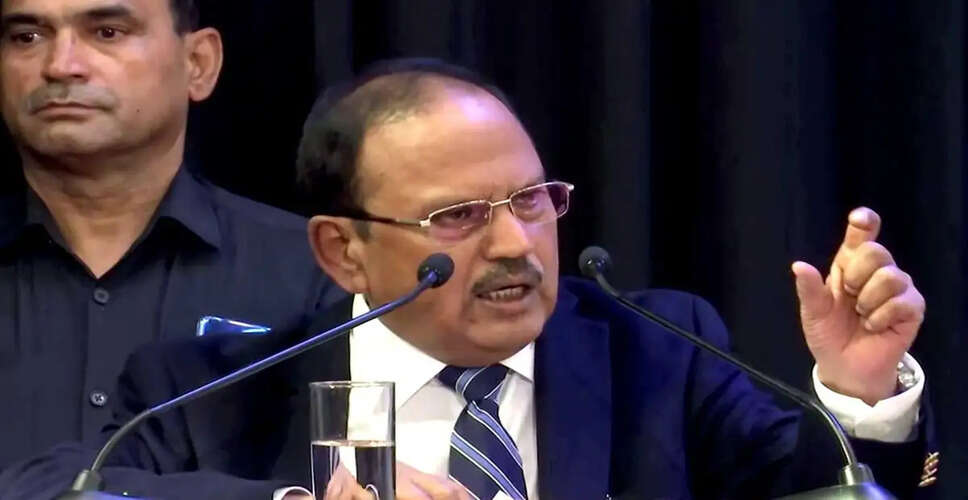
The 16th BRICS National Security Advisors meeting in New Delhi addressed pressing global issues such as security threats, economic stability, and diplomatic relations. National Security Advisor Ajit Doval emphasized the importance of BRICS as a center for global security and cooperation. Key discussions included the significance of the US-Iran agreement for West Asia, the need for enhanced coordination among member states to tackle emerging threats, and India's proactive diplomatic efforts to strengthen ties with various nations. This meeting highlights India's evolving role as a leader in the Global South amidst shifting global power dynamics.
| Jun 23, 2026, 18:06 IST

Significance of the 16th BRICS National Security Advisors Meeting
The 16th meeting of BRICS National Security Advisors, held in New Delhi, comes at a critical juncture as the world seeks new directions amidst war, economic instability, cyber threats, and shifting global power dynamics. During this pivotal gathering, National Security Advisor Ajit Doval emphasized that BRICS is evolving into a decisive center for global security and a multipolar world order.
Focus on West Asia and Energy Security
A key takeaway from the meeting was the focus on West Asia. Doval welcomed the memorandum of understanding between the United States and Iran, expressing 'cautious optimism.' He noted that if successful, this agreement could not only restore stability in West Asia but also enhance global energy security and maritime trade. The reopening of the Strait of Hormuz was highlighted as a particularly positive development, given its significance in global oil supply and trade.
Addressing Supply Chain Challenges
Doval stated that this agreement would alleviate disruptions in the supply of fertilizers, chemicals, and other essential goods. It would help resolve interruptions in global supply chains and promote economic prosperity through enhanced maritime freedom. This stance is particularly crucial as the world grapples with energy crises, inflation, and geopolitical tensions, showcasing India's commitment to addressing the concerns of the Global South.
Concerns Over Non-Traditional Security Threats
During his address, Doval raised serious concerns about non-traditional security threats facing the world. He pointed out that in an increasingly digital world, cyberattacks, proxy terrorism, and disruptive technologies challenge traditional security frameworks. Terrorism is no longer confined by borders, and cyber threats directly impact national economies, defense systems, and civilian infrastructure, indicating that conventional military measures are no longer sufficient.
Collaboration on Counter-Terrorism and Cybersecurity
The BRICS meeting also discussed reports from joint working groups on counter-terrorism cooperation and information and communication technology security. India emphasized the need for improved coordination, intelligence sharing, and technical collaboration among member states to tackle emerging threats. This message is particularly significant as artificial intelligence, digital espionage, and cyber warfare have become new tools in global power struggles.
The Need for Effective Multilateralism
Doval expressed concern over the weakening of multilateralism, stating that existing global institutions are failing to provide effective solutions to rapidly changing crises. He described BRICS as a 'special coalition' of countries committed to peace, development, progress, and cooperation. India made it clear that BRICS aims not only for economic collaboration but also for reforming global governance and amplifying the voice of the Global South.
India's Diplomatic Initiatives
Another notable aspect of this meeting was India's proactive diplomatic efforts. On the sidelines of the BRICS meeting, India sought to strengthen its strategic relationships through bilateral talks with several countries. Doval met with Ghadir Nezamipour, Deputy Secretary of Iran's Supreme National Security Council, to discuss the situation in West Asia, India-Iran relations, and BRICS cooperation. Additionally, discussions were held with Milion Lema Tadesse, Director of Analysis at Ethiopia's National Intelligence and Security Service, to deepen strategic partnerships. This growing engagement with African nations illustrates India's evolving role as a leader in the Global South.
India-China Diplomatic Talks
It is also noteworthy that significant diplomatic discussions took place between India and China during the BRICS National Security Advisors meeting. Ajit Doval met with Chinese Foreign Minister Wang Yi to review progress in normalizing relations after over four years of military standoff along the Line of Actual Control. Both sides viewed the gradual normalization of relations as a positive sign, emphasizing the importance of stable, reliable, and constructive India-China relations for building trust and better understanding between the two nations. Following the agreement on border disputes in 2024, both countries have taken steps to improve relations, including the resumption of direct flights and the restart of the Kailash Mansarovar pilgrimage.
Discussions with Other BRICS Members
Furthermore, discussions were held with top representatives from Russia's Security Council, South Africa, the United Arab Emirates, Egypt, Indonesia, and other member countries on key bilateral issues. This conference, chaired by India, was particularly significant as it centered on 'resilience, innovation, cooperation, and sustainable development.'
Conclusion: A Shift in Global Power Dynamics
Ultimately, the BRICS meeting occurred at a time when the world is moving towards a new balance of power. The US-Europe-centric order is facing challenges, and emerging economies are showcasing their collective strength. India successfully conveyed the message that future global politics will not be determined solely by military power but will also hinge on technological security, economic partnerships, energy stability, and multilateral cooperation.