
BRICS Meeting Fails to Reach Consensus on Middle East Conflict
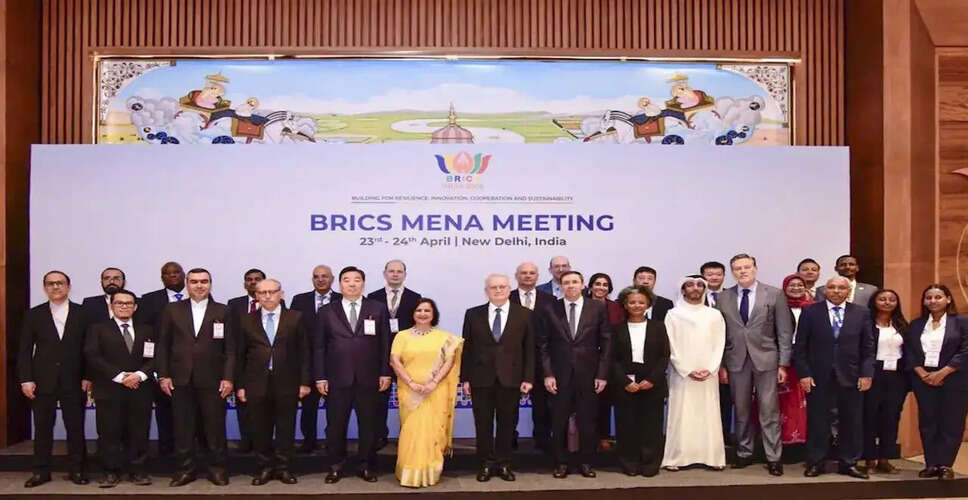

BRICS Members Struggle to Find Common Ground
Significant disagreements among BRICS nations regarding the US-Israel conflict in Iran hindered India's attempts to forge a unified stance during a recent gathering in New Delhi, according to official sources. They noted that India's position on the Palestine issue remained unchanged following the meeting of BRICS Deputy foreign ministers and special envoys focused on the Middle East and North America.
Disparities Among BRICS Nations
The BRICS officials' meeting concerning the Middle East failed to produce a consensus document due to stark differences in viewpoints among member states involved in the conflict. Reports indicate that the stance of the United Arab Emirates contributed to the lack of a collective statement, despite efforts to reconcile differing opinions.
India's Stance on Palestine Remains Steadfast
India had previously established a consensus with the Arab League, including Palestine, as recently as January. The country has consistently advocated for a two-State solution. Sources highlighted that many BRICS members had participated in or supported the Sharm el-Sheikh summit and the UNSC resolution 2803, which were significant developments over the past year.
The Sharm el-Sheikh summit in October facilitated the cessation of the Israeli military operations in Gaza, culminating in a ceasefire agreement. Following the BRICS meeting, the Ministry of External Affairs (MEA) expressed that members conveyed their deep concerns regarding the Middle East conflict and shared their perspectives on the situation.
In January, India and Arab League nations jointly advocated for a sovereign and viable Palestinian state coexisting peacefully alongside Israel. A declaration from the second India-Arab foreign ministers' meeting reaffirmed their commitment to achieving a "just, comprehensive, and lasting peace in the Middle East" in line with international law, relevant UN resolutions, and the Arab Peace Initiative. They called for a sovereign, independent, and viable State of Palestine based on the 1967 borders, living peacefully alongside Israel, while supporting the inalienable rights of the Palestinian people.