
BRICS Foreign Ministers Conference Addresses Global Challenges
The recent BRICS Foreign Ministers' conference in New Delhi addressed pressing global issues such as instability, energy security, and the need for coordinated responses among member nations. External Affairs Minister Dr. S. Jaishankar emphasized the importance of unity and practical efforts to tackle challenges faced by developing countries. With rising tensions in West Asia and the impact on global trade, the conference highlighted the expanding role of BRICS in fostering cooperation and dialogue. Key discussions included regional stability, climate change, and the strengthening of India-Russia relations, showcasing the group's commitment to addressing contemporary global challenges.
| May 14, 2026, 18:28 IST

Key Issues Discussed at the BRICS Meeting
The BRICS Foreign Ministers' conference held in New Delhi focused on critical issues such as global instability, rising tensions in West Asia, energy security, maritime route safety, and enhancing multilateral cooperation. India emphasized the need for practical and coordinated efforts to tackle current global challenges rather than mere rhetoric.
Concerns Over Geopolitical Instability
During the inaugural session, External Affairs Minister Dr. S. Jaishankar highlighted that the world is facing unprecedented geopolitical and economic uncertainties. He pointed out that conflicts, climate crises, post-pandemic challenges, supply chain disruptions, and rising inflation have intensified concerns for developing nations. Jaishankar stressed that the unity of BRICS countries is crucial in these circumstances, urging the group to move beyond discussions to formulate effective and coordinated responses.
Focus on West Asia
Jaishankar expressed particular concern regarding the situation in West Asia, noting that ongoing conflicts, threats to maritime traffic, and disruptions in energy infrastructure pose serious challenges to the global economy. He stated that ensuring safe and uninterrupted maritime passage through international waterways like the Strait of Hormuz and the Red Sea is vital for global economic stability. He emphasized that peace cannot be fragmented and that respecting international law, ensuring citizen safety, and avoiding attacks on public infrastructure are essential.
Dialogue and Diplomacy as Solutions
The minister also asserted that dialogue and diplomacy are the pathways to sustainable solutions for any conflict. He underscored the importance of sovereignty and territorial integrity as the foundation of international relations, expressing India's readiness to contribute to any constructive efforts aimed at reducing tensions and restoring stability. Jaishankar highlighted the need for global cooperation against terrorism, stating that cross-border terrorism violates the fundamental principles of international relations.
Participation of Global Leaders
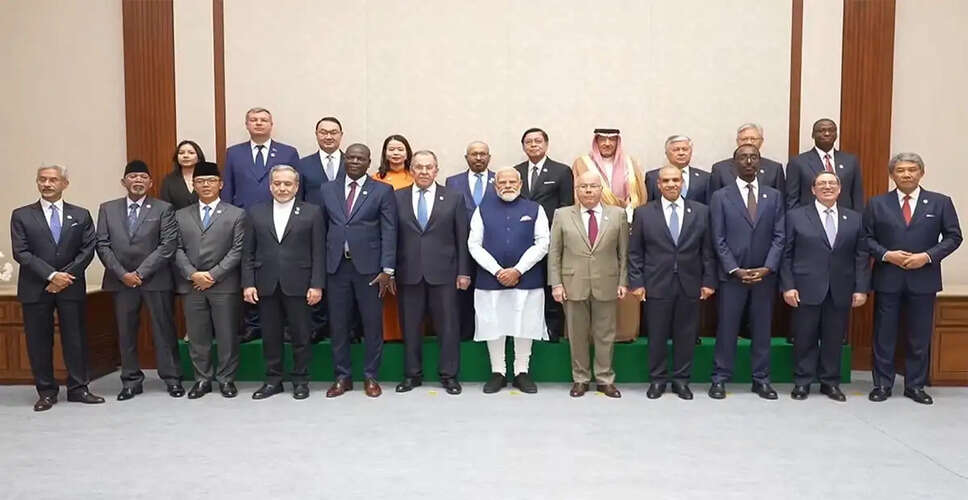
This two-day conference, chaired by India, saw participation from various countries, including Russia's Foreign Minister Sergey Lavrov, Iran's Foreign Minister Abbas Araghchi, Brazil's Foreign Minister Mauro Vieira, Indonesia's Sugiono, and South Africa's Ronald Lamola. Prime Minister Narendra Modi also met with the BRICS foreign ministers, emphasizing the importance of strengthening global cooperation.
Context of Rising Tensions
The conference took place at a time when tensions in West Asia are escalating, impacting global energy supply and trade. The trade and tariff policies of the United States have further heightened concerns for emerging economies. In this context, India stressed the need for reliable supply chains and diversified markets. Jaishankar noted that many countries are grappling with issues related to energy, food, fertilizers, and health security, and BRICS can assist these nations more effectively.
Expansion of the BRICS Group
The BRICS group, originally comprising Brazil, Russia, India, China, and South Africa, is rapidly expanding. In 2024, Egypt, Ethiopia, Iran, and the United Arab Emirates will join, with Indonesia set to become a member in 2025. Today, this group represents nearly half of the world's population, about 40 percent of global GDP, and approximately 26 percent of global trade.
Significant Visit from Iran's Foreign Minister
During the conference, Iran's Foreign Minister Abbas Araghchi's visit to India garnered special attention. He arrived on a plane marked 'Minab 168,' symbolizing the tragic event in which 168 children lost their lives in an attack on a school in Minab city in February, highlighting the humanitarian aspect of the West Asia conflict. Reports suggest discussions between Araghchi and Jaishankar focused on regional stability, energy security, and connectivity projects.
Strengthening India-Russia Relations
Russian Foreign Minister Sergey Lavrov also reaffirmed the strong and reliable relationship between India and Russia. He stated that despite external pressures and unfair competition, Russia will honor all its energy supply agreements with India. He mentioned the Kudankulam nuclear project, noting that cooperation between Russia and India in energy, science, technology, and defense is continuously growing. Lavrov described Prime Minister Modi as one of the world's most energetic leaders, emphasizing that the India-Russia relationship is based not only on strategy but also on deep friendship.
Addressing Climate Change and Multilateral Reforms
Issues such as climate change, technological inequality, and reforms in multilateral institutions were also raised during the BRICS conference. Jaishankar stated the need for a more effective and representative United Nations system, asserting that reforms in the Security Council can no longer be delayed. He emphasized that ensuring climate justice, financial assistance, and equal access to technology is crucial for the interests of developing countries.
Conclusion: The Role of BRICS in Today's World
Through this conference, India aimed to convey that cooperation, dialogue, and reform are the foundations of stability in today's world. Amid the West Asia crisis, global economic uncertainty, and rising geopolitical tensions, the role of BRICS countries has become more significant than ever. India clarified that the responsibility of BRICS in amplifying the voices of emerging economies and building a more just global order is continuously increasing.