
BRICS 2025 Summit: India’s Strategic Role in Global Leadership
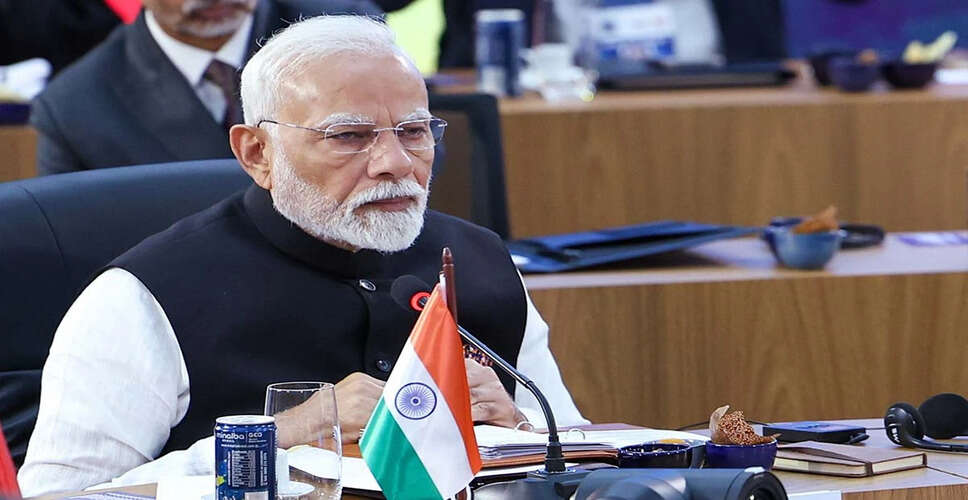
India's Impact at the 2025 BRICS Summit
The 2025 BRICS summit has once again demonstrated the group's commitment to balancing the global economic landscape while actively participating in the reform of multilateral institutions. Prime Minister Narendra Modi's address highlighted India's enduring role in international politics, emphasizing the nation's policy priorities. During this summit, India not only amplified the voice of the Global South but also initiated efforts to strengthen bilateral ties with key partners like China, Russia, and Brazil.
Modi's Leadership and Vision
Prime Minister Modi's leadership was marked by confidence, balance, and effective communication. He articulated India's perspective on three key levels during the summit.
1. Leadership of the Global South – India positioned itself as a voice for developing nations, focusing on their challenges and aspirations.
2. Resolving Differences through Dialogue – India clearly articulated its interests with both China and Russia, adopting a policy of dialogue and balance without confrontation.
3. Sustainable Development and Inclusive Globalization – India shared a long-term vision on topics such as digital public infrastructure, green energy, and food security.
India's Evolving Role in BRICS
Under Modi's leadership, BRICS has transformed into not just an economic platform but a strategic, ideological, and moral forum that serves as an alternative to Western dominance. It is evident that India is no longer just a participant but is taking on the role of a policy-maker and balancer with confidence, dignity, and stability. Modi praised India's digital public infrastructure model and encouraged BRICS nations to learn from this experience, linking the concept of self-reliant India to global self-reliance.
Significance of the 2025 BRICS Summit
The 2025 BRICS summit has established that this platform is now of strategic and practical importance, not merely symbolic. Modi's clear, visionary, and inclusive ideas have showcased India's capacity for global leadership. In the coming years, BRICS will continue to serve as a means for India to establish itself as a powerful, self-reliant, and influential international policy-maker.
Additionally, the BRICS group's strong condemnation of the Pahalgam terrorist attack and its stance against terrorism, emphasizing a zero-tolerance approach, reflects a significant victory for Indian foreign policy. Last week, the Quad meeting in the United States also condemned the Pahalgam attack, demonstrating the global impact of India's strong voice.
Key Outcomes of the BRICS Meeting
The major decisions made during this year's summit included discussions on developing an alternative currency system to balance the dominance of the US dollar. There was also an agreement to include several new developing countries as 'BRICS+', enhancing the group's global influence. Furthermore, there was a focus on increasing the representation of developing nations in institutions like the UN, World Bank, and IMF, along with a commitment to enhance cooperation in sustainable development, green energy, and digital public infrastructure.
India's Strategic Interests in BRICS
From India's perspective, BRICS provides the freedom to shape its foreign policy independent of Western pressures. By sharing the platform with neighboring nations like Russia and China, India safeguards its strategic interests.
Moreover, through BRICS, India leads the Global South, enhancing its strategic and economic influence in regions like Africa and Latin America. The New Development Bank (NDB) under BRICS offers India alternative financial support for infrastructure development, reducing reliance on Western institutions like the IMF and World Bank. Additionally, India's climate commitments and the Digital India initiative gain global recognition and support through collaboration with BRICS nations.
India's Relations with BRICS Members
The interactions between India and China at BRICS occurred amidst ongoing tensions over border disputes. The BRICS platform serves as a strategic 'dialogue buffer' for India and China, where cooperation is possible, but caution is also necessary.
Conversely, the warmth in India-Russia relations was evident. Despite the Ukraine conflict, India has maintained its historic strategic partnership with Russia, reaffirming commitments in oil imports, defense supplies, and nuclear energy cooperation. India has presented its relationship with Russia as a strategic balance without taking sides within the BRICS framework.
Strengthening Ties with Brazil
India and Brazil, both leaders of the Global South, strengthened their collaboration during the BRICS meeting, particularly in agriculture, climate, and digital inclusion. Brazil's abundance of biofuels aligns with India's ambition to lead in green energy, highlighting a shared goal. India emphasized the need to strengthen food supply chains with Brazil, and both nations agreed on the importance of reforming global institutions and enhancing the role of the Global South.
BRICS as a Powerful Collective
BRICS has emerged as a significant group, uniting 11 major emerging economies that represent nearly 49.5% of the global population, about 40% of global GDP, and approximately 26% of global trade. This international platform, comprising Brazil, Russia, India, China, and South Africa, amplifies the voices of developing and emerging economies on the global stage.
India's Global Positioning
Prime Minister Modi's address and his bilateral meetings during the BRICS summit have made it clear that India is no longer just a regional power but a decisive global partner. India is now playing the role of a 'bridge' between the West and the Global South. Furthermore, Modi's five-nation tour has reinforced India's vision of 'Vasudhaiva Kutumbakam' on global platforms. By redefining relations with countries like Brazil, India has demonstrated that it is not only an economic power but also a capable contender for global leadership from a cultural and moral standpoint.