
Bolivia Declares State of Emergency Amid Ongoing Protests
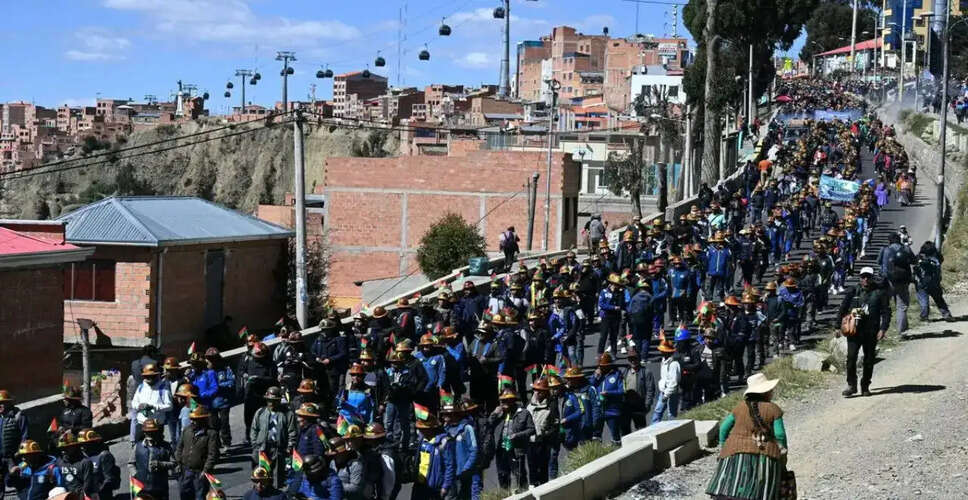

Bolivia Faces Crisis as Protests Escalate
Bolivia has declared a state of emergency following weeks of protests and road blockades that have severely impacted the nation's economy. President Rodrigo Paz made the announcement on Saturday, granting the military the authority to dismantle barricades that have obstructed the delivery of essential goods, including food, fuel, and medical supplies.
The unrest has been escalating for approximately 50 days, with demonstrators demanding Paz's resignation due to his austerity measures. These protests have effectively isolated La Paz, the administrative capital, as reported by various news outlets.
In a televised address, President Paz stated that the protests have evolved beyond typical demonstrations, characterizing the blockades as a coordinated effort to undermine Bolivia's democracy. He emphasized that the state of emergency is intended to restore freedom rather than restrict it, stating, "I have arranged for the implementation of the State of Exception to free the country's roads." He expressed that Bolivians should not be held hostage by blockades that hinder their ability to work, study, and access medical care.
Understanding the State of Emergency
What the State of Emergency Actually Does
According to a government statement, the state of emergency is set to last for 90 days but may be lifted earlier if public safety improves. The decree prohibits blocking streets and highways in a manner that disrupts transportation and the movement of goods. It also authorizes the military to assist police in restoring order and ensuring public safety.
Paz indicated that this measure is necessary to counteract organized groups that are using violence to destabilize the country.
The Human Cost of Protests
Weeks of Protest, A Mounting Human Toll
The unrest stems from Paz's decision to eliminate long-standing fuel subsidies to address the government's budget deficit. This decision, combined with broader economic challenges, has sparked protests primarily led by labor unions, farmers, and Indigenous communities, many of whom feel neglected by the current administration.
Supporters of former President Evo Morales have also joined the protests. The impact of the unrest has been significant, with authorities reporting 365 arrests and 37 injuries due to clashes between protesters and police. Tragically, at least 17 individuals have died, primarily due to a lack of medical care caused by transportation disruptions.
Daily life has been severely affected, with businesses closing, supermarket shelves emptying, and hospitals running out of oxygen. Some citizens have even called for Paz to restore order through force.
A Path Toward Resolution?
A Fragile Path Toward Resolution
There have been some signs of potential de-escalation. Recently, Paz signed an agreement with one of the protesting labor unions, which has called for the lifting of blockades. However, not all protesters agree, with some insisting on Paz's resignation and refusing to engage in negotiations.
Challenges for Bolivia's New Leadership
A Difficult Start for Bolivia's New Leader
Paz, who took office just seven months ago, inherited a severe economic crisis that has plagued the country for years. His administration has faced challenges in addressing chronic fuel shortages and rebuilding the central bank's reserves while maintaining social welfare programs.
Efforts to improve relations with the United States have been made, including a proposed $1.5 billion economic cooperation deal aimed at securing fuel supplies. However, Paz's broader economic initiatives have encountered obstacles in Congress, and Bolivia continues to grapple with a foreign currency shortage, declining natural gas exports, soaring inflation, and ongoing fuel scarcity.