
BJP MP Critiques Karnataka Government's Funding for Minority Areas

Concerns Over Funding Allocation
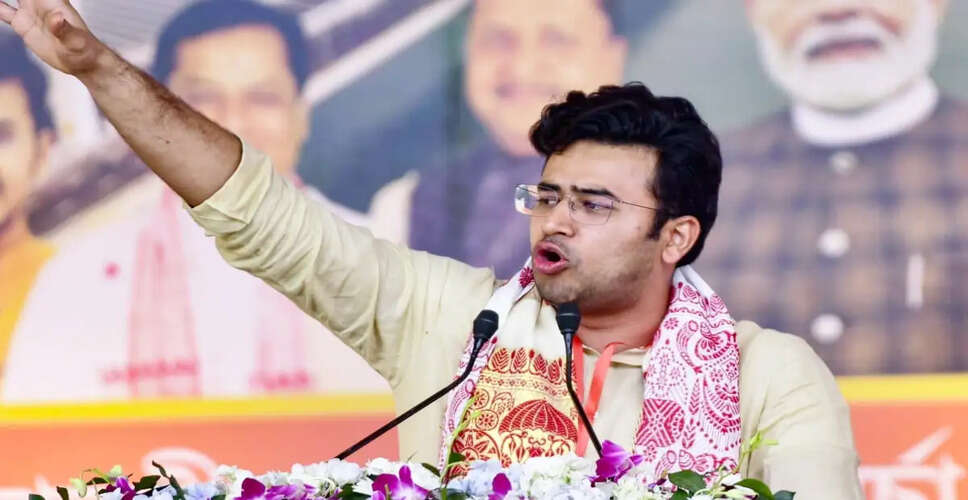
Tejasvi Surya, a BJP Member of Parliament, has sharply criticized the Karnataka government's decision to allocate ₹600 crores for the development of minority settlements, questioning its constitutional validity and broader social implications. Surya argues that public funds should not be distributed based on religious identity and has called for clarification on the legal basis for this initiative. He inquired which constitutional provisions allow the state government to justify spending exclusively on minority areas instead of focusing on all economically disadvantaged regions using objective criteria.
Challenge to Religious-Based Infrastructure Classification
Surya targeted the very concept of classifying infrastructure based on religion. He stated that while individuals may identify with a particular faith, public assets should remain neutral. According to him, assigning religious identities to roads, drains, and neighborhoods is fundamentally flawed. He also questioned how the government could justify declaring specific areas as minority settlements, raising concerns that such classifications might promote social division rather than inclusive development.
Warning Against Institutionalized Segregation
The BJP leader cautioned that this approach could inadvertently encourage ghettoization by formally segregating communities through policy frameworks. Surya referenced constitutional safeguards, citing Articles 14 and 15 of the Indian Constitution, and questioned how a financial package tied to religion could align with the principles of equality and non-discrimination under the law.
Concerns Over Development Equity
He expressed worries about potential exclusion, asking why, if the goal is purely developmental, equally underdeveloped areas populated by Hindus, Dalits, Scheduled Castes/Scheduled Tribes, Other Backward Classes, and other communities would not receive similar benefits. Surya warned that officially separating minority and majority areas could lead to institutionalized isolation. He questioned why religion should be a decisive factor in determining access to developmental benefits, drawing parallels to past divisive frameworks, including the rationale behind the two-nation theory.