
Birsa Munda: The Tribal Revolutionary Who Challenged British Rule
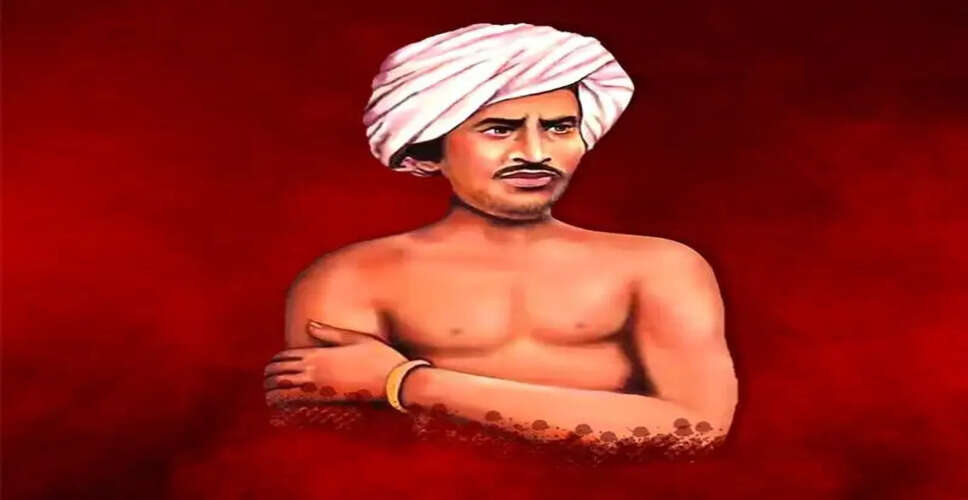

A Glimpse into India's Freedom Struggle
Special Article. The narrative of India's freedom struggle extends beyond major cities, royal palaces, and political movements. It also encompasses the forests, mountains, and tribal regions where fierce resistance against British rule ignited. Among the most revered heroes of this struggle is Birsa Munda, who united the tribal community to defend their water, forests, land, culture, and rights. Despite passing away at just 25, Birsa Munda remains a symbol of courage, self-respect, and resistance.
His life exemplifies how a strong will and dedication to one's community can alter the course of history.
Birth and Early Life
Born on November 15, 1875, in Jharkhand
Birsa Munda was born on November 15, 1875, in the village of Ulihatu in the Khunti district of present-day Jharkhand, into a Munda tribal family. His father was Sugna Munda, and his mother was Karmi Hatu. He grew up facing economic hardships and social challenges.
From a young age, Birsa witnessed the struggles of the tribal community. During that time, the policies of British rule, along with the influence of landlords and moneylenders, were causing the tribal people to lose their traditional lands and rights. Their customary rights over forests were also being curtailed.
These circumstances ignited Birsa's resolve to raise his voice against injustice. He understood that without organization, it would be challenging to protect the rights and culture of the tribal society.
The Fight for Rights
Initiating the Struggle for Water, Forest, and Land Rights
Birsa Munda's fight was not solely about expelling the British from India; it also aimed to liberate the tribal community from exploitation, forced labor, and injustice.
During that era, the traditional land system of the tribals in the Chotanagpur region was deteriorating. The increasing influence of external landlords and moneylenders led tribal families to lose their rights over their own land. Regulations concerning forests also impacted their traditional lifestyles and livelihoods.
Birsa Munda raised awareness against this situation. He urged the tribal community to unite and protect their culture, traditions, and community rights. His ideas instilled a sense of self-respect and awareness of their rights among the people.
The Ulgulan Movement
Challenging British Rule with 'Ulgulan'
The most significant chapter of Birsa Munda's struggle is known as 'Ulgulan,' which translates to 'Great Rebellion' in the Mundari language. This movement, which took place between 1899 and 1900, challenged British rule and the exploitative system in the Chotanagpur region.
Birsa Munda organized the tribals and called for a fight against injustice. His movement quickly spread across various areas, drawing a large number of tribals to join.
Ulgulan was not just a rebellion against British authority; it was also a movement to protect tribal identity, land rights, and traditional systems.
The British administration took severe measures to suppress this movement. Nevertheless, Birsa Munda's ideas and struggles ignited a new consciousness within the tribal community.
Arrest and Untimely Death
Arrested and Died in Ranchi Jail
Birsa Munda's growing influence and the Ulgulan movement alarmed the British administration. To quell the movement, the British launched extensive actions. In February 1900, Birsa Munda was arrested.
After his arrest, he was imprisoned in Ranchi Jail, where he died on June 9, 1900, at the young age of 25.
His premature death deeply affected the tribal community, but his legacy of ideas and struggle did not fade. His name became an inspiration for future generations to fight against injustice.
Historical Impact of Birsa's Struggle
Birsa Munda's Legacy
Birsa Munda's movement prominently highlighted the issue of tribal land rights in the Chotanagpur region. His struggle raised widespread awareness about the problems faced by the tribal community and their traditional rights.
In subsequent years, the Chotanagpur Tenancy Act of 1908 was enacted, which included significant provisions to prevent the transfer of tribal land and protect traditional land rights. This law was established after Birsa Munda's death, but the tribal movements of that time had prominently raised the issue of land rights.
Thus, Birsa Munda's struggle was not confined to his time; it gave a historical identity to the fight for tribal rights.
Remembering 'Dharti Aba'
Honored as 'Dharti Aba'
The tribal community respectfully refers to Birsa Munda as 'Dharti Aba,' meaning 'Father of the Earth.' For them, Birsa is not just a freedom fighter but also a guardian of tribal identity, culture, and rights.
In his honor, the Government of India declared November 15 as Tribal Pride Day in 2021. This day commemorates Birsa Munda's birth anniversary and serves as an opportunity to remember the contributions of tribal freedom fighters and communities across the country.
Various programs are organized nationwide on this day to honor the culture, traditions, and contributions of the tribal community in the freedom struggle.
Birsa Munda's Enduring Legacy
Immortalized in History
Birsa Munda's life is a testament to struggle, courage, and social awareness. He raised his voice for the rights of the tribal community at a time when their lands, forests, and traditional lifestyles were under constant threat.
He taught people to take pride in their identity and to stand united against injustice. Although British rule succeeded in ending his life, it could not extinguish the legacy of his ideas and struggles.
Today, Birsa Munda's name symbolizes tribal identity, social justice, and the fight for freedom. His life continues to inspire future generations to protect their rights and speak out against injustice.
Birsa Munda was a leader who ignited the flame of freedom from the forests, united the tribal community, and immortalized the fight for water, forests, and land in the history of India's freedom struggle.