
Bioluminescent Bloom in Tasmania Linked to Climate Change
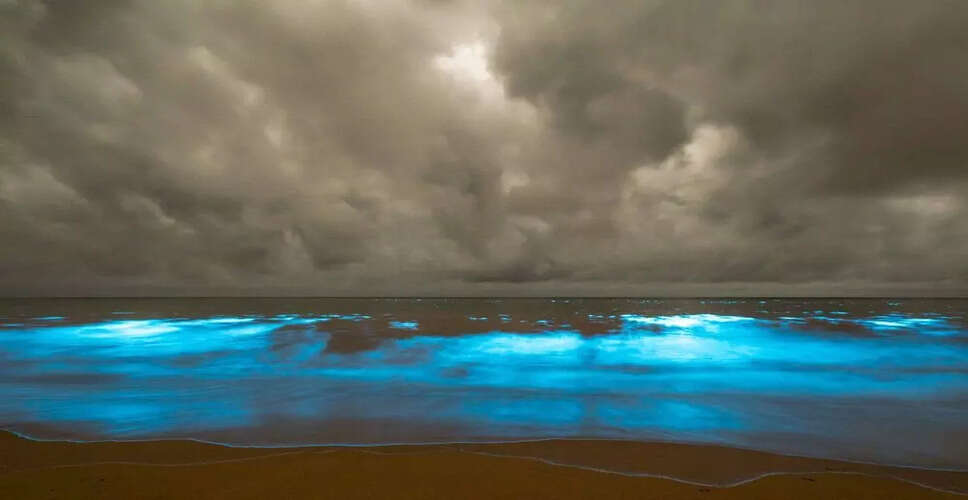
Spectacular Natural Phenomenon in Tasmania
Melbourne, Jan 6: Researchers have identified that a stunning bioluminescent bloom illuminating the southeastern coast of Tasmania is a result of climate-induced ocean warming, rather than pollution from local salmon farms. This phenomenon features vibrant red tides during the day and a mesmerizing blue glow at night.
The glow, which has returned nearly a year after a similar occurrence, is attributed to Noctiluca scintillans, a type of bioluminescent plankton that consumes microscopic algae. When this plankton dies, it rises to the surface, creating red patches that emit light when disturbed, as reported by a local media outlet.
Despite the allure of this natural spectacle, authorities have cautioned against swimming in the affected areas. Nonetheless, the event continues to attract visitors to the southern beaches of Tasmania.
Marine biologist Lisa-ann Gershwin noted that while the bloom is visually stunning, it can release ammonia, potentially causing skin irritation in humans and leading to oxygen depletion in surrounding waters, which can be harmful to marine life.
Gershwin emphasized that this occurrence reflects an ecological imbalance driven by warmer waters from the intensifying East Australian current, a consequence of climate change.
Emeritus Professor Gustaaf Hallegraeff from the University of Tasmania explained that the bloom is fueled by natural nutrients from the ocean depths, not by runoff from land or salmon farms. He stated that Noctiluca does not require nutrients such as ammonia and urea that are typically released by salmon farming operations.
However, such blooms can still impact salmon farming. For instance, a Noctiluca slick near Tasmania's Tasman Peninsula in 2003 prevented salmon from surfacing to feed.
Gershwin cautioned that conditions favorable to Noctiluca could lead to similar harmful blooms, akin to the toxic algal outbreaks caused by the Karenia cristata organism in South Australia.
Despite these concerns, Hallegraeff reassured that Noctiluca scintillans blooms currently pose minimal risks, with no evidence suggesting that their expanded range due to climate change is disrupting other marine organisms.