
Bill Gates Warns: AI Could Lead to Catastrophic Death Toll Amid Regulatory Debate
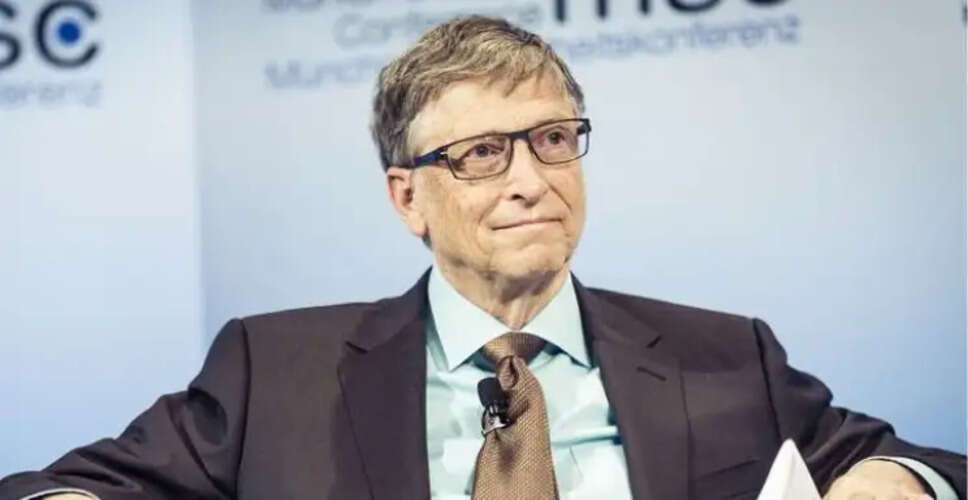

AI's Potential Threats Highlighted by Bill Gates
Washington: Bill Gates, the co-founder of Microsoft, has issued a stark warning regarding the potential dangers of artificial intelligence, suggesting it could lead to events resulting in a billion fatalities. This statement comes amidst a heated discussion in Washington about the necessity of regulating advanced AI technologies versus the risk of hindering the U.S. in its competition with China.
During an appearance on NBC’s 'Meet the Press', Gates emphasized that AI represents a significant leap beyond previous technological advancements, predicting that it could surpass human intelligence in the coming years.
Gates remarked, "This is truly an evolutionary event. We have created an intelligent species that, in many respects, is already smarter than we are, and over the next several years, it will become exponentially more intelligent."
When questioned about the potential for AI to threaten humanity, he stated, "AI is certainly powerful enough to drive events that could lead to a billion deaths."
He further noted, "There has never been a weapon as potent as the combination of malicious individuals utilizing the latest AI technologies."
Gates expressed concern that governments currently lack the necessary expertise to navigate the risks associated with biological and cyber threats posed by AI. He dismissed the idea of relying solely on voluntary measures from companies.
"No one believes self-regulation is sufficient," Gates asserted, advocating for legislation that mandates safety measures and monitoring systems. He acknowledged that while such regulations might incur costs for the industry, they would not significantly impede its progress.
"It is utterly irresponsible not to require every AI to have these safeguards and monitoring capabilities," he added.
His comments coincided with Representative Ro Khanna, a Democrat from California, who called for a verifiable agreement between the U.S. and China to prohibit AI systems that can autonomously enhance themselves.
Khanna mentioned that proposed legislation, supported by Senator Bernie Sanders and Representative Greg Casar, would ban self-improving AI until adequate safeguards are in place.
"This type of AI is no longer being trained by humans; it can train itself, which poses a genuine risk of losing human control," Khanna explained.
He suggested that the U.S. and China should form a group of technologists to negotiate shared restrictions.
"Banning self-recursive self-improving AI should not be a contentious issue," he stated. "I believe the U.S. can spearhead a treaty that is enforceable and verifiable to prohibit such AI and monitor these advanced labs."
U.S. Ambassador to the United Nations, Mike Waltz, mentioned that Washington and Beijing had agreed to initiate a dialogue on superintelligence following a summit between President Donald Trump and Chinese President Xi Jinping.
Waltz indicated that these discussions would involve experts addressing regulations concerning biological weapons and nuclear systems.
"Given that the U.S. and China are significantly ahead of the rest of the world in these advanced models, this should be viewed positively," Waltz remarked.
Conversely, Attorney General Todd Blanche warned against regulations that might undermine U.S. competitiveness. He pointed out that existing laws already empower authorities to take action against individuals and companies misusing AI.
"The solution isn't always to impose more laws," Blanche stated. "Companies can adapt their systems when issues arise. We shouldn't rush to regulate in a way that could jeopardize our leadership in this field."
Meanwhile, India is rapidly adopting AI across various sectors, including public services, healthcare, agriculture, education, and digital commerce. New Delhi has emphasized that AI governance should ensure safety, accountability, and equitable access while fostering innovation in developing nations.