
Bhogali Bihu Celebrations Honor Zubeen Garg's Legacy in Nagaon
A Tribute to a Cultural Icon
Raha, Jan 8: This year's Bhogali Bihu festivities in Nagaon district have taken on a poignant and artistic dimension as a tribute to the beloved cultural figure Zubeen Garg.
Local artists and youth have creatively transformed traditional harvest celebrations into a heartfelt homage, featuring impressive bhelaghars designed like yachts and guitars, along with striking bamboo and straw portraits.
In Amonishali near Raha, a stunning bhelaghar resembling a yacht, adorned with a guitar and hat, has become a focal point of this year's celebrations.
“Zubeen Garg contributed immensely to society. He was a genuine human being. This bhelaghar represents my respect for him, a sentiment shared by many in Assam,” expressed Senapati.
Constructed entirely from bamboo, thatch, straw, and dried betel nut leaves, this impressive structure measures 80 feet in length and rises 40 feet high, capturing the attention of both locals and travelers along NH-37 connecting Guwahati and Nagaon.
The creation, crafted by renowned sculptor Bhagwan Senapati, symbolizes Garg’s deep-rooted connection to music, nature, and humanity.
Artistic representations of the singer’s favorite birds are intricately woven into the design, paying homage to his love for the environment.
With an estimated construction cost of Rs 70,000, this bhelaghar stands out not only for its size but also for the profound emotions it embodies.
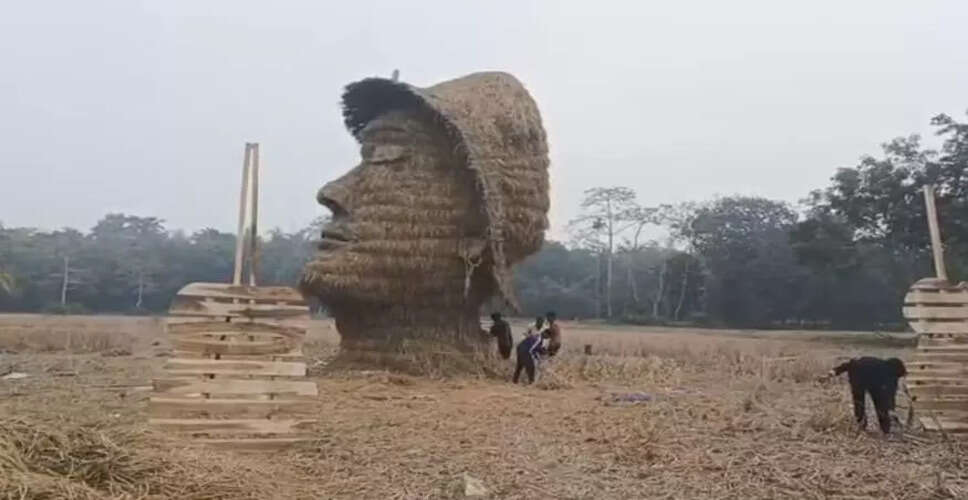
A similar spirit of remembrance is evident in Dighaldari Milonpur village, where 14 youths from six villages, led by Rajiv Jyoti Nath, are collaborating to create a 30-foot-tall bhelaghar featuring Garg’s likeness.
Constructed from bamboo and nora, this structure is nearing completion and marks the first Bhogali Bihu since the singer's passing.
However, the youths have chosen not to burn the bhelaghar during Magh Bihu. Instead, it will be respectfully dismantled, highlighting the sentiment behind this tribute.
Traditionally, bhelaghars serve as temporary shelters for community feasts on Uruka night. This year, however, these artistic creations have evolved beyond mere ritual, standing as memorials that intertwine folklore with shared grief and appreciation.