
Bhawanipur: A Crucial Battleground Ahead of the 2026 Assembly Elections
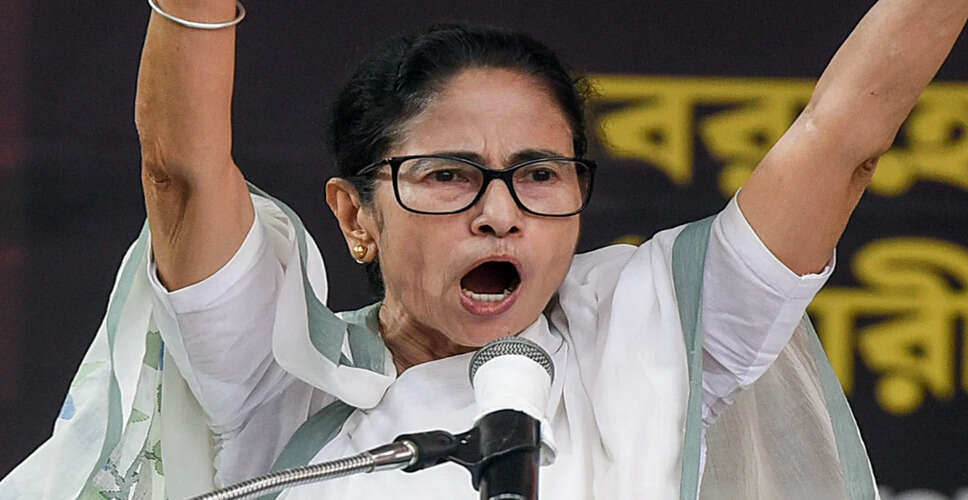
Political Tensions Rise in Bhawanipur
As the 2026 assembly elections approach, a palpable tension is emerging in the historic streets of South Kolkata. Bhawanipur, once regarded as Chief Minister Mamata Banerjee's 'impenetrable fortress,' is transforming into a complex electoral battleground. This contest is no longer merely about securing a seat; it represents a significant referendum on Bengal's evolving political and social identity.
The Spiritual Essence of Bhawanipur
The name 'Bhawanipur' resonates with deep spiritual significance, believed to be linked to Goddess Bhawani and serving as the historic gateway to the sacred Kalighat temple. Over the past century, this area has evolved from a quiet suburban locality into a vibrant, multicultural hub. It showcases a diverse population that defies easy categorization.
A Diverse Community
Intellectual 'Para': Traditional Bengali families engage in political discussions as a local pastime.
Economic Engine: A robust Gujarati and Marwari business community forms the backbone of the local economy.
Diverse Working Class: Interconnected groups of Sikh, Bihari, and Muslim residents contribute to the neighborhood's unique, multi-ethnic identity.
Challenges in Regional Politics
With a non-Bengali population comprising 60 to 70 percent, Bhawanipur presents a complex challenge for regional politics. Since her remarkable debut in 1984, Mamata Banerjee has viewed this constituency as a stronghold. However, the results of 2021 revealed a rare glimpse of vulnerability: while the Trinamool Congress maintained its lead, the BJP posed a formidable challenge, making significant inroads even in wards adjacent to the Chief Minister's residence on Harish Chatterjee Street.
Everyday Realities Clash with Political Promises
In the bustling shade of 'Jadu Babu Bazaar,' the grand promises of political parties collide with the harsh realities of daily life. Sikandar Yadav, a rickshaw puller who has spent three decades navigating the narrow lanes of Bhawanipur, expressed his concerns: "Our earnings have dried up. The government should show us a way forward. After all, what difference does it make who sits on the throne if our lives remain stagnant?"
Local Perspectives on Social Welfare
Nearby, Barkat, a local butcher, remains cautiously optimistic. While he acknowledges the impact of social welfare programs, his support hinges on the future of the city's social fabric.
Evolving Demographics and Political Loyalties
The demographic landscape is no longer uniform. A clear division is emerging:
Aspiring Middle Class: Residents in high-rise buildings express frustration over the lack of industrial development. This 'silent' demographic shift is now seen as more open to alternatives.
Devoted Underprivileged Class: The slogan 'Maa, Mati, Manush' still resonates deeply. Empowered by initiatives like 'Lakshmi Bhandar,' this group remains a strong support base for the party.
The Political Landscape Ahead of 2026
In this unique political arena of Bengal, organizational strength often outweighs public speeches. The Trinamool Congress's booth-level machinery appears more refined and omnipresent, while the BJP, fielding Suvendu Adhikari, hopes to leverage the discontent brewing among the urban elite to shift electoral dynamics. The outcome of the elections is unlikely to be determined solely by a broad 'political wave.' The opposition must remain actively engaged at the grassroots level to counter the Trinamool's robust cadre network. Bhawanipur can no longer be viewed merely as a 'safe seat'; it has become a volatile electoral arena where traditional loyalties clash with modern aspirations. For many residents, the 2026 elections are shaping up to be the most polarized in decades.