
Bengaluru Metro Introduces Toilet Fees Amid Ticket Price Increase
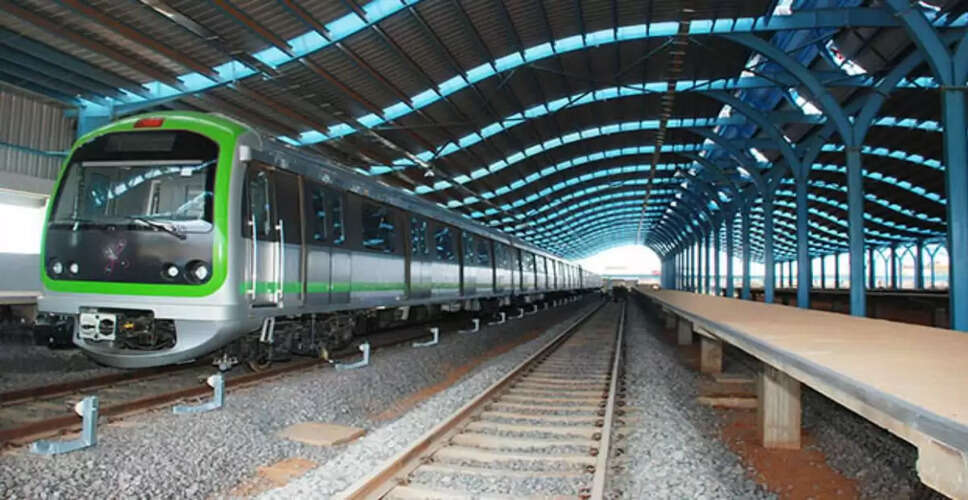
Bengaluru Metro Users Face New Charges
Bengaluru Metro passengers are currently grappling with a significant fare increase of up to 71%. In addition to this, the Bangalore Metro Rail Corporation Limited (BMRCL) has begun implementing fees for public toilet usage at 12 metro stations, leading to dissatisfaction among commuters and staff alike.
Public Toilet Management and Fees
As reported, the public toilets at these metro stations are now under the management of Sulabh International, which will charge users Rs 2 for urinal access and Rs 5 for toilet use.
Public Outcry Over Toilet Fees
This new fee structure impacts key metro stations including National College, Lalbagh, South End Circle, Jayanagar, RV Road, Banashankari, JP Nagar, Yelachenahalli, Sir M Visvesvaraya (Central College), Dr BR Ambedkar (Vidhana Soudha), Cubbon Park, and KSR Railway Station.
A senior official from BMRCL stated that the decision was made to maintain cleanliness in the toilets, which are utilized by a wide range of individuals, not just metro riders.
BMRCL's Justification and Ongoing Criticism
In light of the backlash, BMRCL clarified that toilets located within the paid areas of the metro, accessible only via a Metro card or token, remain free for passengers. Officials emphasized that the new charges for public toilets are unrelated to the fare increase, asserting that the fees are intended to ensure proper maintenance.
Despite this explanation, public discontent persists. Suryanarayana Murthy, Vice-President of the BMRCL Employees’ Union, voiced his concerns, arguing that the management should prioritize fixing existing issues, such as leaks, rather than imposing charges for toilet use.
Recent Fare Hike and Its Impact
On February 8, BMRCL raised ticket prices by up to 71%, with some routes seeing increases close to 100%. Additionally, a 5% surcharge was introduced during peak hours.
However, this fare adjustment has not yielded the desired results. Reports indicate a decline in daily ridership from approximately 860,000 to 630,000, a drop of around 230,000 passengers.
Initially, BMRCL aimed for a fare increase exceeding 100% on certain routes, but after receiving public feedback, they scaled it back to 71%. The significant decrease in passenger numbers suggests that many commuters are unwilling to accept the higher fares.