
Beijing's Transformation: Lessons for India on Air Pollution Control
Beijing's Air Quality Improvement Journey
Once notorious as the 'smog capital' of the world, Beijing is now frequently cited in research papers as a model for air pollution management. Yu Jing, spokesperson for the Chinese embassy in India, shared insights on social media about how China achieved this transformation and what India can learn from it. She emphasized that both China and India face similar challenges regarding air pollution amid rapid urbanization. However, the consistent and rigorous measures taken by China over the past decade have yielded significant results. According to her, the statistics tell a compelling story: in 2013, the annual average of PM 2.5 in Beijing was 101.7 micrograms per cubic meter, which is projected to drop to 30.9 micrograms per cubic meter by 2024.
Key Strategies in Transportation and Industry
Yu Jing highlighted that decisive actions in the transportation and industrial sectors were crucial for this improvement. China adopted ultra-strict emission standards, such as 'China 6NI', equivalent to Euro-6. This led to the phased removal of older, more polluting vehicles from the roads. To control the number of private cars, measures like license plate lotteries, odd-even driving rules, and day-based driving restrictions were implemented. Additionally, China developed one of the world's largest metro and bus networks and rapidly promoted electric mobility. A regional strategy for emission reduction was also established in collaboration with the Beijing-Tianjin-Hebei area.
Industrial Measures and Their Impact
In terms of industrial measures, the actions were even more stringent. Over 3,000 heavy industries were either shut down or relocated outside the city. The removal of Shougang, one of China's largest steel companies, alone contributed to a 20% reduction in airborne particulate matter. The vacated industrial sites were transformed into parks, business centers, and cultural and technological hubs. Notably, the former site of Shougang became the venue for the 2022 Winter Olympics.
Comparative Analysis with India
Experts in India acknowledge that similar measures have been discussed, but the difference lies in the scale and political will. Anumita Roy Chowdhury, Executive Director of the Centre for Science and Environment, noted that China's actions were not limited to Beijing but occurred simultaneously across 26 cities and towns. There, coal was phased out not only in industries but also for domestic use. Sunil Dahiya, founder of Environmental Catalyst, pointed out that while standards like BS-6 exist in India, the political will to enforce them strictly has been lacking. He believes that while completely relocating industries is challenging, a better collaborative pollution control framework and stringent monitoring could improve the situation.
The Story of Intentions and Policy
Ultimately, Beijing's narrative is not just about air quality but about the intentions behind policy-making. It demonstrates that air pollution is not a matter of fate but a result of policy and priorities. The issue is not about technology but about procrastination. In India, pollution becomes a recurring problem every winter, accompanied by emergency measures that are merely temporary fixes. Whether it's odd-even rules, school closures, or temporary construction bans, the situation often returns to normalcy without addressing the root causes. In contrast, Beijing tackled the underlying issues head-on.
Balancing Livelihood and Environment
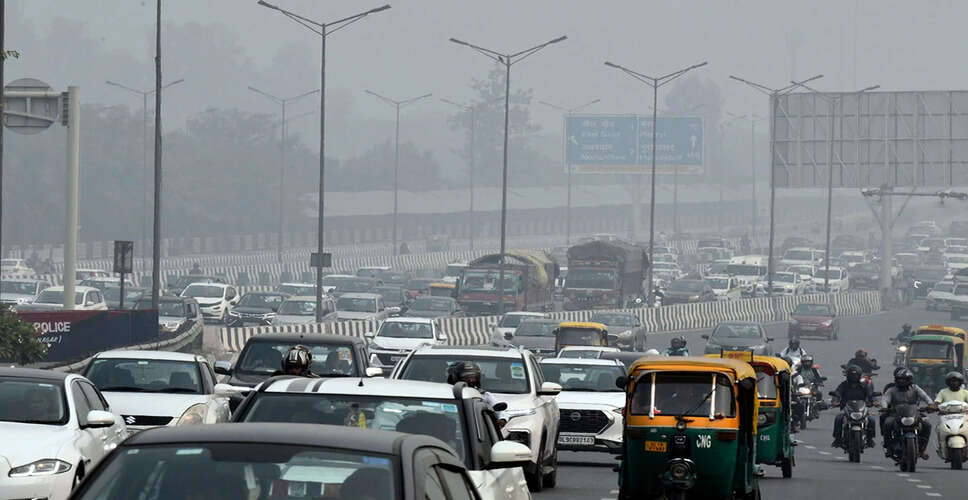
In India, there is often a debate between livelihood and environmental concerns. However, Beijing's experience shows that with proper planning, both can coexist. The city has proven that if the government prioritizes clean air, smog can become a thing of the past. The question now is whether we will continue to accept haze as our fate or strive to make it a mere footnote in history. Currently, the Central Pollution Control Board (CPCB) reports that the air quality in the national capital remains in the 'very poor' category, with an Air Quality Index (AQI) of 358.