
Bangladesh's Election Uncertainty: Will the BNP Rise Amidst Political Turmoil?
Political Landscape in Bangladesh
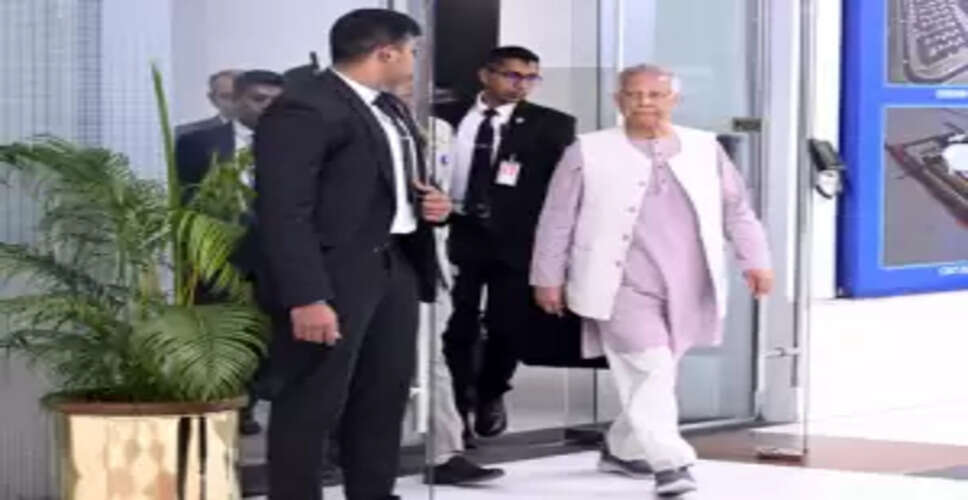
New Delhi: Muhammad Yunus, who is currently overseeing the interim government in Bangladesh, has confirmed that elections are set to take place next year. Amidst ongoing doubts regarding the Awami League's ability to participate, the Bangladesh Nationalist Party (BNP) appears to be in a favorable position.
The BNP has expressed a desire for elections to occur before December 2025; however, the interim government has indicated that necessary reforms will delay this until at least April. A recent meeting between Yunus and Tarique Rahman, the BNP's acting chairman, concluded that elections could potentially be scheduled for February 2026.
Yunus and his allies emphasize that elections cannot proceed without the implementation of crucial reforms. These reforms encompass constitutional amendments, enhancing judicial independence, ensuring press freedom, and revising electoral processes.
India is closely monitoring the situation, reiterating the importance of establishing a democratically elected government in Bangladesh. The pressing question remains whether the country is prepared for elections and if the reforms proposed by Yunus and the National Citizen Party (NCP) can be enacted before February 2026.
The removal of Sheikh Hasina was triggered by a significant student-led uprising, during which security forces employed excessive force against demonstrators. Consequently, there is a strong public demand for accountability regarding those in the security forces who were loyal to Hasina.
A UN fact-finding mission last year revealed that officials from the previous government and security agencies in Bangladesh had perpetrated severe human rights violations against protesters, with findings indicating grave crimes against humanity. Following Hasina's departure from the country on August 5, 2024, numerous cases have been filed against these officials.
While the Awami League claims these cases are politically motivated, public trust in the security forces has significantly eroded. This lack of confidence has contributed to ongoing violence and unrest.
Given the current climate, one can only speculate about the potential for violence during elections, as political parties often resort to aggressive tactics to secure polling stations.
The army's inability to manage the violence effectively has led to a cautious approach, which is detrimental to the overall law and order situation. It is crucial for those responsible for crimes to be held accountable to restore public trust.
The future of the Awami League in the elections remains uncertain. Chief Election Commissioner AMM Nasir Uddin has stated that the party may participate unless barred by the interim government or judiciary.
The possibility of the Awami League being excluded from the elections raises significant concerns. Yunus, along with the BNP, Jamaat-e-Islami, and the NCP, opposes the party. If the Awami League is prohibited from contesting, it could lead to widespread violence, as the party retains substantial support, particularly in rural areas and among minorities and women. Preventing its participation could exacerbate tensions.
To facilitate a peaceful election process, the interim government must ensure that those who have committed crimes are prosecuted. The accountability of the army and security forces is essential for rebuilding public trust. A ban on the Awami League could pave the way for a decisive victory for the BNP.
With such a significant majority and a long absence from power, there are concerns that the BNP could establish an autocratic regime.