
Bangladesh's Awami League Leaders Sentenced for Crimes Against Humanity Amid Political Turmoil
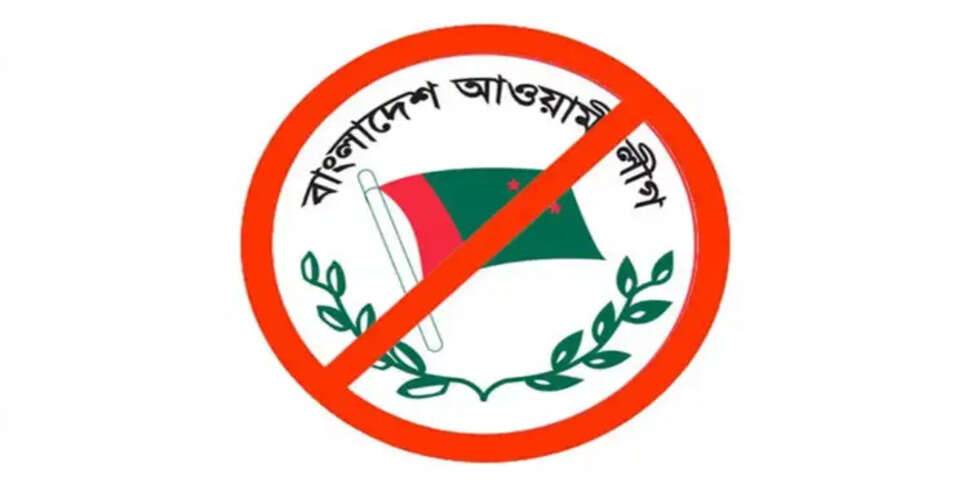

Major Sentencing in Bangladesh's Political Landscape
Dhaka: On Tuesday, Bangladesh's International Crimes Tribunal-2 handed down sentences to seven prominent figures from the banned Awami League, convicting them of crimes against humanity linked to their involvement in the violent protests led by students in 2024, known as the July Uprising.
The verdict was delivered by a three-member panel led by Justice Mohammad Nazrul Islam Chowdhury, with the accused tried in absentia.
Among those sentenced to death were Obaidul Quader, the General Secretary of Awami League and former minister of road transport, along with AFM Bahauddin Nasim, the Joint General Secretary, and Mohammad Ali Arafat, a former state minister for information.
The other four sentenced included Sheikh Fazle Shams Parash, Chairman of Jubo League, Mainul Hossain Khan Nikhil, its General Secretary, and Saddam Hussain and Sheikh Wali Asif Enan, leaders of the Bangladesh Chhatra League.
All seven were represented by state-appointed lawyers during the tribunal's proceedings, which stemmed from the protests that led to the ousting of former Prime Minister Sheikh Hasina on August 5, 2024.
The tribunal had framed seven charges against the accused on January 22, with the trial commencing on February 17. They were accused of orchestrating violence during the protests, which ultimately resulted in the fall of Hasina's government.
Prosecutors alleged that the accused attempted to suppress the protests through incitement, issuing provocative statements, and organizing meetings to plan violent actions. They were also accused of engaging in armed assaults and media suppression, contributing to widespread violence and fatalities across the nation.
Following the protests, Hasina fled to India and has remained there since.
In November 2025, the tribunal sentenced Hasina and her former home minister, Asaduzzaman Khan Kamal, to death in absentia for their roles in the crackdown on the protests.
The tribunal found Hasina guilty under the principle of superior command responsibility, asserting that she permitted the use of lethal force against demonstrators.
The UN human rights office reported that approximately 1,400 individuals lost their lives in the violence associated with the protests from July 15 to August 5, 2024.
The death sentence for Hasina has faced international backlash, with legal experts and human rights organizations expressing concerns regarding the fairness of the trial and procedural integrity. Amnesty International criticized the ruling, stating it failed to provide justice, while Human Rights Watch highlighted issues regarding Hasina's lack of legal representation.
Established in 2010 under Hasina's administration, the International Crimes Tribunal was intended to prosecute crimes against humanity from Bangladesh's 1971 Liberation War.
After the fall of Hasina's government, the interim administration led by Muhammad Yunus amended the tribunal's laws, granting it authority over political parties and their affiliates.
Numerous cases have been initiated against Awami League leaders and affiliates since the government change, with many still pending trial.
In a recent audio-only press conference from New Delhi, Hasina expressed her intention to return to Bangladesh in December, asserting her commitment to restoring the country despite the looming threats of imprisonment or execution.