
Bangladesh Denies Formation of Alliance with China and Pakistan Amidst Trilateral Talks
Bangladesh's Stance on Trilateral Meeting
Dhaka: The interim government of Muhammad Yunus in Bangladesh has dismissed any notions of a new alliance forming between Dhaka, Beijing, and Islamabad. This statement follows a recent trilateral meeting held in Kunming, China, on June 19, which was characterized as non-political.
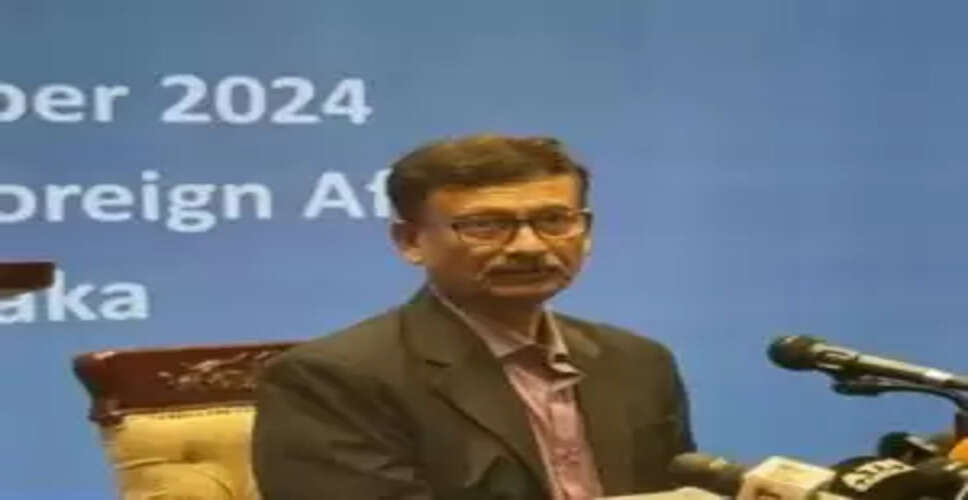
Foreign Affairs Adviser M Touhid Hossain clarified to reporters that the meeting was purely official and did not involve any political agenda, emphasizing that there was no intention to create an alliance.
When questioned about whether the meeting aimed to exclude India, Hossain firmly stated, "It is certainly not targeting a third party, which I can assure you."
Earlier, the foreign ministry had noted that representatives from Bangladesh, China, and Pakistan convened informally during two regional events sponsored by China, namely the China-South Asia Exposition and the China-South Asia Cooperation Forum.
While China and Pakistan released separate statements indicating that the three nations engaged in extensive discussions on trilateral cooperation, Bangladesh's statement did not mention the formation of a joint working group, which was highlighted by the other two countries.
Bangladesh's former acting foreign secretary, Ruhul Alam Siddique, represented the nation at the meeting alongside Chinese Vice Foreign Minister Sun Weidong and Pakistani Additional Foreign Secretary Imran Ahmed Siddiqui, with Pakistan's Foreign Secretary Amna Baloch participating virtually.
In response to inquiries about rejecting the characterizations made by Beijing and Islamabad, Hossain remarked that there was no need for denial but reiterated that the meeting was not significant or structured.
He noted that discussions primarily revolved around connectivity and related topics, stating, "If there is any further progress, you will know that, but there is not much scope to speculate."
Hossain also mentioned that Dhaka is open to participating in similar meetings with other nations, using a hypothetical scenario involving India as an example.
"If India wishes to hold a meeting with Bangladesh and Nepal, Dhaka would be interested in participating the very next day," he said, while acknowledging that relations between Dhaka and New Delhi are currently undergoing a phase of readjustment.
He explained that the depth of the relationship between India and the previous government led by Sheikh Hasina was not mirrored in the current dynamics, especially following Hasina's ousting in August last year amid significant student protests.
After fleeing to India post-coup, Yunus assumed leadership of the interim government. In April, Indian Prime Minister Narendra Modi met Yunus for the first time since Hasina's removal, expressing concerns over minority attacks and urging for a peaceful discourse.