
Balendra Shah's Rastriya Swatantra Party Poised for Major Win in Nepal Elections
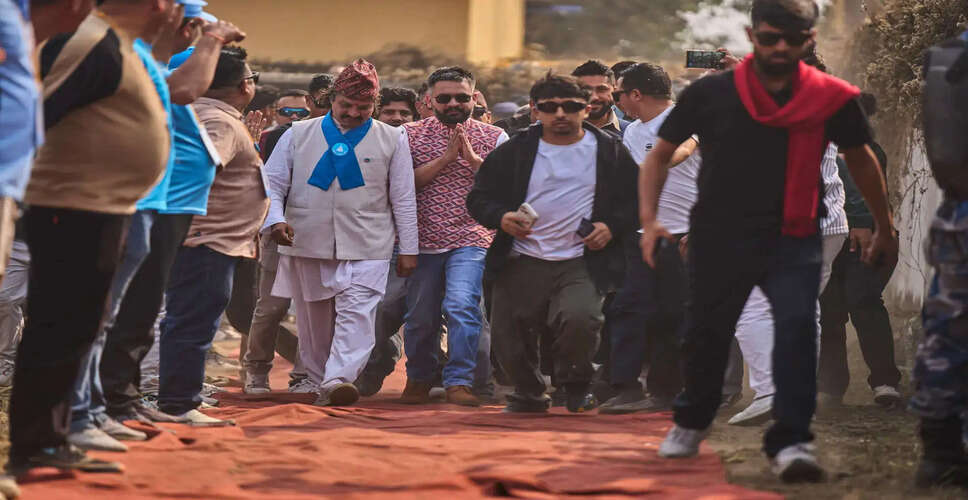
Rastriya Swatantra Party's Promising Victory
Rapper-turned-politician Balendra Shah, also known as Balen Shah, is leading his newly established Rastriya Swatantra Party (RSP) towards a significant victory in Nepal's inaugural general elections following the tumultuous Gen Z protests that led to the fall of the KP Sharma Oli administration. Shah commenced his Prime Ministerial campaign in Janakpur, a departure from the traditional starting point of Kathmandu, stating, "Sarvapratham, Mata Janaki ke pranaam." His use of Maithili, a language prevalent in Bihar and parts of Nepal, surprised many. Clad in his signature black outfit and sunglasses, he has been actively campaigning across the nation, drawing enthusiastic crowds.
Who is Balendra Shah?
Who is Balendra Shah, aka Balen Shah
At just 35 years old, Balen Shah has emerged as a leading candidate for Nepal's top position. He previously served as the mayor of Kathmandu, a role he won in 2022 as an independent candidate, capitalizing on public discontent with established political parties. His tenure was marked by efforts to address urban issues such as illegal street vendors and waste management, although he faced backlash for demolishing properties without proper notice.
Shah, who trained as a structural engineer, gained popularity as a rap artist, using his platform to address social and political issues. His campaign focuses on providing education and healthcare access to the economically disadvantaged.
RSP's Electoral Performance
Balen Shah's RSP Headed Towards Victory in Nepal
Recent data from the Election Commission indicates that the RSP has secured 18 seats and is leading in 99 others. In contrast, the Nepali Congress has won four seats and is ahead in 11, while the CPN-UML has claimed one seat and is leading in 11 constituencies. The Nepali Communist Party has obtained two seats and is leading in 10, whereas the Shram Sanskriti Party is currently leading in only three seats, down from six.
Out of 275 parliamentary members, 165 will be elected through direct voting, while the remaining 110 will be chosen via a proportional representation system.
The Impact of Gen-Z Protests
Nepal's Gen-Z Protest
The Gen Z movement, which intensified through protests on September 8 and 9 last year, successfully ousted Prime Minister KP Sharma Oli, who led a coalition government with the Nepali Congress. Following his removal, President Ramchandra Paudel dissolved the House of Representatives and appointed Sushila Karki as the caretaker Prime Minister. The Gen Z protesters have emphasized issues such as anti-corruption, good governance, and the need for generational change in political leadership.