
Bahrain Oil Firm Declares Force Majeure Amid Iranian Attack
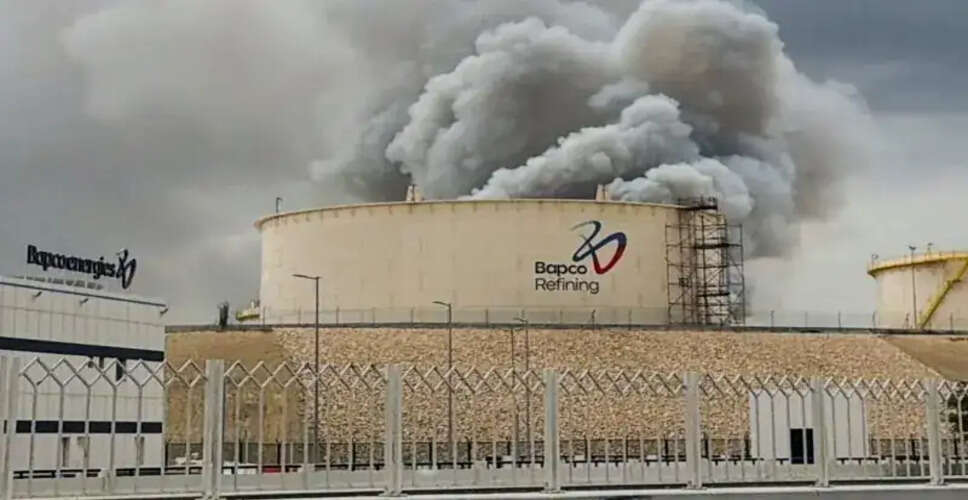
Bahrain's Oil Operations Disrupted
On Monday, Bahrain Petroleum Company (Bapco), the state-owned oil entity, announced a force majeure on its oil shipments following an Iranian drone strike that ignited a significant fire at one of its vital energy facilities. This incident has escalated tensions in the crucial oil corridor of the Gulf. As reported by the Bahrain News Agency, this declaration permits Bapco to temporarily halt its contractual delivery commitments due to unforeseen circumstances. However, the company reassured that fuel supplies for the local market remain stable and will proceed without disruption, backed by emergency contingency measures.
The decision came after an attack on the Al-Ma’ameer oil facility, a key refinery in Bahrain, which resulted in a large fire and damage to parts of the facility. Emergency teams were promptly dispatched to manage the blaze and evaluate the situation.
Footage shows massive fires raging at Bahrain’s only oil refinery after it was struck by an Iranian Shahed-136 one-way-attack (OWA) drones.Following the strike, Bapco Energies, Bahrain’s state-owned oil company, declared force majeure on its deliveries later in the day, citing… pic.twitter.com/cVUKY3AbVy
— Egypt's Intel Observer (@EGYOSINT) March 9, 2026
In a statement released on X, the Bahrain News Agency attributed the fire to 'Iranian aggression targeting a facility in Al-Ma’ameer.' While the attack caused structural damage, it was noted that there were no reported casualties. Firefighting and emergency response teams were quickly mobilized to control the situation.
The Bahrain News Agency's post on X confirmed, 'Outbreak of a fire due to the Iranian aggression targeting a facility in Al Ma’ameer, with material damage reported but no casualties recorded, and the competent authorities have begun firefighting procedures.'
This incident marks a significant escalation in the ongoing regional tensions involving Iran, Israel, and the United States, with energy infrastructure in the Gulf increasingly under threat. Additionally, shipping traffic through the Strait of Hormuz, a crucial waterway connecting the Arabian Gulf to the Gulf of Oman and responsible for transporting about 20% of the world's oil, has significantly slowed as Iran tightens its grip on the route. The near halt of tanker traffic has raised alarms regarding global energy supplies.
The rising instability has already impacted oil markets, with Brent crude, the global oil benchmark, surpassing $114 per barrel on Monday, reflecting a 60% increase compared to the prices observed when Israel and the United States initiated military actions against Iran.