
Australia Strengthens Ties with India in Fight Against Terrorism
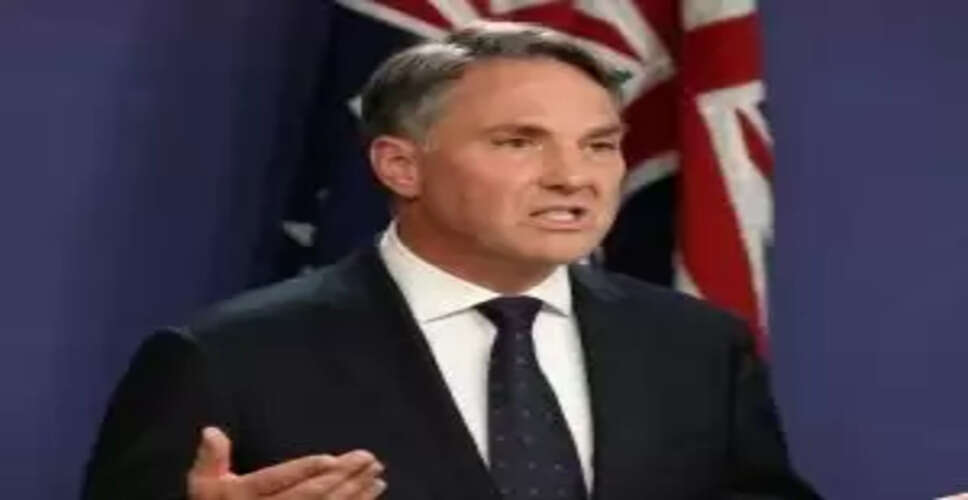
Australia's Commitment to India's Security
New Delhi: Richard Marles, the Deputy Prime Minister of Australia, affirmed on Wednesday that Australia supports India's efforts against terrorism, emphasizing the importance of their relationship for Australia's national interests.
During discussions with India's Defence Minister Rajnath Singh, Marles praised the halt in military actions between India and Pakistan, calling it a demonstration of Indian leadership.
The two nations agreed to enhance their strategic partnership to promote peace and stability in the Indo-Pacific region.
The recent terror attack in Pahalgam and Pakistan's role in cross-border terrorism were key topics during the Singh-Marles dialogue.
Singh expressed gratitude for Australia's strong backing of India's decisive actions following the Pahalgam incident.
Marles stated, "We acknowledge and welcome the cessation of military activity. We see this as an act of Indian leadership," during his opening remarks.
Singh reiterated India's right to defend itself against terrorism supported by Pakistan, noting that India's response was measured and responsible.
Marles highlighted that the relationship with India is of utmost priority for Australia and is crucial to its national interests.
His visit coincided with the fifth anniversary of the India-Australia Comprehensive Strategic Partnership, which has strengthened bilateral defense relations.
Both leaders agreed to enhance and diversify defense-industrial collaboration.
In a separate meeting with Prime Minister Narendra Modi, Marles reaffirmed Australia's commitment to supporting India in its fight against cross-border terrorism.
Modi congratulated Marles on the recent electoral success of the Australian Labour Party.
The two leaders discussed ways to further solidify the comprehensive strategic partnership, which marked its five-year milestone.
They emphasized the need for cooperation in defense industrial collaboration, resilient supply chains, critical minerals, and emerging technologies.
The shared vision for a stable and prosperous Indo-Pacific continues to guide their collaboration, as noted in a statement from the Prime Minister's Office.
Modi also invited Prime Minister Anthony Albanese to an annual summit scheduled to take place in India later this year.
Singh and Marles condemned the Pahalgam terror attack and extended condolences to the victims' families, according to the defense ministry.
Singh highlighted the significant progress made in bilateral defense ties and expressed hope for continued growth.
He mentioned the extreme challenges India faces at its western border, likely referring to terrorism supported by Pakistan.
Both sides committed to working together for a free and open Indian Ocean and Pacific region.
They called for the strengthening of bilateral defense cooperation to achieve shared goals of peace and stability in the Indo-Pacific.
The signing of the Australia-India joint research project was welcomed, and both parties agreed to intensify defense industry collaboration.
They discussed advancing defense science and technology projects during their upcoming meeting in Australia for the third India-Australia 2+2 ministerial meeting.
The Singh-Marles meeting provided an opportunity to assess the status of bilateral engagements amid evolving regional and global dynamics.
Topics included defense strategic cooperation, security, industry collaboration, cyber technologies, counter-terrorism, hydrography, and maritime security.
Following the meeting, Singh expressed gratitude for Australia's unwavering support for India's response to the Pahalgam attack.
He noted that they reviewed the entire spectrum of the India-Australia defense partnership during their productive discussions.
Singh praised Marles' commitment and leadership in enhancing bilateral defense cooperation as a vital component of their strategic partnership.
The two sides exchanged views on regional and global security matters of mutual concern.
On the fifth anniversary of the India-Australia Comprehensive Strategic Partnership, both parties expressed satisfaction and acknowledged that defense cooperation has become a key pillar of their collaboration.
Marles is the first senior Australian official to visit India since Prime Minister Albanese's Labour Party secured a second term in the recent parliamentary elections.
During his meeting with Singh, Marles conveyed Prime Minister Albanese's solidarity with India regarding the Pahalgam attack.
He emphasized Australia's commitment to combating terrorism alongside India and welcomed the cessation of hostilities between India and Pakistan.
Marles stated, "We welcome the stoppage in military activities," and assured that Australia will continue to collaborate with India to address terrorism in all its forms.
"We believe our strategic alignment with India has never been stronger. This is a time to unite with allies, and we certainly view India as a key partner," he remarked.
"We aim to be ambitious regarding the joint declaration on defense and security, as well as the maritime security and cooperation roadmap," Marles added.
"We see these as critical steps to further elevate our defense relationship."