
Aung San Suu Kyi Celebrates 80th Birthday Amidst Ongoing Struggles
Aung San Suu Kyi, the iconic leader of Myanmar, celebrates her 80th birthday today while enduring imprisonment under military rule. Known for her fight for democracy, she was awarded the Nobel Peace Prize in 1991. Despite her significant contributions, her recent years have been marred by controversies, including allegations of corruption and the Rohingya crisis. This article delves into her early life, education, political career, and the challenges she continues to face, providing a comprehensive overview of her remarkable yet tumultuous journey.
| Jun 19, 2025, 11:42 IST
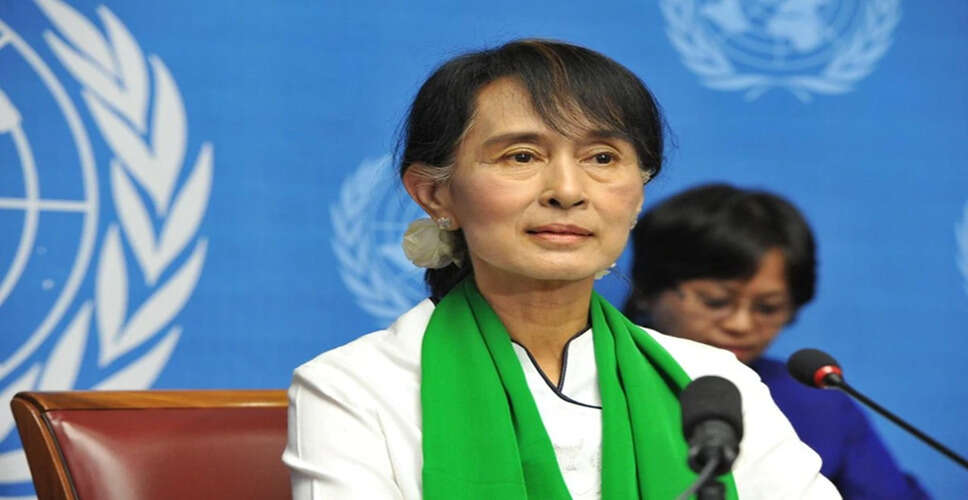
Aung San Suu Kyi's 80th Birthday
Today, June 19, marks the 80th birthday of Aung San Suu Kyi, who has been fighting for the rights of the people in Myanmar for many years. Currently imprisoned, she is held in Insein Prison under the military regime, facing serious corruption allegations. Despite these challenges, Aung San Suu Kyi was awarded the Nobel Peace Prize 32 years ago for her relentless struggle. However, her relationship with Western nations advocating for democracy has soured. Let’s explore some intriguing aspects of her life on this special occasion...
Early Life and Family Background
Aung San Suu Kyi was born on June 19, 1945, in Rangoon. Her father, Aung San, was instrumental in establishing the modern Burmese army and collaborated with the Japanese during World War II against the British. Tragically, he was assassinated in 1947 while negotiating Burma's independence from British rule. Aung San Suu Kyi was raised by her mother, who later became a prominent political figure in Burma.
Education and Early Career
In 1960, while her mother served as Burma's ambassador to India and Nepal, Aung San Suu Kyi completed her undergraduate studies in political science at Lady Shri Ram College in New Delhi in 1964. She furthered her education at Oxford, studying politics, philosophy, and economics, and worked for three years at the United Nations in New York.
Nobel Peace Prize Recognition
In 1991, Aung San Suu Kyi was awarded the Nobel Peace Prize for her efforts in the struggle for democracy, although she was under house arrest at the time. During the latter half of the first decade of the century, she received global support for her release. In 2008, she became the first person to receive the Congressional Gold Medal while still imprisoned, amidst significant pressure on Myanmar from neighboring countries.
Release and Political Career
Following the general elections in Myanmar in 2010, Aung San Suu Kyi was released from house arrest just six days later. In 2012, she collected her Nobel Prize during a European tour and won a seat in the Myanmar elections, becoming the leader of the opposition party. Her party achieved victory in the 2015 general elections, although constitutional restrictions prevented her from becoming president. Nevertheless, her party formed the government, and she took on the role of Foreign Minister.
Controversies and Challenges
Upon entering government, Aung San Suu Kyi established a commission to address the atrocities against the Rohingya Muslim minority, a region notorious for its human rights violations. However, her administration struggled to resolve conflicts in Shan and Kachin states. By 2017, the actions of government forces against the Rohingya were classified as genocide, a claim Aung San Suu Kyi rejected.
Recent Developments
Following widespread global protests against her, several awards conferred upon her were rescinded. In 2020, her party made a comeback, but in 2021, the military declared the elections fraudulent, leading to her detention and subsequent corruption charges. As of December 22, Aung San Suu Kyi has been sentenced to a total of 32 years in various cases.