
Assam's Upcoming Budget Session: Key Insights and Expectations

Preparations for the Assam Legislative Assembly Budget Session
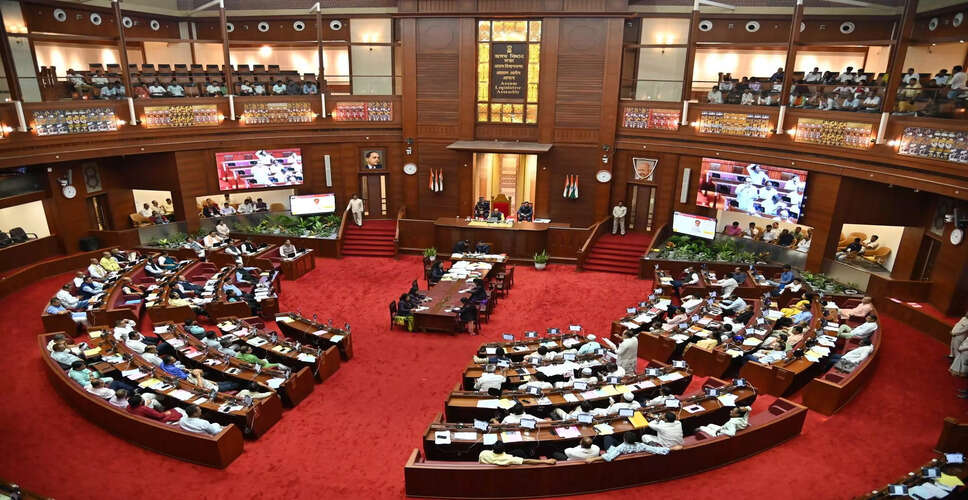
File image from a session of Assam Legislative Assembly (Photo: @mpa_india/X)
Guwahati, July 1: The Budget Session of the Assam Legislative Assembly is set to commence on July 6, with Chief Minister Himanta Biswa Sarma laying the groundwork over the past week, hinting at the direction of the State Budget for 2026-27, which will be unveiled by Finance Minister Jayanta Mallabaruah on July 10.
One of the most significant indications has come directly from Sarma. During a review meeting at Lok Sewa Bhawan on June 26, which focused on budget proposals from eight departments, he expressed a desire for the upcoming budget to shift from a focus on outlays to one that emphasizes outcomes.
Priorities outlined in that meeting included the strategic allocation of funds to enhance budget effectiveness, infrastructure development, provision of clean drinking water, rural welfare initiatives, and timely implementation of citizen-focused schemes.
The following day, on June 27, Sarma assessed proposals for FY 2026-27 from an expanded group of 18 departments, again at Lok Sewa Bhawan, with discussions revolving around welfare delivery, efficient resource management, inter-departmental collaboration, and development priorities.
Sarma has also highlighted the importance of women and youth in the budget, while emphasizing the need for fiscal discipline.
“Women and youth will be a significant focus in the upcoming #AssamBudget as we strive to maintain fiscal discipline…,” Sarma mentioned in a social media update on July 27.
He noted that feedback gathered during the consultation process is being thoughtfully considered, indicating that the final budget may reflect insights from departmental reviews rather than being solely crafted by the Finance Department.
Overview of the Session Calendar
This will mark the inaugural Budget Session of Sarma's newly elected government, running from July 6 to July 31.
The Annual Financial Statement, or Budget Estimates, is scheduled to be presented on July 10, following the House's discussion on the Supplementary Demand for Grants for 2026-27 and the passage of the Assam Appropriation Bill, 2026, on July 9.
A three-day general discussion on the Budget will take place from July 13 to 15, after which the Assembly will recess from July 16 to 21 to allow Departmentally Related Standing Committees to examine the proposals in detail.
When the House reconvenes on July 22, these committees will present their reports, and voting on the demands for grants will occur through July 23, alongside a second reading of the Appropriation Bill.
Legislative Agenda Beyond the Budget
Additionally, two significant Bills approved by the Assam Cabinet on June 23 are expected to be introduced during this session.
The Assam Regulation of Re-classification and Re-classification-cum-Transfer of Lands (Amendment) Bill, 2026 aims to simplify the process of converting agricultural land for specific non-agricultural uses through an automatic self-registration system.
The government asserts that this reform will facilitate investments in MSMEs, hydrocarbons, and solar energy.
Amendments to the Assam Private Universities Act, 2007, will also be presented, which propose to reduce the minimum land requirement for new private universities from 60 to 35 bighas in rural areas and from 30 to 21 bighas in urban locations like Guwahati and Dibrugarh, along with a rationalization of endowment fund norms.
Overall, the pattern of departmental reviews, Sarma's emphasis on an outcome-focused budget, and the specific focus on women, youth, and rural welfare suggest that this budget is being framed not merely as a routine fiscal exercise but as a significant governance marker for the government's second term.
It remains to be seen whether the Budget, once presented on July 10, will align with the ambitious signals conveyed prior to the session.