
Assam's Indigenous Communities to Apply for Arms Licences Starting August
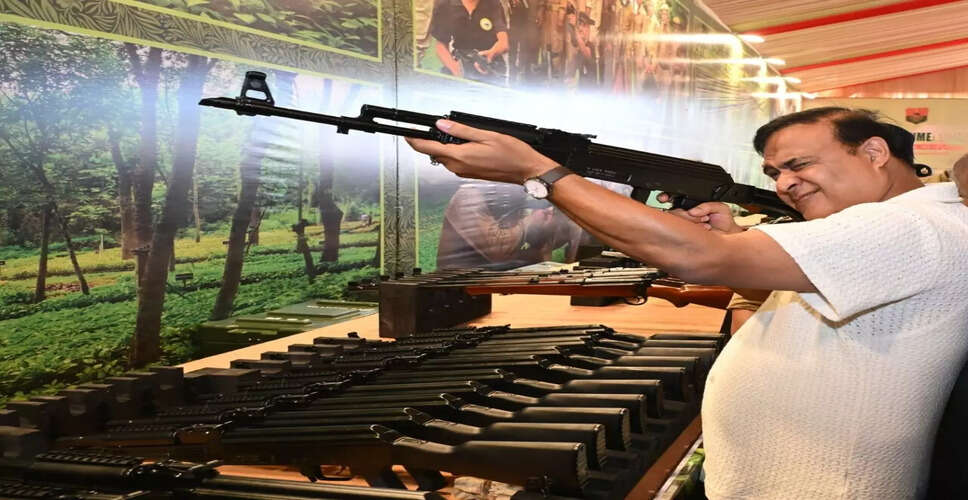
New Arms Licence Scheme for Indigenous Residents
Guwahati, July 22: Starting from the first week of August, indigenous individuals living in remote and vulnerable regions of Assam will have the opportunity to apply for arms licences, as announced by Chief Minister Himanta Biswa Sarma on Monday.
During a press briefing at the Garukhuti Agricultural Project in Sipajhar, Sarma revealed that a dedicated online portal would be introduced to streamline the application process under a special government initiative.
“The portal will be accessible for applications by early August, allowing indigenous individuals to submit their requests online,” he stated, emphasizing that the scheme is exclusively for individuals rather than organizations.
Local MLA Padma Hazarika is expected to recommend approximately 10 to 12 farmers from Garukhuti for the initial round of applications.
This initiative to grant arms licences to indigenous residents was initially disclosed in May during a state cabinet meeting.
Sarma explained that the scheme aims to empower indigenous communities in districts that are grappling with security issues stemming from cross-border infiltration.
“To clarify, the government is not providing firearms to anyone. We are merely issuing licences to those who fulfill the eligibility requirements,” Sarma had previously stated.
The districts earmarked for this initiative include Dhubri, Nagaon, Morigaon, Barpeta, South Salmara, and Goalpara. The government assured that applications would undergo rigorous verification processes.
In a critique of the Congress party during the press conference, Sarma remarked that there was “no controversy” regarding the Gorukhuti Agricultural Project, “except for the fact that we removed a significant vote bank of Congress from this region.”
“Over the past four years, we have transformed Sipajhar into a constituency that represents indigenous interests. The issue of infiltration in Assam has persisted for a century—one individual cannot resolve it in just four years. However, we have certainly restored some confidence to a community that was on the verge of despair,” he concluded.