
Assam's Election Preparations: A Behind-the-Scenes Look
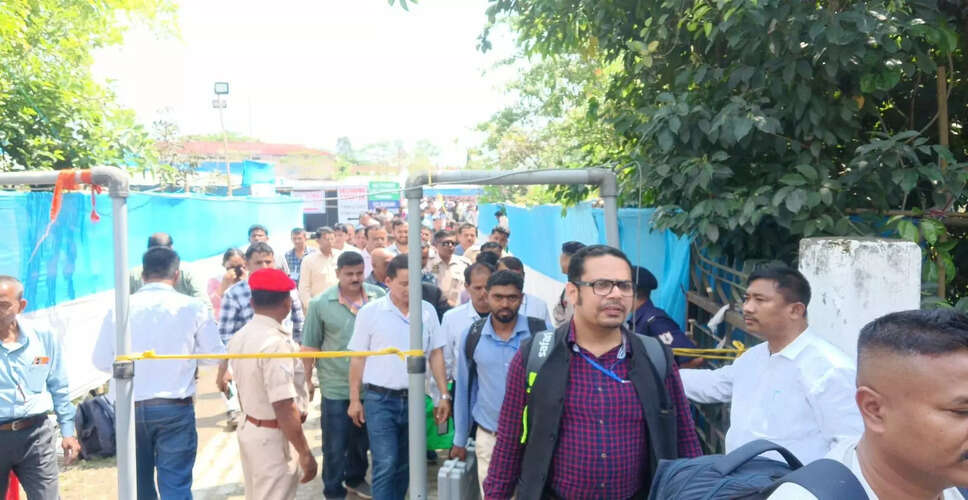

Intensive Preparations for Polling Day
Over 1.5 lakh polling personnel are dedicated to ensuring a smooth electoral process.
Guwahati, Apr 8: As Assam gears up for its pivotal democratic event on April 9, extensive preparations are already in motion. Across various regions, from urban centers to remote areas, a significant yet discreet operation is taking place, largely unnoticed by the electorate.
Before voters engage with the Electronic Voting Machines (EVMs), a complex network of planning and coordination has been set in motion.
Central to this initiative is a meticulously designed system aimed at minimizing errors. For weeks, officials have been assessing routes, inspecting polling locations, and finalizing logistical details, while personnel navigate long distances, balancing their regular duties with election-related tasks.
More than 1.5 lakh polling personnel (1,51,132 individuals) are involved in ensuring the electoral process runs without a hitch.
They are backed by 41,320 Ballot Units, 43,975 Control Units, and 43,997 VVPAT machines, with additional reserves prepared for any emergencies. However, the true narrative lies in the often-overlooked dedication behind these numbers.
Embracing Technology in Elections
This election cycle has seen a significant technological advancement, with webcasting implemented at all 31,490 polling stations, covering 31,486 main booths and four auxiliary ones, facilitating real-time monitoring across various levels of the electoral framework.
Security measures have also been heightened, with Central Armed Police Forces, including CRPF personnel, stationed at polling sites, and micro observers monitoring sensitive areas.
This year's elections in Assam are not solely a national affair; they have garnered international attention as well. Under the International Election Visitors Programme (IEVP), a group of 12 representatives from Election Management Bodies across seven countries, along with three officials from the Election Commission of India, arrived in Guwahati for a two-day observation visit.
The delegation aims to observe the polling arrangements and gain insights into Assam’s electoral processes, highlighting the increasing global interest in India's democratic practices.
Encouraging Voter Participation
As preparations intensify, the emphasis remains on encouraging citizen involvement. Chief Electoral Officer Anurag Goel has reiterated that voting is both a privilege and a duty, urging citizens to participate actively in the electoral process.
In a press briefing on Tuesday, he called on voters not only to cast their votes but also to motivate others, emphasizing that cooperation with polling officials and adherence to guidelines would facilitate a smooth and peaceful election.
"Every vote embodies 'a strength that builds the nation and sustains the democratic spirit,'" he stated.
The Challenges Faced by Election Officials
For many officials, the groundwork for the elections begins weeks ahead. Bedanta Das, a section officer, has been involved in tasks such as mapping routes, verifying road conditions, and ensuring essential facilities at polling stations.
“We must create a roadmap well in advance and physically check the conditions on the ground,” he explained, noting that responsibilities span multiple polling stations within his area.
Juggling these duties with regular office work presents challenges. Das mentioned that field visits often disrupt routine tasks, which must be managed later. Logistical hurdles also arise, particularly as polling day approaches.
“Initially, we are not provided with transport, and we have to arrange our own travel without reimbursement,” he pointed out, shedding light on a lesser-known aspect of election duty.
For others, the challenge lies in managing coordination on a large scale. Pranab Kalita, who worked in personnel management, described how the process begins months in advance with data collection and duty assignments. However, the execution can be inconsistent.
“There are instances when officials are summoned to the administration office, but arrangements are delayed. People often wait for hours, from morning until evening, just to receive their assignments,” he noted, highlighting the pressure points within the system.
Enhancing Voter Experience
For voters, these behind-the-scenes efforts translate into a more organized and accessible experience. Polling stations are equipped with essential facilities, including drinking water, waiting areas, toilets, and wheelchairs for individuals with disabilities.
Seating arrangements near queues and provisions for the safekeeping of mobile phones have also been established to streamline the voting process.
As Assam prepares for the elections, Goel’s message connects both the electoral system and the citizens. He has urged individuals to approach polling day with a sense of purpose, reminding them that participating in elections is not merely about making a choice but also about fulfilling a responsibility.
In his words, every voter is a partner in nation-building, and each vote contributes to the broader democratic mandate.
As voters head to the polling booths tomorrow, they will witness the visible manifestation of democracy. However, what remains unseen is the extensive effort, long hours, and quiet coordination that have made this moment possible.