
Assam's Dialysis Patients Face Uncertainty as Free Treatment Ends
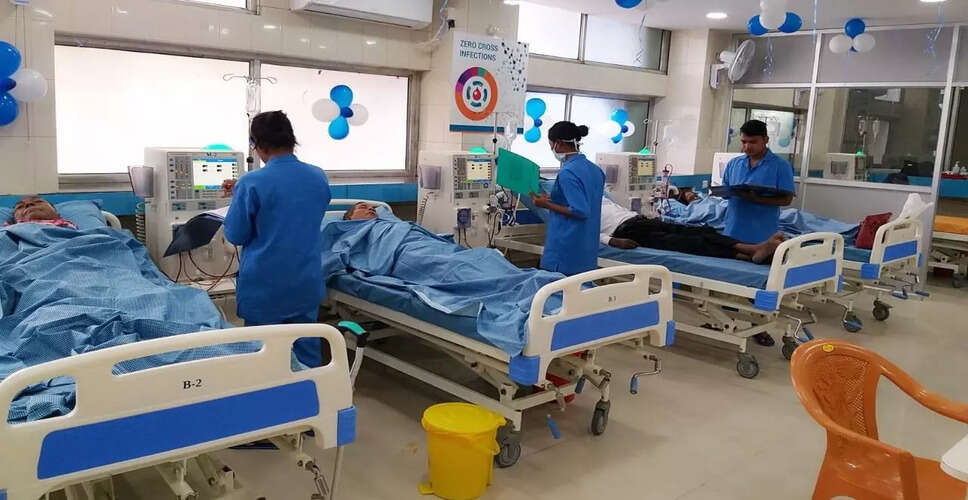

Dialysis: A Lifeline for Many
File image of a dialysis programme center in one of the Assam's civil hospital (Photo: @himantabiswa/X)
For countless kidney patients in Assam, regular dialysis is essential for survival, not something that can be postponed.
This urgency makes the state government's recent decision to halt free dialysis services under Ayushman Bharat in private hospitals, starting July 1, particularly concerning.
While officials claim that enhanced public facilities will accommodate the increased demand, many patients and their families remain skeptical.
Protests erupted in Dibrugarh on June 22, where dialysis patients and their supporters rallied for the restoration of benefits and uninterrupted treatment.
They fear that the withdrawal of coverage will plunge already struggling families deeper into financial hardship and disrupt critical care.
The Financial Burden of Dialysis
Jalalur Rahman from Chirang understands this fear all too well. His brother has been undergoing dialysis for over six months.
Initially, they sought treatment at a private hospital, which quickly drained their finances.
"We spent on five dialysis sessions, and with additional costs for medications and tests, we nearly lost everything," Rahman recounted.
Coming from a modest background, their savings were exhausted, and they had to borrow money. "When a family member requires dialysis, financial resources deplete rapidly because treatment is continuous," he explained.
Now, his brother receives free dialysis at Kajalgaon and is scheduled for a fistula procedure at Gauhati Medical College and Hospital. However, Rahman worries for those still reliant on private facilities under Ayushman Bharat.
"Missing even one session can lead to serious health issues. The body reacts negatively, and stopping treatment is not an option," he stated, noting that available slots in government hospitals are scarce, often requiring patients to wait.
"If someone loses access to private dialysis and cannot find a quick alternative, it could be life-threatening,” he added.
Concerns from Medical Professionals
A nephrologist from a private hospital in Guwahati echoed these concerns.
Speaking anonymously, the doctor noted that many dialysis patients at private facilities are beneficiaries of Ayushman Bharat, which covers the procedure and associated costs, although some medications must still be purchased.
Hospitals are already advising patients about the upcoming changes, but many prefer to remain where they are, despite the loss of coverage.
"Patients are familiar with their doctors and the care they receive. Those who can afford it plan to stay, while others may have to transition to government facilities,” the nephrologist explained.
The doctor cautioned that financial difficulties could lead to serious health repercussions and expressed concern about the public healthcare system's capacity.
"Government hospitals are already under pressure due to high patient volumes. While doctors strive to provide quality care, an influx of patients can overwhelm the system," the doctor added.
State's Justification for the Change
State health officials present a different narrative, framing the decision as a strategic move to enhance government-operated dialysis services rather than a reduction in care.
A senior official from the National Health Mission (NHM), who wished to remain anonymous, highlighted that the state already conducts more dialysis sessions through its own programs than through Ayushman Bharat in private hospitals.
"Last year, over 300,000 dialysis sessions were performed under state-supported initiatives, compared to approximately 77,000 under PMJAY," the official stated.
They assured that infrastructure is being developed to meet the demand, with five new government-funded dialysis centers ready to open and five more expected within the next few months, aiming to establish a center in each legislative assembly constituency.
Free dialysis will continue through the Pradhan Mantri National Dialysis Programme, which is jointly funded by the state and NHM.
"Our goal is to streamline services within government facilities while enhancing infrastructure," the official noted, adding that two additional dialysis centers are planned for Kamrup Metro.
However, officials acknowledge that the transition may be challenging. "We anticipate an initial surge in demand," the official said, "but we expect the situation to stabilize within two to three months as new centers become operational."
Access Issues for Rural Patients
This shift has reignited discussions about access to treatment. Many dialysis patients already travel long distances multiple times a week for their sessions, and while doctors recommend the nearest facility, availability often dictates their choices.
For those in rural areas, proximity can mean the difference between manageable treatment and a grueling routine.
Public sentiment has largely opposed the government's decision. One commenter on social media described dialysis as a recurring, essential expense that cannot be postponed. "It was not just financial support; it was a lifeline that sustained them week after week,” they wrote.
The commenter urged the government to reconsider, advocating for expanded access to life-saving treatments rather than restrictions.
The government is optimistic that public infrastructure can replicate the services provided by private hospitals. However, patients are primarily concerned with one question: will they receive treatment when they arrive?
As of July 1, the success of this transition will be measured by whether any patient is turned away, as that will be the true indicator of success.