
Assam's Chief Minister Unveils Vision for a ₹10 Lakh Crore Economy by 2028

Ambitious Economic Goals Set by Assam's Leadership
Guwahati, May 26: With a significant electoral mandate and a comprehensive legislative agenda, Assam's Chief Minister Himanta Biswa Sarma presented an ambitious economic strategy on Tuesday, aiming to establish a ₹10 lakh crore economy by 2028.
During the discussion on the Motion of Thanks to the Governor's Address in the Assembly, Sarma characterized the NDA's substantial victory not merely as a political success but as a public affirmation of his administration's development approach.
Sarma detailed the NDA's electoral performance, noting that the alliance secured 102 seats, with BJP candidates alone garnering over 81.92 lakh votes, while AGP and BPF contributed 14 lakh and 8 lakh votes respectively, pushing the NDA's total beyond the 1 crore mark.
He remarked, "The NDA achieved victories in all Scheduled Tribe reserved seats and those dominated by tea tribes, winning all but one seat reserved for Scheduled Castes."
On the economic front, Sarma referenced NITI Aayog statistics indicating that approximately 35% of Assam's populace has escaped poverty, leading to the rise of a new aspirational middle class.
He stated that the state's Below Poverty Line (BPL) population is currently around 17%, expressing optimism that this could be reduced to between 2% and 3% within the next five years.
"Assam is witnessing the rise of a robust middle class, which fosters educated youth and stronger professionals," he noted, emphasizing that poverty alleviation is crucial for the state's broader economic aspirations.
One of the most notable statistics Sarma shared was regarding maternal healthcare improvements. When he took office as Health Minister in 2016, the maternal mortality rate was 480, but sustained efforts have reduced it to 84, as per the Sample Registration System report, marking a significant public health achievement and a reflection of improved governance.
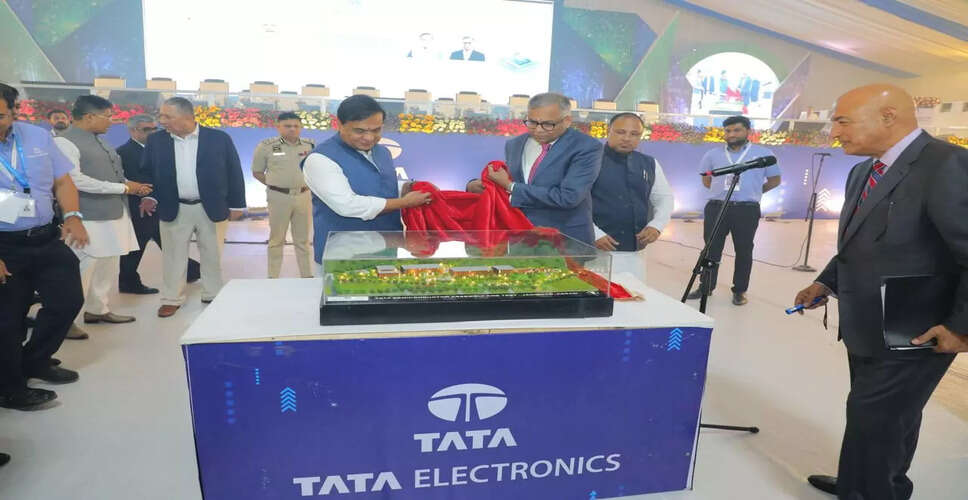
Sarma elaborated on Assam's industrial goals, spotlighting three key projects that are redefining the state's economic landscape: a semiconductor facility in Jagiroad, a fertilizer production unit in Namrup, and a proposed thermal power project in Chapar.
In terms of infrastructure, Sarma laid out an extensive plan to enhance educational access, noting that Assam currently has 14 medical colleges, with 11 more planned. He reiterated the government's vision of establishing one medical college, one engineering college, and one university in each district.
While acknowledging the challenges ahead, Sarma emphasized the necessity for stronger measures against illegal immigration and the safeguarding of indigenous land rights, especially in char areas, where displacement and encroachment are ongoing issues.
He called for a focused approach to the development and security of regions such as Karbi Anglong, Bodoland, Barak Valley, and Dima Hasao, indicating that the government's growth strategy must extend to Assam's more remote and historically neglected areas.