
Assam's 2026-27 Budget: A Vision for Job Creation Beyond Government Roles

Assam's Ambitious Employment Strategy
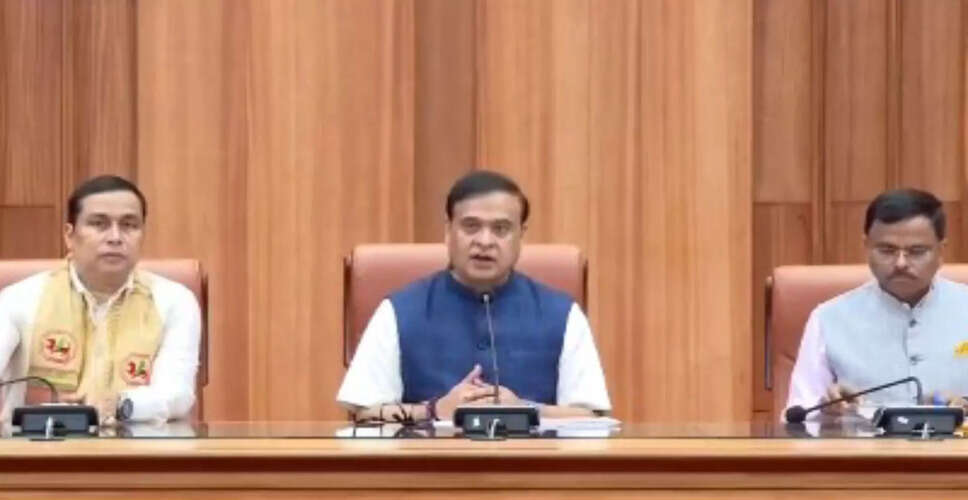
Assam Finance Minister Jayanta Mallabaruah, Chief Minister Himanta Biswa Sarma, and Chief Secretary Ravi Kota during a post-budget press briefing (Photo - @himantabiswa / X)
Guwahati, July 10: The Assam Budget for 2026-27 emphasizes the government's goal of generating 200,000 public sector jobs over the next five years, while also outlining a broader vision for employment. This plan aims to equip the youth of Assam for careers in diverse fields such as manufacturing, technology, creative sectors, green energy, and global services.
Rather than solely concentrating on filling government positions, the Budget sets the stage for developing a workforce tailored to industries that were not prominent in Assam's economy a decade ago, including semiconductor manufacturing, advanced technology, animation, gaming, industrial production, exports, and international services.
While the previous five years focused on delivering government jobs, the upcoming five years are geared towards preparing the youth for a dynamic job market.
Target of 200,000 Jobs
Finance Minister Jayanta Mallabaruah announced to the Assembly that the government had exceeded its previous commitment of 100,000 jobs by providing over 164,000 appointments through the State Level Recruitment Commissions (SLRC) in the last five years.
He stated, "The Government had promised one lakh jobs, and we have exceeded that commitment by providing over 1.64 lakh appointments in the last five years. Building on this achievement, we are now entering the next phase of employment generation. Over the next five years, the Government will target 2 lakh employment opportunities across the broader public sector ecosystem of the State."
The proposed jobs will encompass various sectors, including government departments, universities, medical colleges, statutory bodies, societies, Sixth Schedule Councils, and state-owned enterprises.
A task force led by the Chief Secretary has been established to devise a roadmap for achieving this target. In addition to filling existing vacancies, the government plans to create new positions in healthcare, education, police, forest, revenue, and other essential departments.
Chief Minister Himanta Biswa Sarma emphasized that the government would not restrict itself to merely filling current vacancies.
"We will create jobs in different sectors and empower the youth," Sarma stated during a post-budget press conference held at the Central Hall of Assam Legislative Assembly.
Expanding Beyond Government Employment
A detailed examination of the Budget reveals that the government's employment strategy extends well beyond public sector recruitment.
Several significant announcements aim to foster job creation in the private sector in the coming years. The Budget allocates Rs 496 crore for the Skill, Employment, and Entrepreneurship Department, underscoring the government's commitment to developing industry-ready skills rather than relying solely on traditional recruitment methods.
One of the primary focuses is the semiconductor ecosystem.
With assistance from the Japan International Cooperation Agency (JICA), Assam intends to cultivate the skills and infrastructure necessary for semiconductor manufacturing, which requires engineers, technicians, quality-control experts, logistics professionals, and supply-chain specialists.
This marks a notable shift towards high-value manufacturing for a state that has historically relied on agriculture, tea, oil, and government jobs.
The Budget also prioritizes industrial growth by proposing the establishment of industrial parks in every district. Alongside the Aerotropolis project under the Asom Nagar Unnayan Abhiyan, these initiatives are expected to attract manufacturing units, logistics companies, and export-oriented industries, generating jobs across various skill levels.
Preparing Youth for Global Opportunities
The Budget also emphasizes preparing Assam's youth for employment opportunities beyond the state and even internationally.
Proposals for foreign language training and spoken English programs for nurses aim to enhance overseas employability, particularly in countries like Japan, Germany, the United Kingdom, and the Gulf region.
The government's employment strategy further includes support for sectors such as AVGC-XR (Animation, Visual Effects, Gaming, Comics, and Extended Reality), green energy, and entrepreneurship, which are anticipated to generate thousands of private-sector jobs in the coming years.
Referring to the government's comprehensive approach, Sarma remarked, "We will not only fill empty vacancies but also create new ones. Healthcare, education, and several other sectors will see new opportunities, and we believe we will achieve the target of 2 lakh employment."
Focus on Green Energy and Entrepreneurship
Green energy is another key area of focus. As renewable energy projects expand across India, the demand for skilled workers in solar power, battery storage, and clean-energy technologies is expected to rise. The Budget aims to prepare Assam's workforce for these emerging opportunities.
The government has also placed a greater emphasis on entrepreneurship. By investing in skill development, industrial infrastructure, and sector-specific initiatives, it hopes to encourage more young people to become entrepreneurs or find employment in the private sector rather than relying solely on government jobs.
A New Employment Paradigm
For decades, government recruitment has shaped the career aspirations of many young people in Assam. The Budget maintains this commitment, with the promise of 200,000 public sector jobs remaining a significant focus.
However, its broader message indicates that the future job market will be markedly different.
The government's policy direction suggests it anticipates Assam's youth will work not only in government offices but also in semiconductor plants, industrial parks, renewable energy projects, gaming studios, logistics hubs, manufacturing units, and even healthcare institutions abroad.
Whether these plans translate into substantial employment will depend on effective implementation, private investment, and industrial growth. Nonetheless, the Budget clearly indicates that Assam is striving to prepare its workforce for the jobs of tomorrow, rather than just the government jobs of today.