
Assam Leads Northeast in HIV Cases: A Public Health Concern
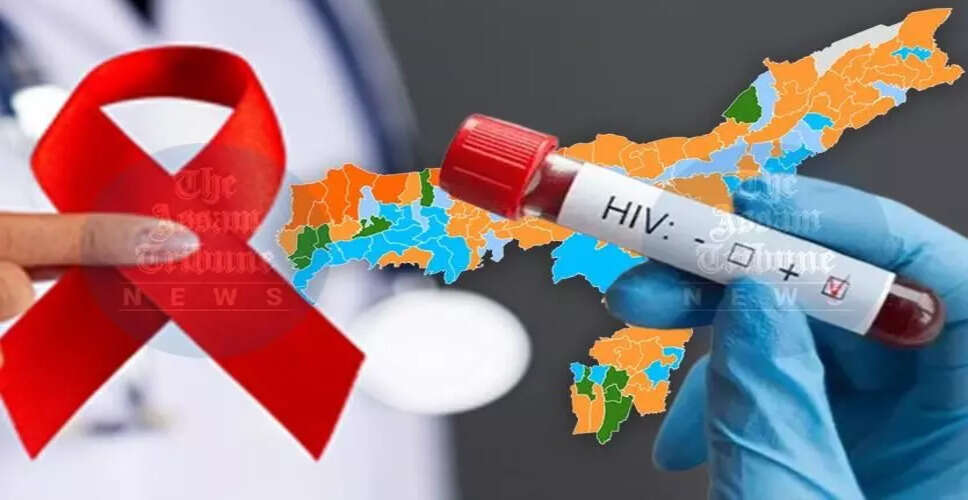

HIV Prevalence in Assam
NEW DELHI, June 22: Assam has been identified as the state with the highest number of individuals living with HIV (PLHIV) in the Northeast, highlighting a significant public health issue despite ongoing awareness initiatives and targeted government interventions.
As per the Union Health Ministry’s report for 2025-26, there are currently 33,145 individuals in Assam living with HIV, which translates to an estimated prevalence rate of 0.13 percent within the state.
This statistic positions Assam at the forefront of all Northeastern states in terms of absolute numbers. Mizoram follows with 26,321 PLHIV, while Nagaland and Manipur report 23,731 and 23,463 cases, respectively. Other states like Tripura, Meghalaya, Arunachal Pradesh, and Sikkim have reported 10,769, 9,244, 2,630, and 533 cases, respectively.
The data underscores the distinct demographic and epidemiological characteristics of the region. Assam's leading position is significant not only due to its large population but also because it acts as a crucial transport and commercial hub linking the Northeast with the rest of India. Factors such as high mobility, migration, urbanization, and varying healthcare access complicate efforts for HIV prevention and treatment.
A notable portion of HIV infections in Assam involves women. Out of 13,809 women diagnosed as HIV-positive across the Northeast, Assam accounts for 6,809, nearly half of the total. The report also highlights that 146 pregnant women in Assam have tested positive for HIV, the highest in the region, followed by Nagaland with 127 and Meghalaya with 124. These statistics emphasize the need for enhanced prevention programs for parent-to-child transmission and timely antenatal screening and treatment.
The National AIDS Control Organisation (NACO) is addressing these challenges through a comprehensive communication strategy that integrates prevention, treatment, care, and support. Information, Education, and Communication (IEC) initiatives are woven into the HIV program to boost awareness, promote testing, and mitigate stigma.
Understanding the unique vulnerabilities of the Northeast, NACO has rolled out state-specific multimedia campaigns tailored to local contexts. One of its prominent youth outreach programs, the ‘Red Fest’, utilizes music and cultural performances to raise awareness about HIV/AIDS while dispelling myths and misconceptions among the youth.
An intensified IEC campaign has also been launched to educate communities about HIV transmission, prevention, and associated risks. Concurrently, advocacy and capacity-building initiatives have involved community leaders, policymakers, and other stakeholders to fight discrimination and foster acceptance of individuals living with HIV. Several Northeastern states have organized State Council on AIDS meetings to enhance inter-departmental coordination and strengthen local ownership of HIV control strategies.
Health experts assert that ongoing success hinges on expanding early diagnosis, ensuring consistent access to antiretroviral therapy, reducing stigma, and reaching at-risk populations with targeted interventions.
“The latest statistics from Assam indicate that despite ongoing efforts, the state continues to bear the largest HIV burden in the region, making it essential to invest further in prevention, surveillance, and treatment services to reverse this trend,” stated renowned health expert Suneela Garg.