
Assam Government Reduces Compensation Disbursement Time for Human-Elephant Conflict Victims

New Compensation Timeline Announced
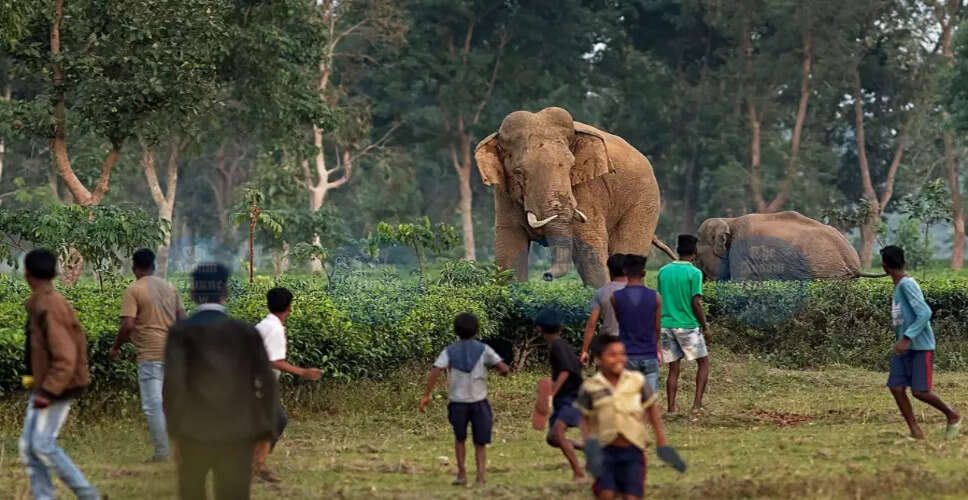
Elephant attacks continue to claim lives across Assam (Photo: AT)
Guwahati, Nov 4: The Assam administration has revised the timeline for providing compensation to the families of individuals who lose their lives due to human-elephant conflicts, reducing it from 72 hours to 48 hours.
Forest Minister Jayanta Mallabaruah made this announcement during a meeting at Aranya Bhawan on Tuesday, where he also revealed plans to significantly increase the number of Gajmitra teams dedicated to mitigating human-elephant conflicts throughout the state.
“Families will receive Rs 6 lakh for the loss of life within two days, while compensation for crop damage will be set at Rs 8,000 per bigha, to be disbursed within three to four days,” the minister stated.
District Commissioners (DCs) have been empowered to manage the compensation process following joint evaluations by the district administration and the Forest Department.
“To facilitate quicker payments, dedicated central accounts have been established in all 35 districts,” Mallabaruah added.
Earlier in July, during a session of the Assam Legislative Assembly, the government had pledged that families of those killed in elephant attacks would receive Rs 6 lakh as ex gratia within 72 hours of the incident. This new decision accelerates that timeline by a full day.
After a review meeting with senior officials from the Forest Department and Divisional Forest Officers (DFOs), the minister announced plans to expand the current 81 Gajmitra teams to at least 150, with potential for further growth based on local needs.
“Each team will consist of 10 local residents and three personnel from the Forest Department, creating a dedicated 13-member unit focused solely on conflict prevention, especially during the vulnerable months from November to March,” he explained.
The three departmental staff assigned to each team will not have any other duties and will collaborate closely with local volunteers. “Each Gajmitra will receive Rs 1,000 monthly,” he noted.
The newly expanded teams are anticipated to begin operations around November 7 or 8, following essential training and awareness initiatives, according to the minister.
Range-level committees, led by Range Officers and including five Forest Department personnel and 10 local residents, will evaluate needs and coordinate preventive strategies.
These strategies will encompass solar fencing, lighting, watchtowers, and other necessary equipment.
The initiative comes in response to a rising number of fatalities from human-elephant conflicts in Assam, with reports indicating that 53 individuals have died in such incidents this year. Districts like Tamulpur, Goalpara, and Kamrup (Rural) have been particularly hard-hit.
Recently, a herd of over 40 elephants has been reported to be invading villages in the greater Rani area, searching for food, damaging crops, and raising safety alarms among residents.
The ongoing incursions have increased anxiety among farming communities as the harvest season approaches, while damaged solar street lights and perceived inaction from officials have further exacerbated local concerns.