
Assam Government Monitors Potential Flood Threat from Bhutan's Glacial Lake Outburst

Monitoring Flood Risks from Bhutan
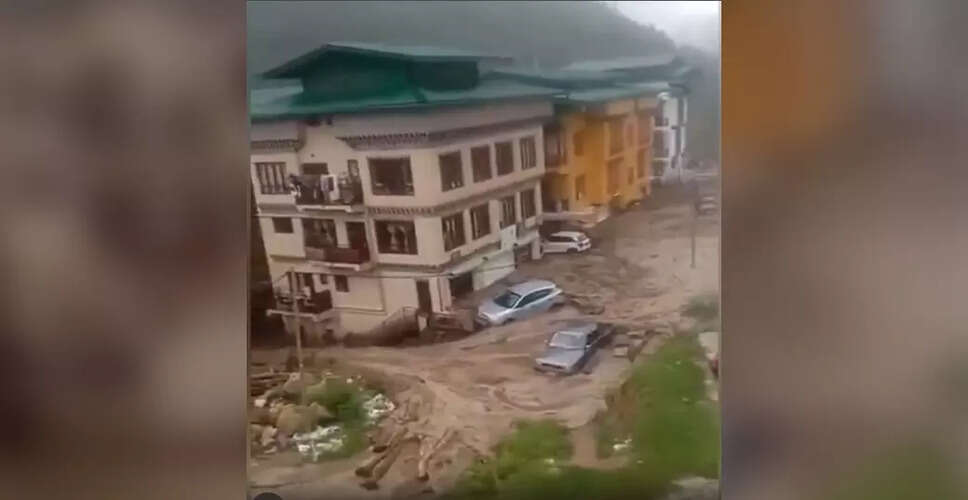
The floodwaters have crossed Srigang in Kabesa Gewog, around eight kilometres from Punakha Dzong, in Bhutan
Guwahati, Oct 30: Chief Minister Himanta Biswa Sarma announced on Friday that the Assam government is actively monitoring the potential effects of a glacial lake outburst flood (GLOF) at Shintaphu Lake in Bhutan. The authorities are particularly focused on vulnerable revenue circles in the Dhubri and Kokrajhar districts.
The Chief Minister emphasized that state teams are maintaining constant communication with the National Disaster Response Force (NDRF) and other relevant agencies, ensuring readiness to respond if necessary.
“We are vigilantly observing the potential impact of the glacial lake outburst in Bhutan across all at-risk revenue circles in Dhubri and Kokrajhar. Our teams are in regular contact with the NDRF and other agencies, prepared to act if required. Residents are urged to remain alert, follow official updates, and cooperate with local authorities,” Sarma stated in a social media update.
On October 29, the Ministry of Jal Shakti issued an advisory indicating that the Indian Embassy in Bhutan had reported a GLOF at Shintaphu Lake, part of the Punatsangchhu river system.
“Due to the reported flash flood in the upper reaches of the Punatsangchu (Sankosh river in India), water levels are expected to rise suddenly in India, particularly in the districts of Alipurdwar in West Bengal and Dhubri in Assam. The floodwaters are anticipated to reach the border within 6-8 hours, likely affecting Alipurduar in West Bengal and Dubri in Assam,” the advisory noted.
Local authorities along the Sankosh river in both states have been advised to stay vigilant, closely monitor the situation, and implement necessary precautionary measures.
On Thursday evening, rising floodwaters caused damage to infrastructure at Gasa Tshachu, a well-known natural hot spring near the Mo Chhu River in Bhutan’s Gasa district. Fortunately, no casualties were reported as the area had been evacuated prior to the flood.
Shintaphu Lake, situated at the source of the Mo Chhu River, is one of Bhutan’s 17 glacial lakes identified as potentially hazardous. Gasa Tshachu had previously experienced significant damage during a flash flood on August 26, 2021, when the swollen Mo Chhu altered its course towards the hot spring.
Reports indicate that floodwaters have reached Srigang in Kabesa Gewog, approximately eight kilometers from Punakha Dzong, raising concerns about their potential impact on downstream regions.
Bhutan has notified the administrations of Assam and West Bengal regarding the possible threat. In addition to Dhubri in Assam, vulnerable areas in West Bengal include the Darjeeling hills, Alipurduar, and Jalpaiguri.
In West Bengal, the Cooch Behar administration has also alerted residents living along the banks of the Sankosh river, which originates in northern Bhutan and is part of the river system that ultimately flows into the Brahmaputra.
Meanwhile, Alipurduar Police District Superintendent Amit Kumar Shaw urged residents to remain calm, assuring them that the administration and various agencies are on high alert and coordinating their response.
The flash flood has also caused damage to infrastructure in Bhutan. An official press release stated that a solar-powered irrigation system installed earlier this year in the Dochhukha-Dzomlingthang-Ritsa Chiwog area under Guma Gewog in Punakha has been partially damaged due to the surge in the Mo Chhu River.
A local leader reported that the irrigation system has ceased functioning, although officials are still assessing the full extent of the damage. Flood debris has also obstructed a section of the Punakha-Gasa Highway in the Dzomlingthang area, potentially disrupting road connectivity.