
Assam Government Leverages Technology to Combat Forest Encroachment

Innovative Measures Against Encroachment
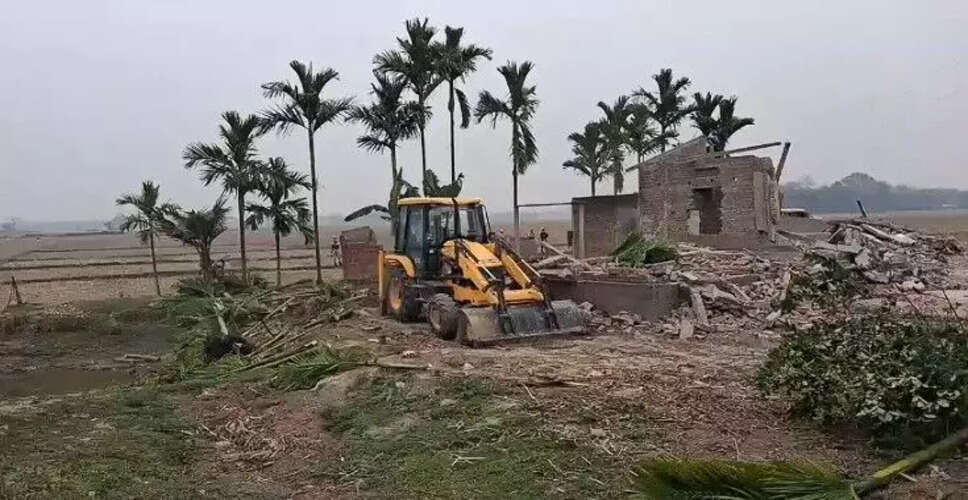
File image of eviction drive carried out in Biswanath district (Photo: Meta)
Guwahati, Oct 23: On Friday, the Assam government emphasized the importance of utilizing satellite technology and artificial intelligence (AI) to identify and prevent early signs of encroachment in protected forest areas.
During the inauguration of a new online transfer portal by the Forest Department, Chief Minister Himanta Biswa Sarma highlighted that timely detection is essential to stop encroachments from escalating into significant settlements that complicate eviction processes and raise various human and administrative issues.
“By employing satellites to observe our forests, we can detect the initial encroachment in a reserved area or the first tree that is cut down. Addressing the first encroachment can help avoid public outcry,” he stated.
The Chief Minister noted that authorities often delay action at the initial stages, allowing encroachments to proliferate before launching eviction operations, which then draw public attention and raise concerns about the residents on the land.
“Once 200 to 300 families settle, numerous questions arise regarding their identity, whether they are Assamese or potentially suspicious nationals. Ultimately, the forest suffers, leading to a decline in forest cover,” he remarked.
“Why can’t we focus on the very first house constructed on reserved forest land?” he questioned, emphasizing the necessity for an AI-driven alert system that utilizes regular satellite imagery and data on forest cover and land usage.
Under the suggested framework, satellite images that reveal the initial signs of deforestation or encroachment would be sent to divisional forest officers (DFOs), prompting them to investigate the affected regions and prevent further occupation.
“If we fail to implement an AI alert system with regular data and images regarding forest land use, receiving a warning about the first house built in a reserved forest would allow us to educate the individual and send them back without resorting to force,” Sarma explained.
Sarma asserted that merely deploying forest guards and officials would not suffice to deter encroachment without the aid of technology.
He insisted that accountability within the Forest Department must accompany technological monitoring, ensuring that officials respond promptly when the first signs of encroachment or tree cutting are observed, rather than waiting for settlements to grow.
Establishing a Database and Phased Eviction
Sarma mentioned that the government has successfully decreased the rate of forest encroachment in Assam in recent years, citing the recovery of nearly 600 hectares of forest land from encroachment just a week prior.
He advocated for the creation of a comprehensive database detailing encroachments across the state's reserved forests, urging the government to assess the extent of occupation and implement phased strategies to reclaim forest land in line with Supreme Court directives.
“Apart from Assamese community members eligible for land patta under forest land regulations, we should compile a database on the number of encroachments throughout Assam's reserved forest areas. Following Supreme Court guidelines, we must also work systematically to free forest land from encroachment, including both reserved and proposed reserved forests,” he stated.
Sarma emphasized the need for the government to prioritize two critical actions.
“Identifying the first instance of tree cutting and detecting the first house built within a reserved forest,” he said.
He highlighted that addressing encroachments at these early stages is vital for safeguarding forest cover and minimizing the necessity for extensive eviction operations.