
Assam Government Initiates Legal Sand and Stone Mining to Curb Illegal Activities

District Survey Reports for Mining
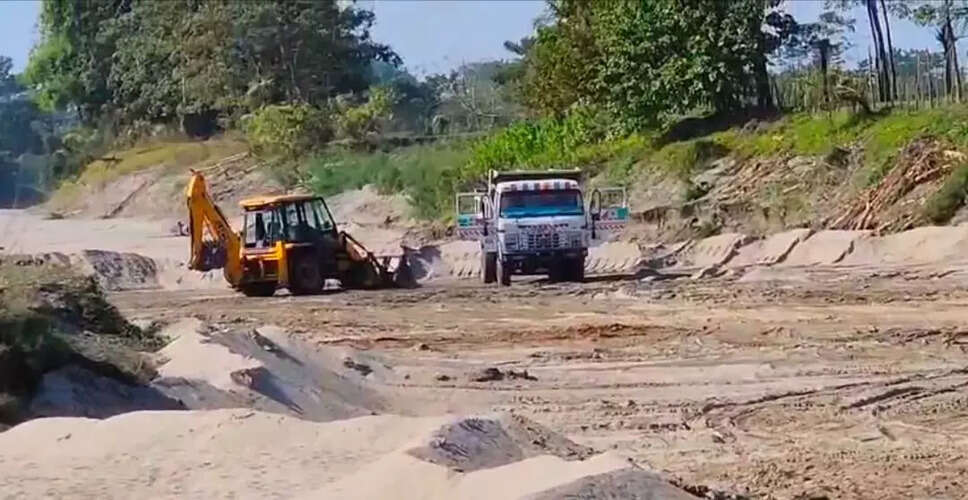
A file image of sand mining (AT Image)
Guwahati, Oct 24: The Assam government has compiled District Survey Reports for 35 districts to pinpoint areas suitable for legal sand and stone mining, as stated by Forest and Environment Minister Jayanta Malla Baruah on Saturday.
The reports, developed by specialists, highlight appropriate locations for extraction, considering the rising demand for construction materials due to ongoing development projects in the state. The government intends to utilize these findings to promote regulated mining and reduce illegal activities.
“As development progresses across Assam, sand and stone are vital for construction. The District Survey Reports indicate where mining can be legally conducted. Our goal is to enable regulated extraction while discouraging illegal mining,” Mallabaruah explained.
The Minister also mentioned plans to issue tenders for approximately 100-150 sand and stone mining sites, with several tenders anticipated to be released within the upcoming week. The allotment process is expected to be finalized by November.
“We have pinpointed numerous sand and stone mining locations for legal tendering. About 100-150 sites will be available for tender, and we aim to complete this process by November. This will allow individuals to source these materials from legal quarries instead of resorting to illegal mining,” he added.
Challenges in Bharalu River Restoration
Bharalu restoration faces encroachment, narrowing
Addressing the restoration of the Bharalu River, Baruah noted that the natural flow of the waterway has been significantly disrupted due to blocked channels and the discharge of wastewater from residential areas.
“The Bharalu no longer functions as a flowing river. Many of its channels have been obstructed, and it has increasingly turned into a drain carrying household wastewater,” he remarked.
Mallabaruah emphasized that the river has narrowed to just two or three meters in certain sections, warning that restoration efforts would necessitate widening it to at least eight meters.
“Unless we can restore it to a minimum width of eight meters, the objective of reviving the river will not be fulfilled,” he stated.
Leased land and unauthorized constructions along the riverbanks present additional hurdles to the restoration initiative.
The government may contemplate designating specific stretches as eco-sensitive zones to prevent further construction and explore strategies to clear the necessary space for widening the river.
Community Efforts in Gibbon Conservation
Women join gibbon conservation efforts
Baruah also emphasized community-driven initiatives aimed at protecting the endangered western hoolock gibbon in Barekuri, Tinsukia district, where local groups are merging conservation awareness with ecotourism.
Located about 16 km from Tinsukia town, Barekuri is home to an estimated 20-21 western hoolock gibbons belonging to five family groups.
The primates inhabit bamboo groves and fruit trees in residential backyards, showcasing a unique coexistence between local residents and wildlife.
Baruah identified habitat fragmentation, electrocution, and food scarcity as significant threats to the species. Conservation efforts include planting fruit-bearing trees, insulating power lines, and planning a green corridor linking Barekuri with Bherjan-Borajan-Padumoni Wildlife Sanctuary.
In a post on a microblogging platform, the minister noted that Barekuri exemplifies how community involvement, particularly women's participation, and nature-based tourism can bolster wildlife conservation.
He underscored that safeguarding Assam’s wildlife necessitates collective responsibility, with local communities playing a crucial role in preserving the state’s natural heritage for future generations.