
Assam Government Encourages Farmers to Shift to Maize Cultivation Amid Rising Demand

Government's Call for Diversification in Agriculture
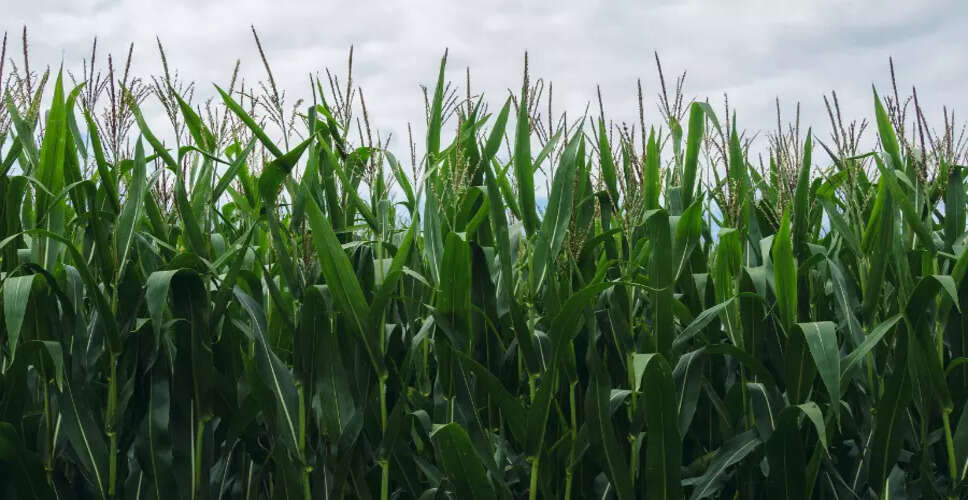
Representational image.
Guwahati, July 29: On Wednesday, the Assam government encouraged farmers to consider maize cultivation, highlighting the increasing demand from the ethanol sector and the potential for higher earnings. The government assured that it would continue to provide support through Minimum Support Price (MSP) incentives.
This topic was brought up during the 14th day of the Budget Session of the Assam Legislative Assembly by Congress MLA Mohibur Rahman from Mankachar. He expressed concerns that farmers are not receiving the MSP set by the Centre due to insufficient procurement facilities.
Rahman noted that although the Centre established the MSP for maize at Rs 2,410 per quintal last year, farmers in his area are compelled to sell their crops for approximately Rs 1,500 per quintal.
"Maize farming is on the rise in our region, yet farmers are unable to benefit from the MSP due to inadequate procurement systems. The government must ensure that effective mechanisms are established before the upcoming marketing season in February-March so that farmers can actually receive the MSP," he stated.
He also raised similar concerns regarding mustard cultivation, mentioning that while the MSP for mustard is set at Rs 6,200 per quintal, local farmers are only receiving between Rs 4,800 and Rs 5,000.
In response, Agriculture Minister Pijush Hazarika assured that the Assam government is complementing the Centre's MSP with additional incentives and promoting maize cultivation due to its increasing market demand.
"The Centre has set the MSP for mustard at Rs 6,200 per quintal, and the Assam government is adding an incentive of Rs 300, raising the effective support price to Rs 6,500. For maize, the Centre's MSP is around Rs 2,400, with the State government providing an extra Rs 250 per quintal," Hazarika explained to the assembly.
The minister emphasized the potential of maize farming in lower Assam, noting that South Salmara and Mankachar produced over 5,300 metric tonnes of maize last year.
"The ethanol industry has created a substantial market for maize. While there is some criticism regarding ethanol production, it is generating new opportunities for our farmers. India imports a significant amount of fuel, and domestic ethanol production can help reduce these imports while providing additional income for farmers," he stated.
Hazarika pointed out that maize prices have significantly improved in recent years due to rising demand, claiming that farmers could earn around Rs 35,000 from cultivating maize on one bigha of land.
"Farmers should continue with paddy cultivation, but they should also increasingly embrace maize farming as it offers better returns and a growing market," he concluded.