
Assam Faces Rising Death Toll from Japanese Encephalitis

Increasing Fatalities from Japanese Encephalitis in Assam
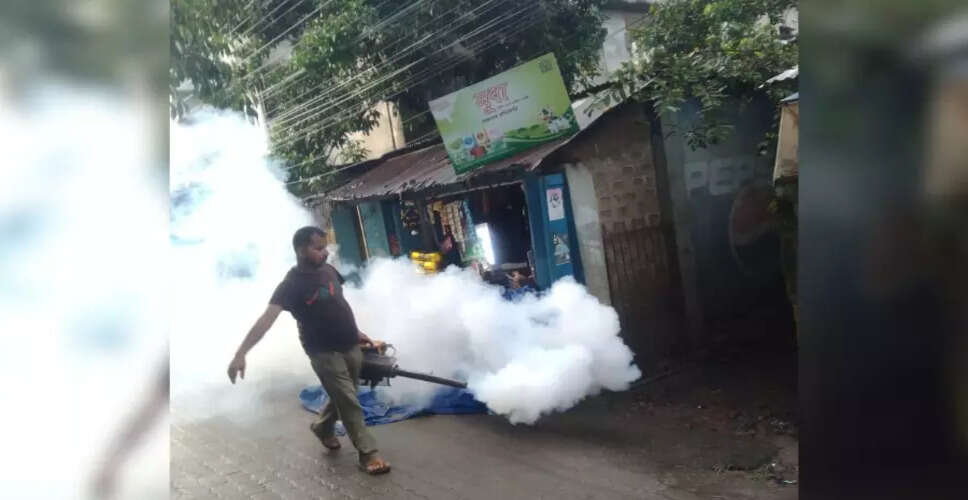
File image of fogging carried out by GMC (Photo: @gmc_guwahati/X)
Guwahati, June 25: The number of deaths attributed to Japanese Encephalitis (JE) in Assam has reached 15, following the report of five additional fatalities on Wednesday.
With these recent deaths, the total fatalities from both Japanese Encephalitis and Acute Encephalitis Syndrome (AES) this year has climbed to 60, as per the National Health Mission (NHM) of Assam.
An official from NHM indicated that 15 individuals have lost their lives due to JE, while 45 others have died from AES across various districts in the state since the beginning of the year.
Deaths linked to JE have been recorded in districts including Baksa, Cachar, Chirang, Kamrup Metropolitan, Tamulpur, Barpeta, Jorhat, Lakhimpur, and Kamrup.
Meanwhile, AES-related fatalities have been noted in Baksa, Cachar, Chirang, Goalpara, Morigaon, Sivasagar, Tamulpur, Udalguri, West Karbi Anglong, Darrang, Dhubri, Kokrajhar, South Salmara-Mankachar, Tinsukia, Charaideo, Kamrup Metropolitan, Barpeta, Jorhat, Kamrup, and Lakhimpur.
This season, Assam has confirmed 56 cases of Japanese Encephalitis and nearly 500 cases of Acute Encephalitis Syndrome.
Abhijit Sarma, Executive Director of NHM Assam, clarified that JE and AES are separate clinical conditions and should not be confused with one another.
"While JE is a contributing factor to AES, not every AES case is due to Japanese Encephalitis," he explained.
In preparation for the peak transmission season of AES and JE, which generally spans from June to August, the state government has ramped up its preparedness efforts.
Sarma noted that various initiatives have been in place since February 2026 to enhance disease surveillance, improve case management, bolster hospital readiness, expand vaccination efforts, and foster better inter-departmental collaboration.
The NHM has also trained key medical personnel, assigned district coordinators, distributed treatment protocols, reinforced referral systems, ensured the availability of essential medications, and broadened JE vaccination in at-risk regions.
Health officials are advising residents, especially those in high-risk zones, to stay alert and seek prompt medical care if they exhibit symptoms such as high fever, headaches, vomiting, confusion, or seizures.