
Assam Cabinet Announces Historic DBT Disbursement and Policy Changes
Major Financial Initiative Under Orunodoi Scheme
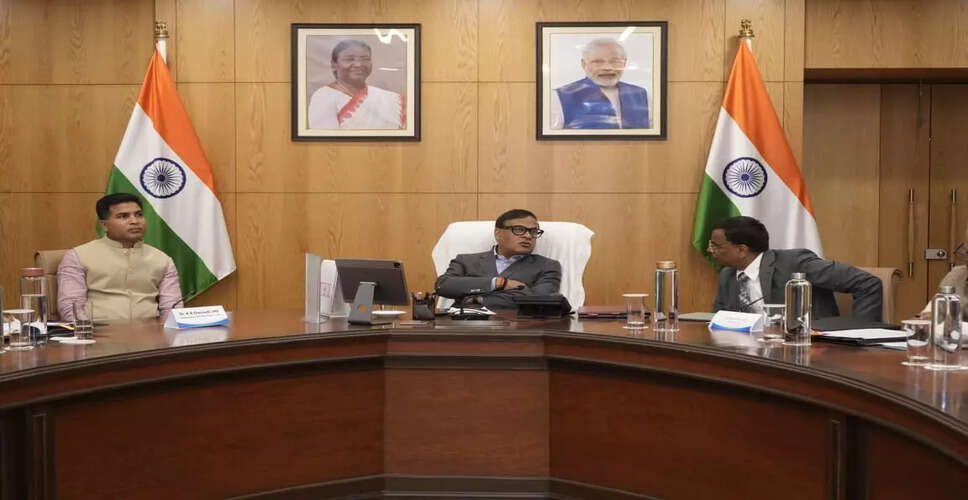
Guwahati, Feb 26: On Thursday, the Assam Cabinet revealed a significant Direct Benefit Transfer (DBT) initiative under the Orunodoi scheme. On March 10 at 11 am, approximately 39.70 lakh beneficiaries will receive a total of Rs 9,000 each, summing up to nearly Rs 3,600 crore in a single day.
“This marks the largest single-day fund transfer to beneficiaries in Assam's history. Events will be organized in every panchayat, municipal ward, and autonomous council area to celebrate this distribution. The central event will be held at Jyoti Bishnu Kala Kendra in Khanapara,” stated Chief Minister Himanta Biswa Sarma.
Decentralization of Power to Autonomous Councils
The Cabinet also made a pivotal policy decision to decentralize authority, transferring initial tender powers to autonomous councils. This includes the Bodoland Territorial Council (BTC), Karbi Anglong Autonomous Council, and Dima Hasao Autonomous Council, allowing them to manage preliminary tender processes for smaller projects.
“The Cabinet has opted for a decentralized approach, empowering BTC, Karbi Anglong, and Dima Hasao. For projects related to PWD, water resources, flood control, or irrigation costing under Rs 10 crore, these councils will oversee the initial tender process,” Sarma explained.
He emphasized that while the final approval will still rest with the state government, the councils will have the authority to issue preliminary tenders.
“This change will greatly expedite the execution of government schemes in BTC and other Sixth Schedule regions. This proposal was presented by BTC Chief Hagrama Mohilary and has received Cabinet approval,” he added.
Support for Tea Garden Workers
In discussions regarding tea garden workers, Sarma mentioned that a tripartite meeting with stakeholders has led to a decision to align wages with the new labor codes introduced by the central government.
“Starting April 1, 2026, the daily wage for tea garden workers will increase by Rs 30. Consequently, workers in the Brahmaputra Valley will earn Rs 280 per day, while those in the Barak Valley will receive Rs 258,” he stated.
Developmental and Economic Decisions
Industrial & Hospitality Initiatives
• Incentives have been approved for an integrated shipyard and container shipping line in Guwahati.
• A five-star hotel project in Silchar has received clearance.
Both initiatives are anticipated to create substantial employment opportunities.
Education & Agriculture Enhancements
• Administrative approval has been granted for a College of Agriculture in Patharkandi, aimed at bolstering higher education and supporting farmers in the Barak Valley.
Land & Infrastructure Developments
• Land has been allotted to 326 beneficiaries under Mission Basundhara.
• A Rs 519 crore NABARD loan has been approved for infrastructure development in border and Sixth Schedule areas.
• VAT on Aviation Turbine Fuel (ATF) has been reduced to enhance connectivity and promote tourism.
Healthcare & Women’s Empowerment Initiatives
• The ASHA Express scheme will provide scooties to over 33,000 ASHA workers and supervisors to improve healthcare delivery.
• The second installment of the Mukhyamantri Mahila Udyamita Abhiyan (MMUA) will be sanctioned starting March 11.