
Assam Assembly Election Results: A Personal Connection to Change

A Unique Election Experience
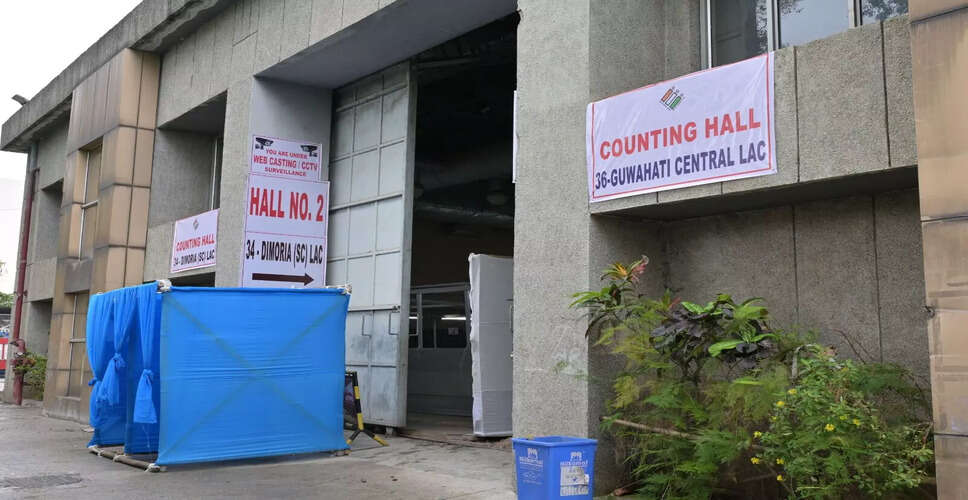
A view from the counting centre in Kamrup (M). (Photo:@ECISVEEP/X)
This year's Assam Assembly election results feel markedly different. They resonate on a personal level rather than appearing routine.
Waking up today, I experienced an unsettling yet familiar sensation in my stomach, reminiscent of the day I received my Class 10 board exam results.
It's a blend of anxiety, curiosity, and a subtle fear of the unknown. Interestingly, I didn't prepare for this; I didn't take any exam. Yet, the nervousness is palpable and persistent.
Perhaps it's because this election transcends mere numbers or seats; it embodies the potential for what tomorrow could bring.
In homes, on phones, and in conversations, there's a palpable investment in the outcome. Young individuals, often labeled as 'disinterested' or 'detached,' are actively engaged.
They're creating reels about the results—some humorous, others sarcastic, and some profoundly serious. They're constantly refreshing news apps, checking the ECI website, and flipping through TV channels to catch the latest updates.
This collective anticipation is almost heartwarming; the shared tension is evident.
Historically, elections have evoked a sense of indifference among many, with a quiet sentiment of 'who cares who comes to power.'
However, this year marks a shift in tone. It now feels more like, 'we must ensure things don’t deteriorate… perhaps they can improve.'
In this transformation, something significant has emerged.
This election has subtly united people. Differences in age, religion, caste, or gender seem to fade away, if only for a moment.
There's a mutual understanding, a common desire for improved governance, accountability, and change.
You can witness this at home as well. Families—grandparents, parents, and siblings—gather around the same screen.
Breakfast discussions have shifted from mundane routines to updates on counting, the smoothness of the process, and the implications of the results.
It feels as though the entire household is collectively holding its breath.
The path to this moment has not been trivial. On April 9, 23, and 29, citizens turned out in droves to cast their votes.
They endured long queues, harsh sunlight, unexpected rain, and traveled great distances, all while remaining patient and resolute.
The turnout numbers reflect this spirit, showcasing record participation across states. Yet, beyond the statistics lies a deeper narrative—a hope that their votes will matter, that their voices will be heard.
This is what imbues this moment with such weight and emotion; it carries expectations and belief.
When the results are announced, they will inevitably declare winners and losers. However, what should not be overlooked is this rare sense of unity; the profound care people have shown.
Regardless of the outcome, this sentiment deserves recognition and perhaps even preservation.