
Assam and Meghalaya Collaborate to Tackle Guwahati's Waterlogging Issues
Joint Initiative for Satellite Mapping
Guwahati, June 3: The states of Assam and Meghalaya have embarked on a crucial initiative to address the ongoing waterlogging challenges in Guwahati. This collaboration was revealed during a press conference by Assam Chief Minister Himanta Biswa Sarma and Meghalaya Chief Minister Conrad Sangma in Guwahati on Monday.
The satellite mapping will be executed by the North Eastern Space Applications Centre (NESAC), a regional agency under the Indian government's Department of Space. The mapping will gather essential data on various factors such as topography, forest cover, surface runoff, water channels, and regions susceptible to water accumulation. Once the mapping is finalized, the data will be forwarded to IIT-Roorkee for analysis, which will provide scientifically sound and environmentally sustainable recommendations.
Chief Minister Sarma highlighted the urgency of the situation, stating, “Assam presented a comprehensive overview to the Meghalaya team regarding the substantial water influx from the Khanapara region along the interstate border. This uncontrolled water flow is a major contributor to flooding in several areas of Guwahati.”
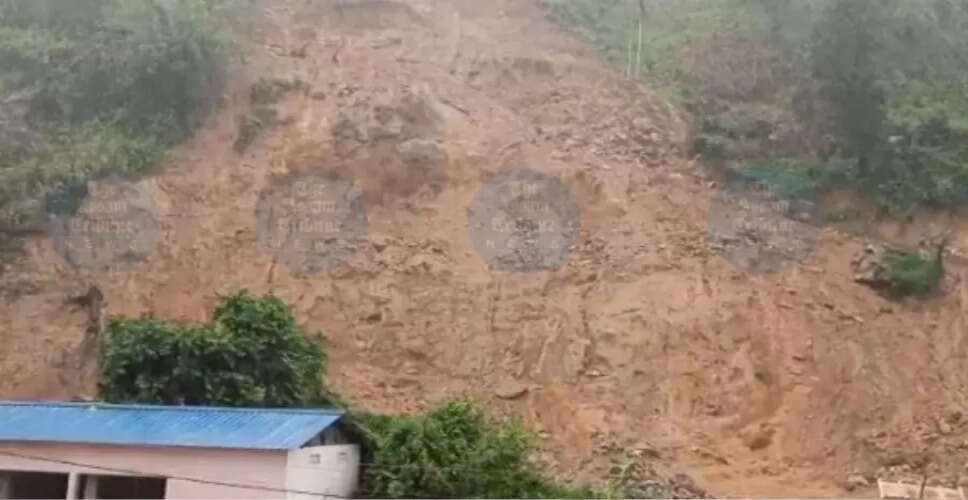
He further pointed out that the Assam government has long blamed the increasing waterlogging on unregulated hill cutting in Meghalaya's Ri-Bhoi district. Specifically, he mentioned the University of Science and Technology, Meghalaya (USTM), claiming that water runoff from its hilltop campus significantly contributes to flooding in downstream Guwahati. Sarma previously referred to this issue as a form of “flood jihad,” which stirred controversy.
In response, Chief Minister Sangma acknowledged the severity of the problem, particularly in the context of changing climate patterns. “Recent months have shown how severe rainfall, driven by climate change, has intensified urban flooding. This is a significant concern for both states, and collaboration is essential,” he stated.
Both leaders emphasized that any solution must not jeopardize the livelihoods or economic activities in Meghalaya. “Our goal is to resolve this issue in a way that protects the environment, addresses the flooding crisis in Guwahati, and also safeguards the economic interests of those in Meghalaya,” they noted in a joint statement.
The mapping process led by NESAC is anticipated to be completed within three months, after which IIT-Roorkee will commence its analysis. The results are expected to form the basis for a comprehensive inter-state flood management strategy.
Additionally, Chief Minister Sarma mentioned that his government has reached out to a Supreme Court committee regarding the hill-cutting issue, with the apex court already issuing notices to both states.
This collaborative effort signifies a pivotal moment in inter-state cooperation in the Northeast, merging political commitment, scientific knowledge, and regional teamwork to tackle one of Guwahati’s most urgent urban issues.