
Assam Advances Towards Implementing Uniform Civil Code
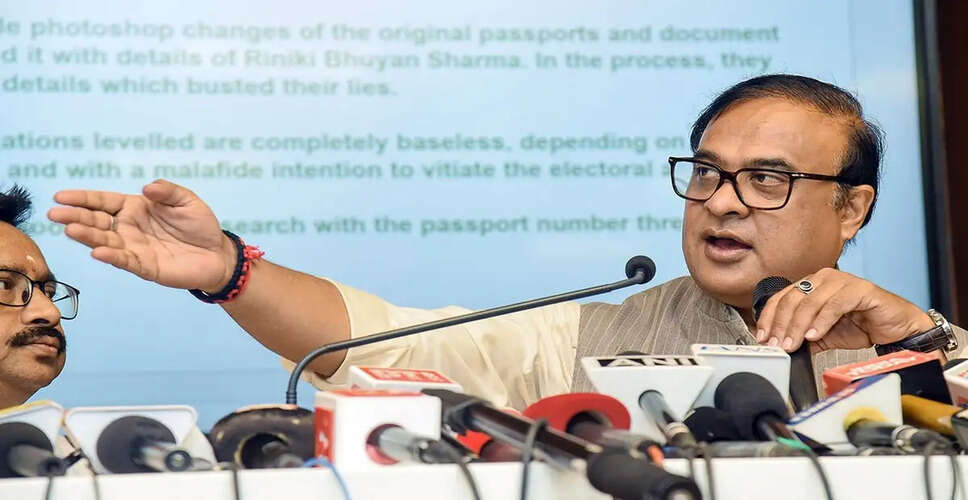

Assam Takes Significant Steps for Uniform Civil Code
Efforts to implement a Uniform Civil Code (UCC) at the national level are gaining momentum. Assam has become the third state in India, following Uttarakhand and Gujarat, to initiate the process of adopting the UCC. The Bharatiya Janata Party (BJP) has long championed the UCC as a key ideological commitment. Following the construction of the Ram Temple in Ayodhya and the abrogation of Article 370, the implementation of the UCC is viewed as a crucial step in fulfilling the BJP's third major ideological promise.
Today, the Assam government presented the UCC bill in the state assembly. Minister Atul Bora introduced the bill, which is expected to be discussed and voted on during the final day of the assembly session. It is noteworthy that the BJP had pledged to implement the UCC in its manifesto ahead of the Assam assembly elections, and the bill was approved in the first cabinet meeting after the government formation on May 13.
Exemptions and Objectives of the UCC
Chief Minister Himanta Biswa Sarma has clarified that all tribal communities residing in hilly and plain areas will be exempt from this law. He also assured that religious traditions, customs, and cultural beliefs would remain unaffected. The Assam government states that the UCC aims to establish a minimum marriage age, grant women rights to family property, prohibit polygamy, ensure mandatory registration of marriages and divorces, and legally recognize cohabiting relationships.
Central Government's Assurance to Tribal Communities
In this context, Union Home Minister Amit Shah provided significant assurances to tribal communities during a recent tribal cultural event in New Delhi. He stated that special provisions have been made to exclude all tribal communities from the UCC, ensuring their rights remain fully protected. Shah emphasized that this law would not infringe upon the land, forest, and cultural rights of the tribal population, recalling the struggles of tribal leader Birsa Munda and affirming that tribal communities are the rightful owners of their land and forests.
This statement from the Home Minister is particularly important as there have been attempts to create confusion among tribal communities regarding the UCC. Various political parties and organizations have propagated the notion that this law would disrupt tribal traditions and social structures. However, both the central government and BJP-led states have consistently clarified that the cultural identity and traditions of tribal communities will be fully safeguarded.
Political Context and Judicial Remarks
It is also worth noting that during the recent West Bengal assembly elections, Prime Minister Narendra Modi articulated a clear stance on the UCC, stating that it would be implemented in West Bengal to end appeasement politics. During the Bengal elections, Amit Shah also released the BJP's manifesto in Kolkata, promising that if the BJP formed the government, the UCC would be enacted within six months. These statements indicate that the BJP aims to move beyond ideological debates and is actively working on a phased implementation of the UCC across states.
Additionally, recent remarks from the Supreme Court have added new dimensions to this debate. During a hearing related to the inheritance rights of Muslim women, the bench led by Chief Justice Suryakant stated that the resolution of issues related to inheritance laws lies in the UCC. The court recognized that differing personal laws hinder women's equal rights and emphasized the need for comprehensive legislation. Justice Joymalya Bagchi also suggested that it would be prudent to leave this matter to the legislature to formulate a law like the UCC.
The Core Purpose of the UCC
The fundamental aim of the UCC is to establish uniform laws for all citizens concerning marriage, divorce, inheritance, and adoption. Currently, different personal laws apply to various communities, which can sometimes undermine the rights of women and marginalized groups. The Supreme Court has repeatedly stressed the necessity of a UCC. Article 44, included in the directive principles of the Constitution, directs the state to implement a UCC.
Nonetheless, the Assam government's decision regarding the UCC is considered significant for the nation. It promises equal rights for women, enhances transparency in marriage and divorce processes, and aims to curb practices like polygamy. By excluding tribal communities from its purview, the government has conveyed that the process of reform can advance while preserving cultural diversity and constitutional rights. Following Uttarakhand and Gujarat, Assam's move signals that the UCC is poised to become a central theme in national politics and social reform.