
Assam Achieves Significant Progress in FIR Resolutions and Conviction Rates
Major Improvements in Assam's Law Enforcement
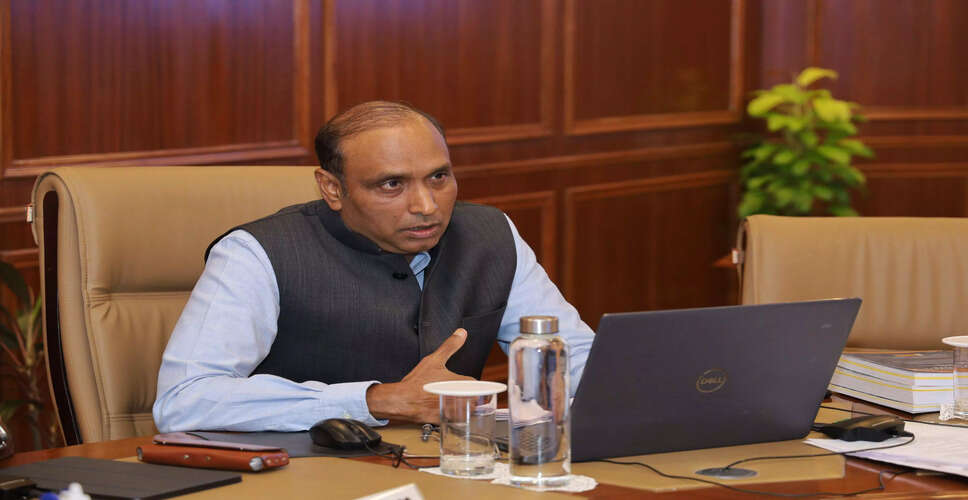
Guwahati, Dec 31: Over the past year, Assam has successfully addressed approximately 95% of the 70,000 FIRs filed throughout the state, with the conviction rate experiencing a notable increase from 26% to 50%, as reported by Special Director General of Police (SDGP) Munna Prasad Gupta on Wednesday.
During a press conference at the newly established Police Commissionerate in Khanapara, Gupta credited this progress to enhanced oversight of investigations, increased accountability among officers, and the introduction of three new criminal laws that took effect on July 1, 2024.
“Investigating officers who submit accurate charge sheets and ensure that offenders face consequences are being recognized. Conversely, those who make mistakes, whether intentional or due to negligence, are subject to disciplinary measures,” he stated.
Gupta highlighted a significant overhaul in investigative procedures, mandating forensic involvement in cases.
“Previously, visiting the crime scene was not obligatory. Now, for offenses punishable by seven years or more, a forensic expert must be present at the scene and conduct videography. Any shortcomings during the investigation can ultimately undermine the case in court,” he explained.
Focusing on the victim-centric approach of the new legal framework, SDGP Gupta noted that the updated laws prioritize the rights of victims and the public.
“Victims are now required to be kept informed about the status of their cases. Justice must be delivered within specified timelines to prevent cases from dragging on indefinitely,” he added.
One of the significant reforms introduced is the electronic FIR system and the concept of zero FIR.
“Individuals no longer need to travel between police stations. Complaints can be filed at any station, which will then forward it to the appropriate jurisdiction,” Gupta mentioned.
The senior officer also pointed out measures designed to prevent accused individuals from delaying trials.
“Previously, trials would halt if the accused was missing. Now, even if the accused is evading capture, the trial will proceed. Courts can issue judgments in absentia, and the punishment will be enforced. In such instances, the convict cannot appeal solely through a lawyer but must be in custody,” he clarified.
Gupta stated that technology's role has been expanded to enhance the efficiency of investigations and trials.
“The significance of electronic evidence has been elevated, and procedures have been streamlined. Accused individuals do not need to appear in court every time; they can participate via video conferencing. Witnesses can also testify from designated locations within their districts, minimizing inconvenience and delays,” he added.
Regarding ongoing public outreach efforts, Gupta mentioned an exhibition on the new criminal laws aimed at stakeholders and citizens to promote awareness.
“The exhibition, inaugurated on December 29 by the Union Home Minister and the Chief Minister, will run until January 2. I encourage the public to attend and familiarize themselves with the new provisions, particularly those concerning crimes against women and children, where penalties have been intensified,” he urged.
On the notable case involving Zubeen Garg, Gupta confirmed that the Special Investigation Team (SIT) has completed its work.
“The investigation has been finalized, and the charge sheet has been submitted. As the case is currently subjudice, I cannot comment further on the trial,” he stated.
Gupta also mentioned that the Union Home Ministry is closely observing the implementation of the new laws across various states.
“Assam currently leads with an implementation score of 81%, while the national average stands at around 57%. This evaluation is based on several criteria,” he concluded.